Minimalist cozy interiors are the only style that ever made me want to clear every shelf and then immediately pile blankets back on the sofa. A couple of years ago I decluttered my whole apartment, and it looked great in photos but felt like a waiting room in real life. It took me months of trial and error to learn that a cozy minimalist home isn’t about owning less. It’s about owning the right things: warm textures, soft light, and a few pieces you actually love.
If you’ve been saving minimalist aesthetic pins on Pinterest and wondering why your own space still feels a little flat, this guide is for you. Below are 17 minimalist cozy interiors design ideas I’ve tested in my own home or recreated for friends, with real US brands, rough price ranges, and the practical measurements that make each idea actually work. Pinterest is where I first spotted this trend, and you can check Pinterest Trends yourself to see how cozy minimalist searches are moving.
What Makes Minimalist Cozy Interiors Different?
Classic minimalism focuses on empty surfaces, cool tones, and strict function. Minimalist cozy interiors keep the clean lines but add warmth through color, fabric, and lighting. When a minimalist room feels cold, it’s usually missing one of three things: texture, warm light, or something personal on display.
My rule is “fewer things, softer things.” You can edit your belongings down to the essentials, but the ones you keep should invite you to sit, touch, and stay a while. That is the whole idea behind cozy minimalism, and it’s why this style feels so different from a bare showroom.
The Simple Formula Behind a Cozy Minimalist Home
Before the ideas, here’s the formula I use in every room:
- Warm neutrals: cream, oatmeal, soft beige, warm white, and light greige instead of stark white or cool gray.
- Layered textures: linen, wool, boucle, cotton, and woven natural fibers.
- Natural materials: light oak, walnut, rattan, ceramic, and stone.
- Layered lighting: two or three light sources per room at different heights.
- One personal moment: a piece of art, a stack of books, or a handmade bowl.
Prices in this guide are approximate ranges. They shift with sales and seasons, so treat them as a planning guide and check current prices before you buy.
Cozy Minimalist Living Room Ideas
A cozy minimalist living room is where the formula matters most, because it’s the room you use the longest every day. These five ideas do the heavy lifting.
1. Start With One Soft, Textured Sofa
The sofa carries the whole room, so I choose a neutral one in a textured fabric like a linen blend or boucle. A flat, shiny fabric makes the space look stiff. If you have a bigger room and prefer a sectional, my guide to 17 corner sofa design ideas shows how to choose one without overwhelming the space. In a living room around 12 by 14 feet, a sofa between 80 and 88 inches long leaves enough walkway, and I always tape the sofa’s outline on the floor first to check the flow.
Prices run roughly from $600 at the budget end (try IKEA) to $1,800 or more for higher-end pieces from Article or West Elm. One thing to avoid: if you have pets, skip loosely looped boucle, because claws snag it. A tightly woven linen blend holds up better.
Add one chunky knit throw and two pillows in different textures, then stop. The restraint is what keeps minimalist cozy interiors looking calm instead of cluttered.
2. Swap Your Coffee Table for a Low Wooden One
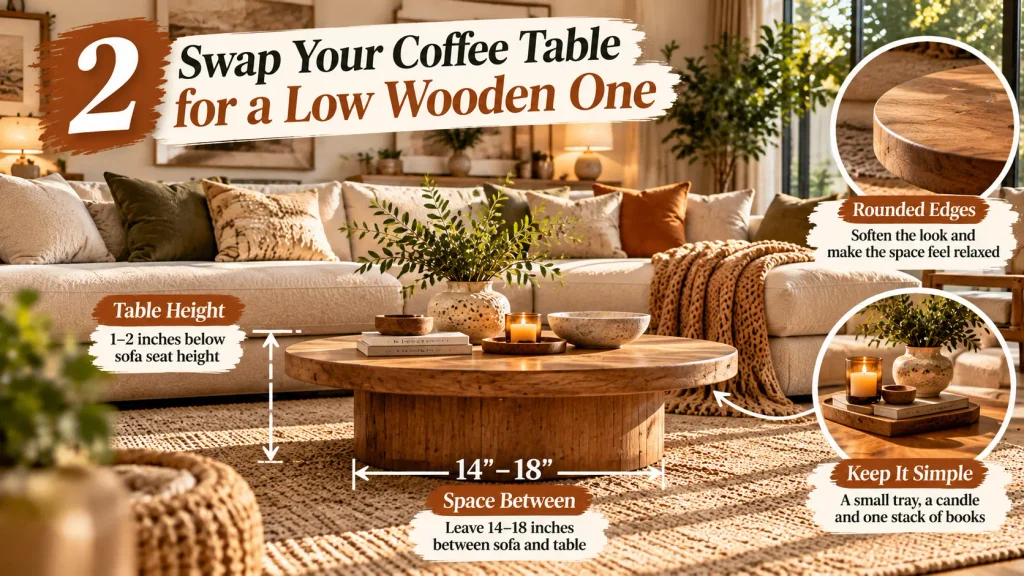
A low wooden or stone coffee table grounds the room and makes everything feel more relaxed. I look for rounded edges because they soften the straight lines of sofas and shelves. A good rule is to keep the table top about an inch or two below your sofa seat height, with roughly 14 to 18 inches of space between the table and the sofa so you can reach your drink without leaning.
Target‘s Threshold and Hearth & Hand lines have simple wood tables, often in the $150 to $350 range. If you want something sturdier, Pottery Barn and CB2 offer statement pieces. Keep the top almost bare: a small tray, a candle, and one stack of books.
3. Layer Your Lighting Instead of Relying on the Ceiling Light
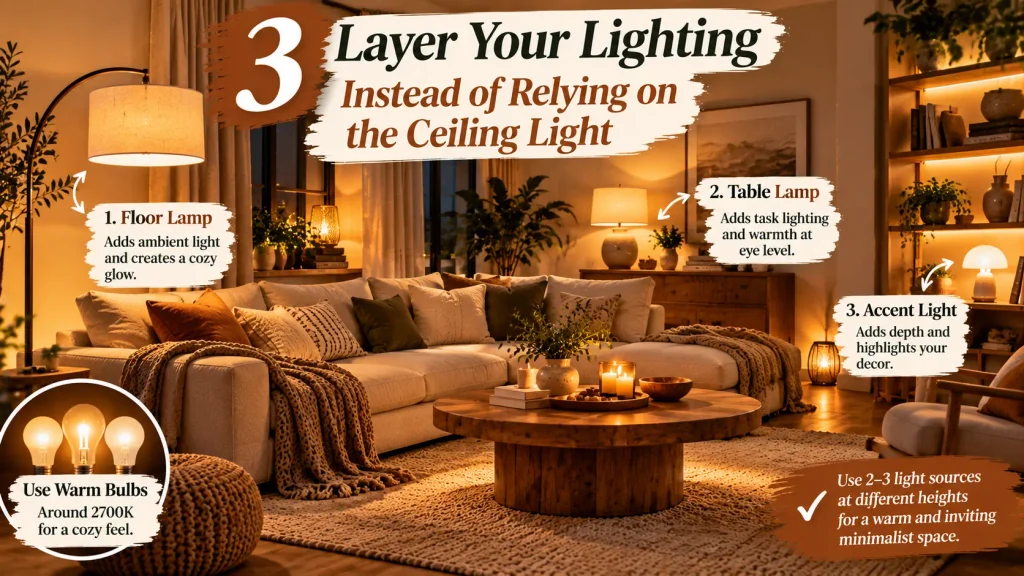
This one change made the biggest difference in my own home. Overhead lighting flattens everything, so I turned it off and used three lights at three heights: a floor lamp, a table lamp at about eye level when you’re seated, and a small accent light low on a shelf or console. Choose warm bulbs around 2700K for that glow, and keep every bulb in the room the same temperature, because mixing warm and cool bulbs makes a room feel messy.
Paper lantern floor lamps and simple ceramic table lamps suit this look perfectly, and you can find good ones at IKEA and HomeGoods for roughly $30 to $120. If you can add a dimmer switch or a dimmable bulb, do it. Being able to lower the light in the evening is half of what makes a room feel cozy.
4. Add a Large Neutral Rug to Warm Up the Floor
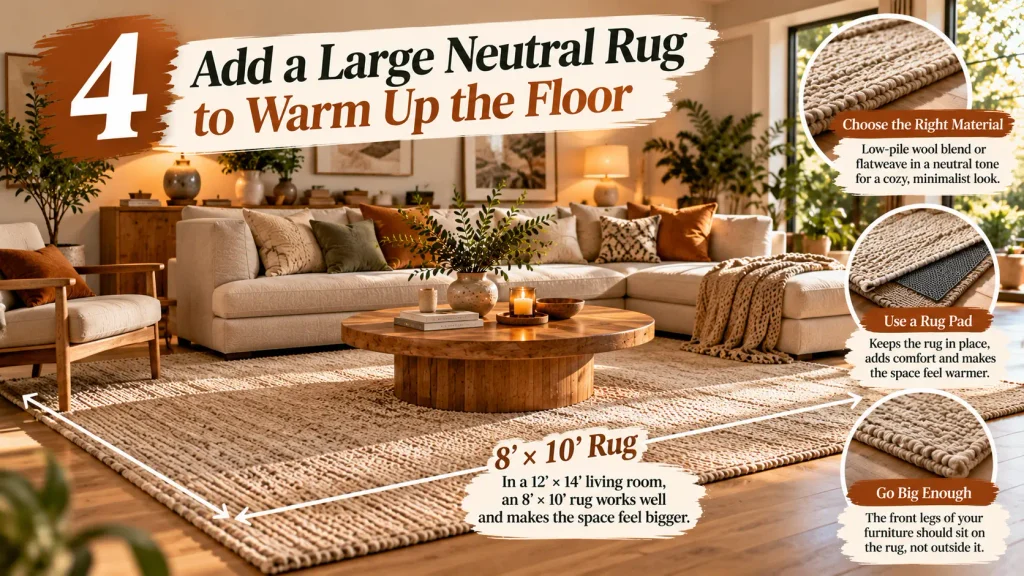
A rug is one of the easiest ways to make a minimalist space feel cozier. Choose a low-pile wool blend or a flatweave in a neutral tone. For a 12 by 14 foot living room, an 8 by 10 foot rug usually works well, and the front legs of your sofa and chairs should sit on it so the seating feels connected. A rug that’s too small makes a room look smaller and colder.
Rugs from IKEA and Rugs USA range from roughly $100 for a basic option to $500 or more for a larger wool piece. Add a thin rug pad underneath. It stops slipping and makes even a flatweave feel softer underfoot.
5. Hang Linen Curtains Close to the Ceiling
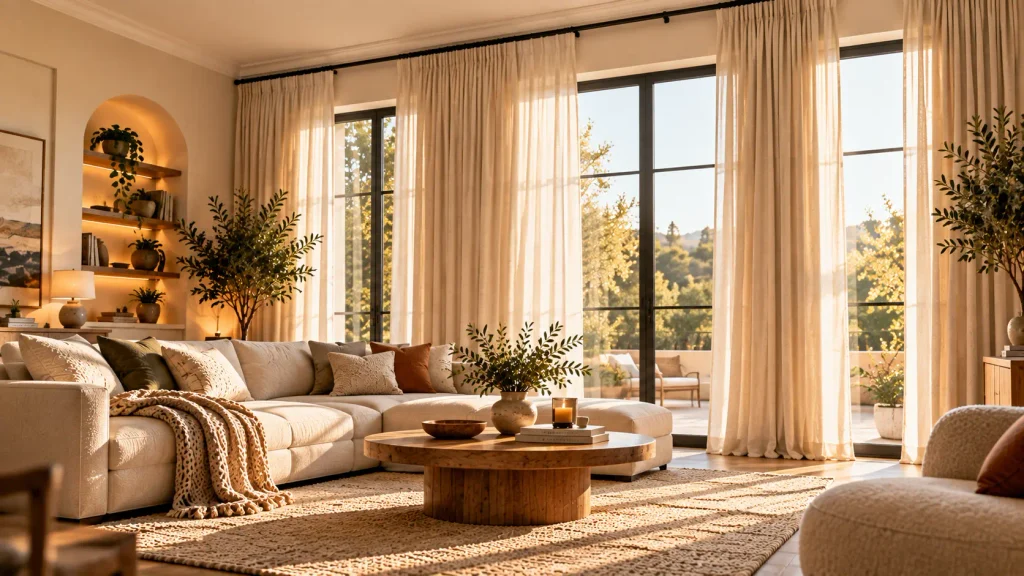
Soft linen or cotton curtains in cream or sand filter harsh daylight and add instant warmth. I hang the rod a few inches below the ceiling and let the fabric fall to the floor, which makes the room feel taller. Buy panels that are about twice as wide as the window, because curtains that are too flat look cheap and stiff.
Panels from IKEA and Amazon typically cost $30 to $120 per pair. In a bedroom, choose a lined version, since plain linen lets in a lot of morning light.
Minimalist Cozy Bedroom Ideas
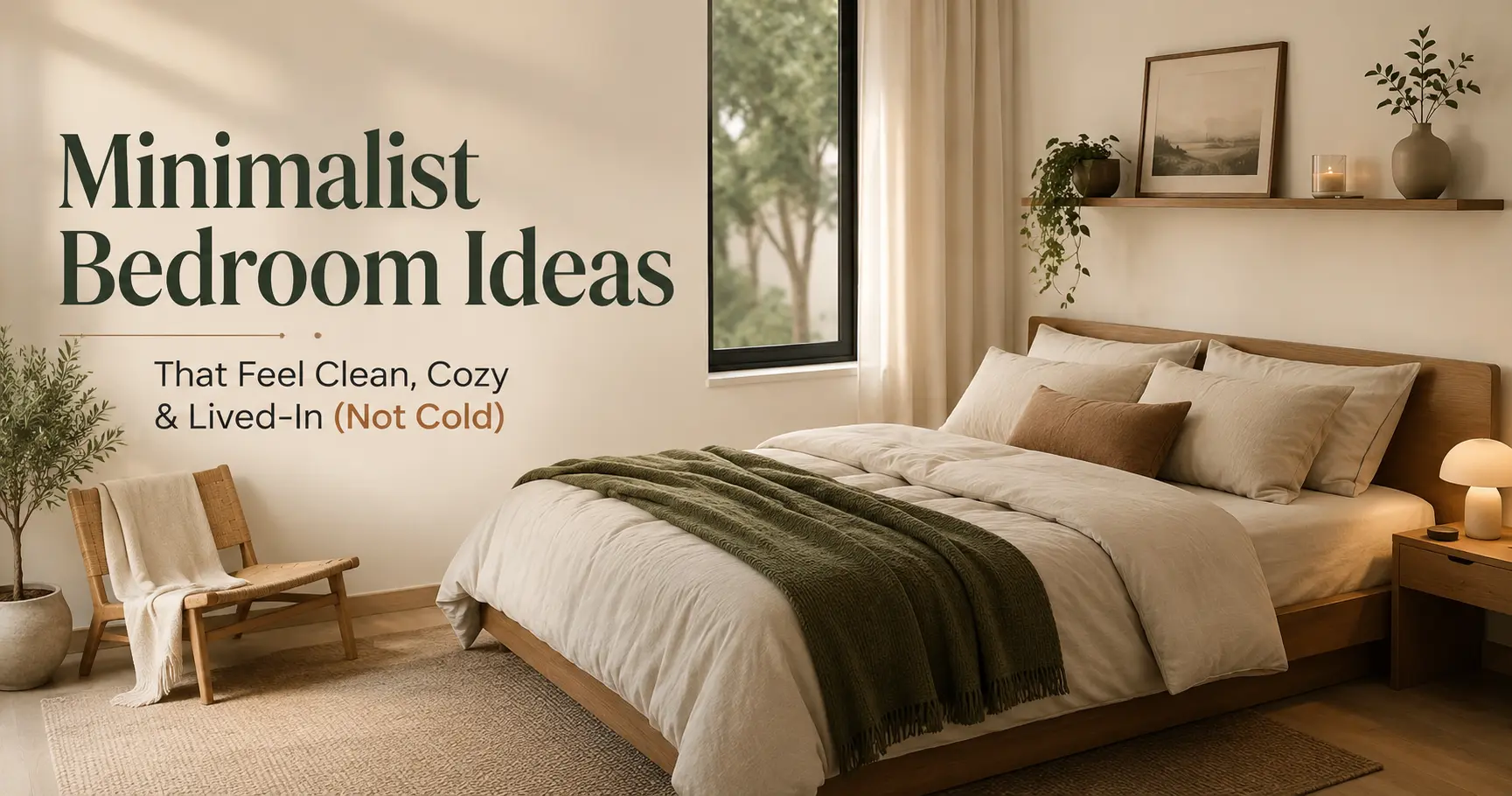
Your bedroom should be the calmest room in the house. These four ideas turn a plain bedroom into a real retreat, and you’ll find a shorter companion guide in my post on minimalist bedroom ideas that feel clean and cozy.
6. Choose Linen or Washed Cotton Bedding in Warm Neutrals
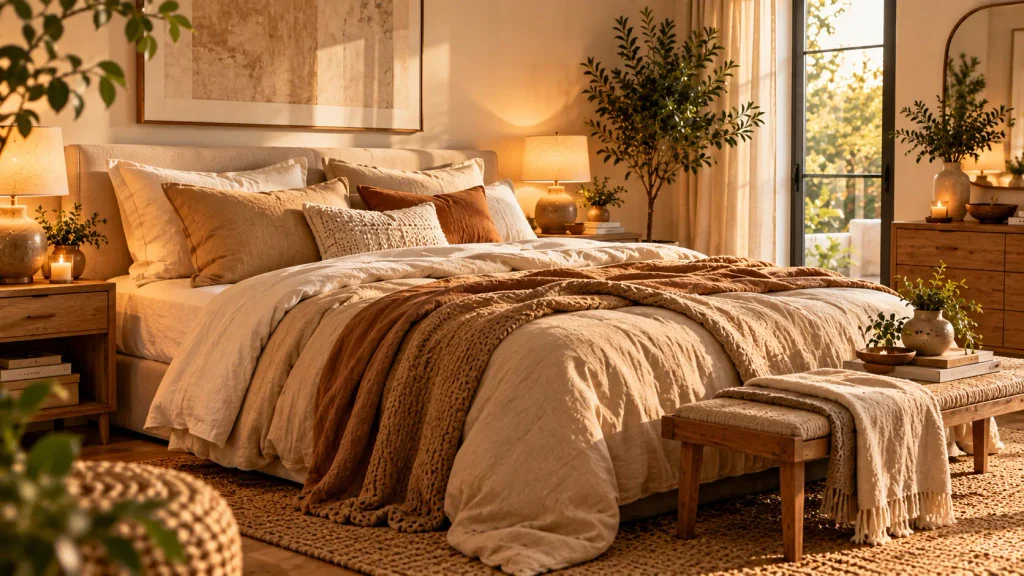
Linen or washed cotton in cream, sand, or soft taupe looks relaxed and slightly rumpled in the best way. If wrinkles really bother you, go with washed cotton instead of pure linen, because it keeps the same soft look with less fuss. Decent sets from Target or Pottery Barn run about $60 to $250 depending on quality.
Skip the pile of decorative pillows. Two sleeping pillows, two simple accent pillows, and one folded blanket at the foot of the bed is enough for a calm, layered bed.
7. Keep Nightstands Almost Empty
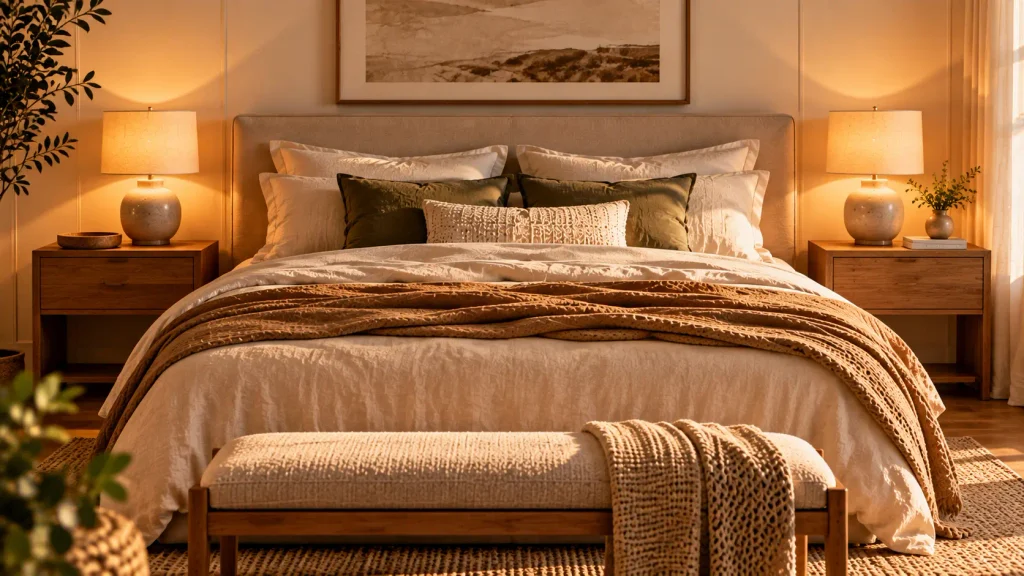
Put a small ceramic lamp on each side of the bed, and limit each nightstand to three things: a lamp, a book, and a small dish or plant. When I tried this, my bedroom went from “storage space with a bed” to a room I looked forward to walking into at night. Choose a lamp whose shade sits around shoulder height when you’re sitting up in bed, so the light lands on your page and not in your eyes.
If your phone charger cable ruins the look, a small cable clip behind the nightstand keeps it out of sight.
8. Pick a Simple Wood or Upholstered Bed Frame
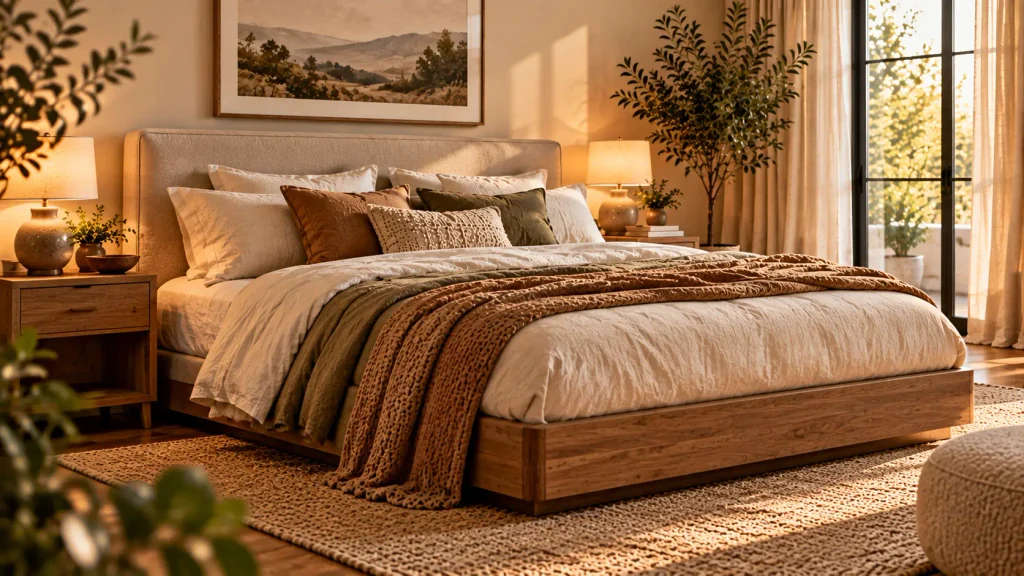
A low platform bed in light oak or a soft upholstered headboard adds warmth without any decoration. I prefer plain lines and natural finishes because they let the bedding be the star. A low platform can also help if your ceilings are on the lower side, since it tends to keep the room feeling open.
IKEA and Target offer budget frames around $250 to $600, and West Elm has higher-end options. If you need under-bed storage, choose a frame with built-in drawers rather than a bare platform.
9. Paint the Walls a Warm Neutral Instead of Pure White
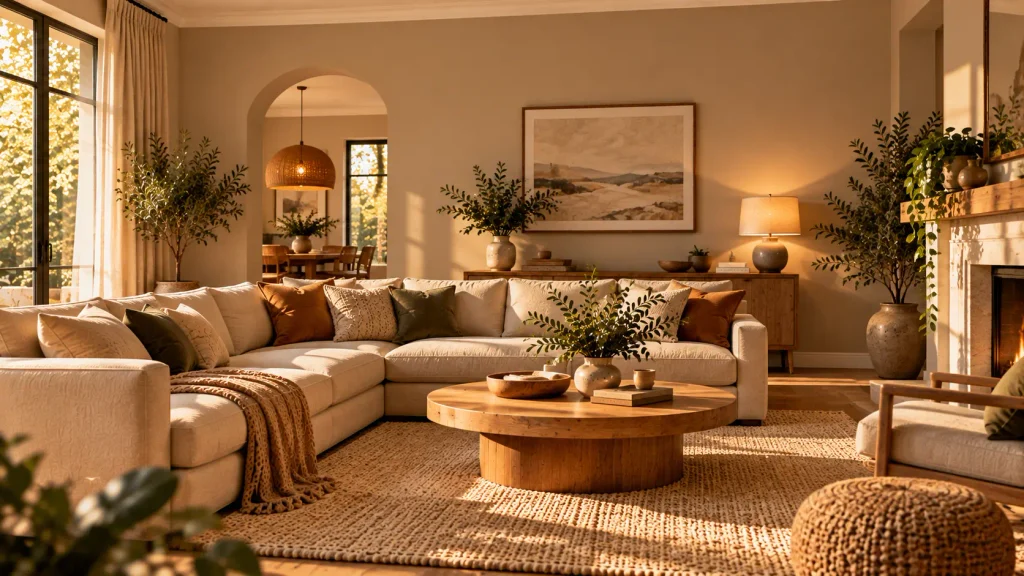
If your walls are bright white, they may be the reason your space feels cold. Warm whites, soft creams, and light greige make a room feel instantly calmer. Sherwin-Williams has a helpful guide to blending warm and cool neutrals, and Benjamin Moore also has plenty of popular warm neutral shades. A gallon typically costs around $50 to $90.
Test samples on two different walls, paint a swatch about two feet square, and check it in the morning and the evening before you commit. Rooms that face north tend to look cooler, so pick a color with a slightly warmer undertone there.
Minimalist Cozy Decor Details That Make the Difference
Once the big pieces are in place, these small decor choices are what make minimalist cozy interiors feel finished instead of empty.
10. Style Shelves With the “One-Third Empty” Rule
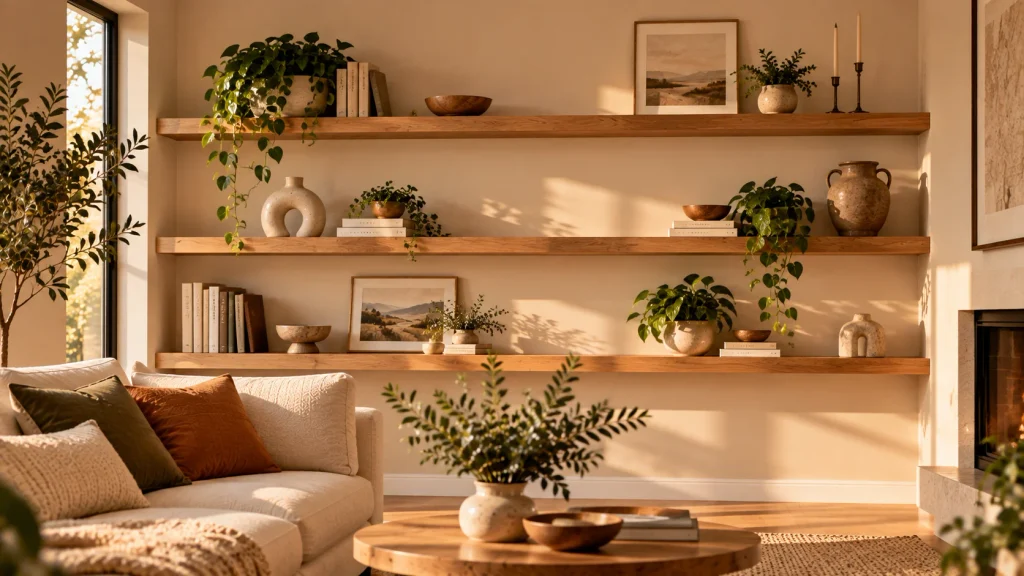
Shelves are where minimalist rooms often go wrong. Either they’re packed, or they’re so bare they look unfinished. I leave about one-third of each shelf empty and group the rest in odd numbers: three ceramics, a stack of books, one small plant. Vary the heights, so something is tall, something is medium, and something is low. The empty space makes it look intentional instead of lazy. If you’d rather mount your shelves, my geometric wall shelf decor ideas are a good starting point for small apartments.
11. Use One Large Plant Instead of Many Small Ones
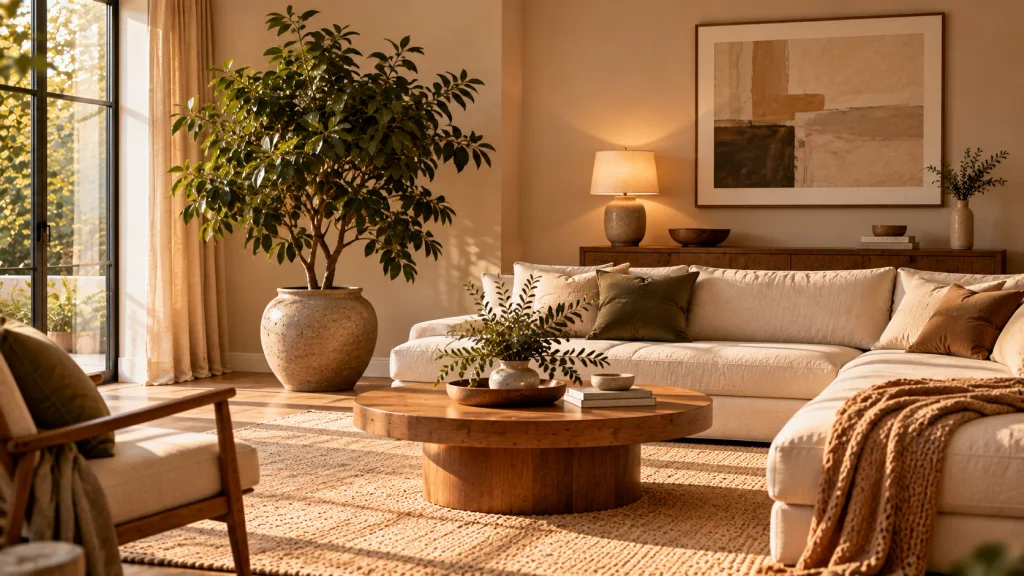
One big plant in a simple pot does more than five small ones scattered around. A leafy plant in a corner, or a branch in a ceramic vase on the table, adds life without breaking the clean look. If your room is dim, a cast-iron plant tolerates low light, and a spider plant does well in medium light. Both are listed as non-toxic to cats and dogs by the ASPCA. Snake plants and ZZ plants also handle low light, but the ASPCA lists the snake plant as toxic to pets, so skip them if you have a cat or dog. If you don’t have a green thumb, good faux options from IKEA or Target cost around $15 to $60.
12. Choose One Statement Piece of Wall Art
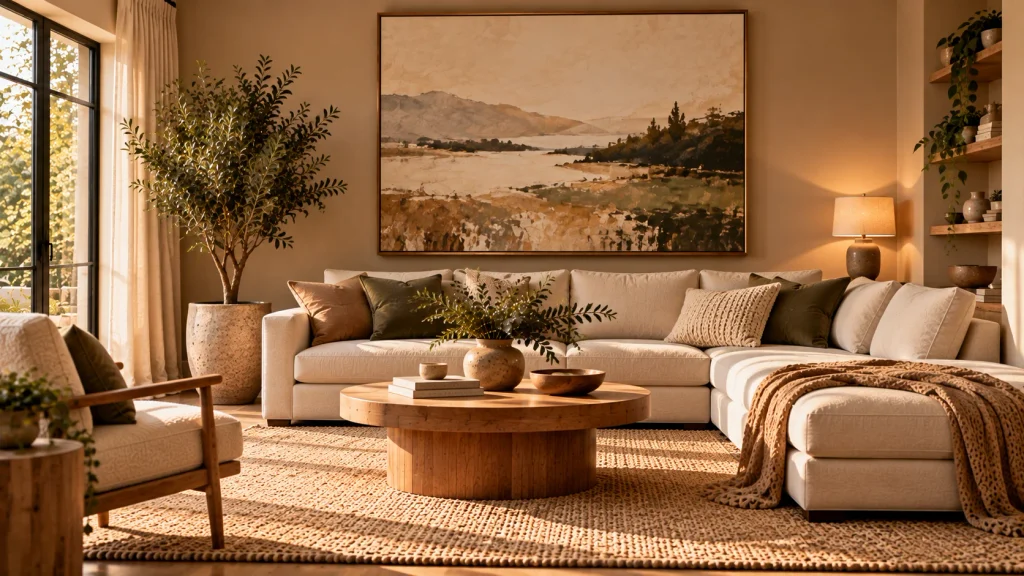
Simple, cozy wall decor works best when you commit to one piece instead of a gallery wall. I like a large abstract print in warm tones or a simple framed line drawing. Hang it so the center sits at about 57 inches from the floor, and over a sofa leave roughly 6 to 8 inches above the back. Etsy and Society6 have affordable prints from about $20 to $100 depending on size.
13. Bring Natural Materials Into the Kitchen
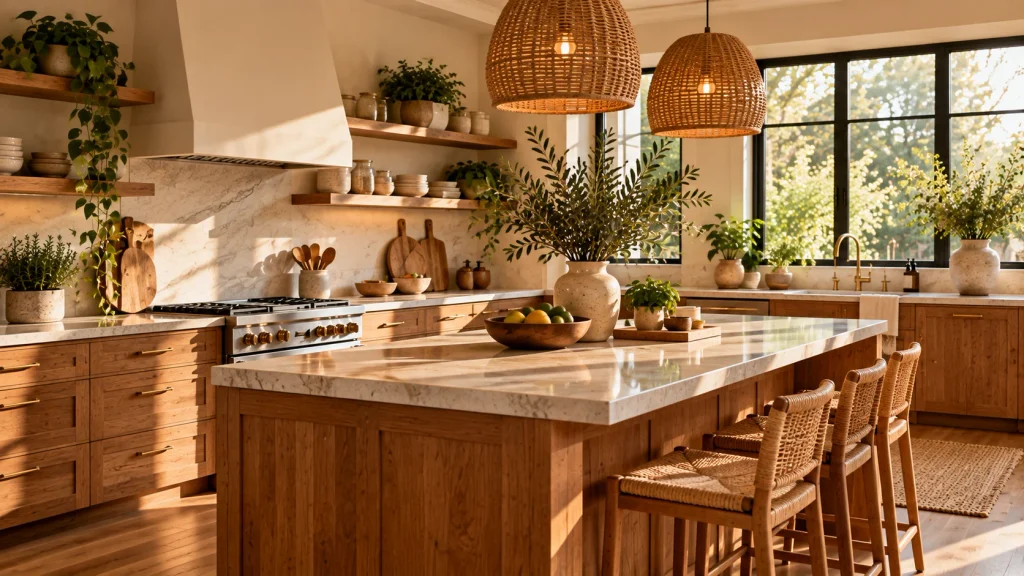
Light oak shelves, a wooden cutting board on display, and a few ceramic pieces add warmth without clutter. I keep only the items I use daily on the counter, usually no more than three, and store everything else behind doors. Wooden stools or a simple bench at the table also soften a kitchen that otherwise leans hard and shiny. For more small-kitchen tricks, see my small kitchen decor ideas that look expensive.
14. Make Your Entryway Welcoming With Just Three Things
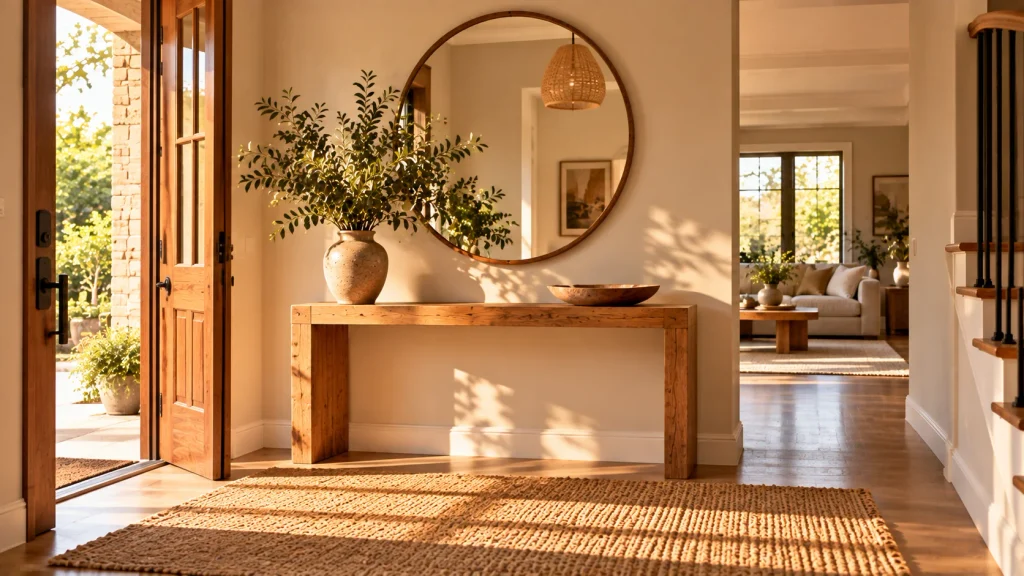
Entryways are often overlooked, but they set the tone for a cozy minimalist home. I use a slim bench, a woven basket for shoes, and a single round mirror. In a narrow hallway, look for a bench that is only 12 to 14 inches deep so it doesn’t block the walkway. A hook or two for bags finishes the space without crowding it.
Minimalist Interior Design Ideas for Small Spaces
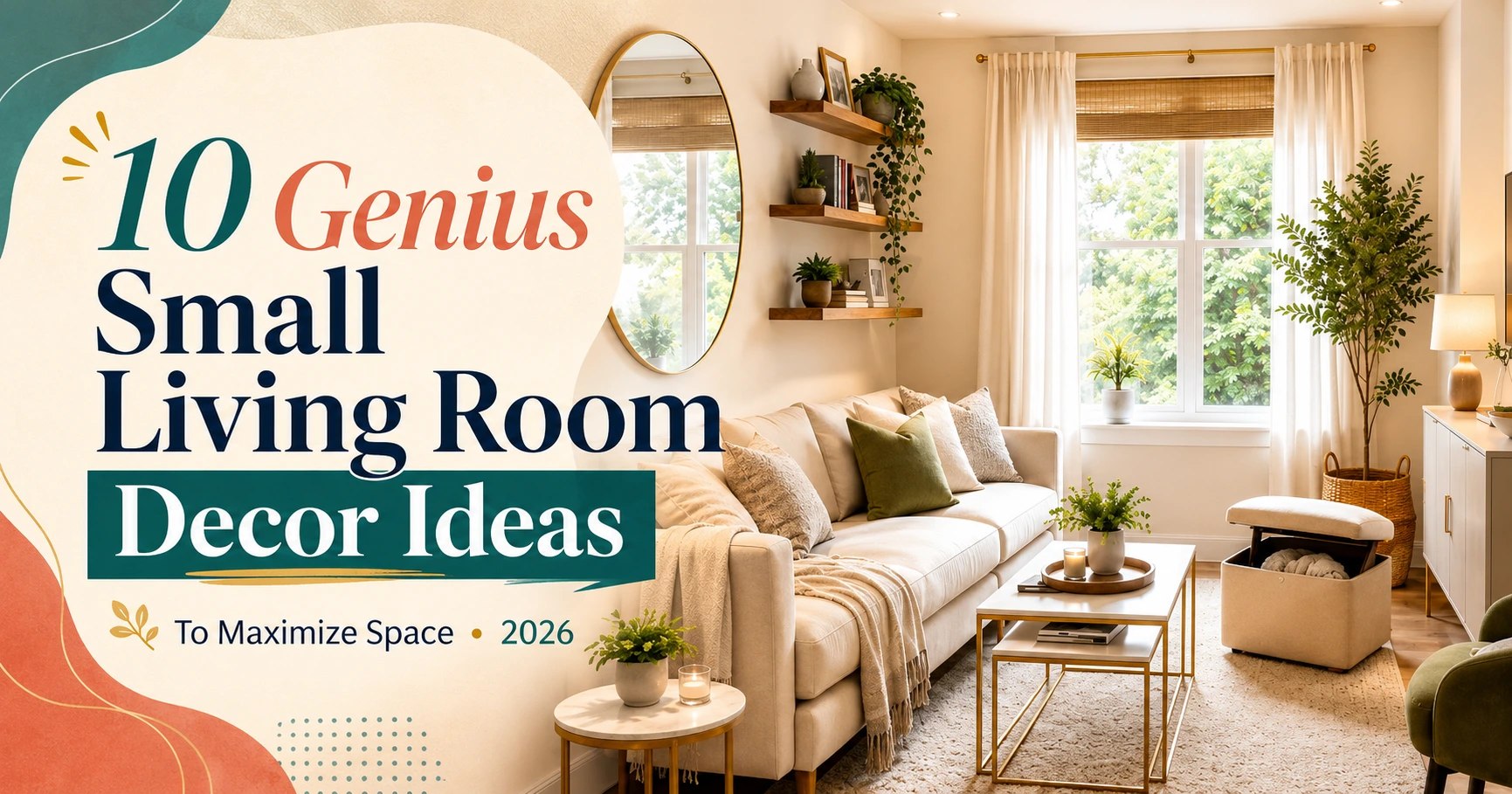
You don’t need a big home to get this look. In fact, small spaces often suit minimalist cozy interiors even better. My guide to small living room decor ideas to maximize space goes deeper on layouts for tight rooms.
15. Pick Multi-Purpose Furniture
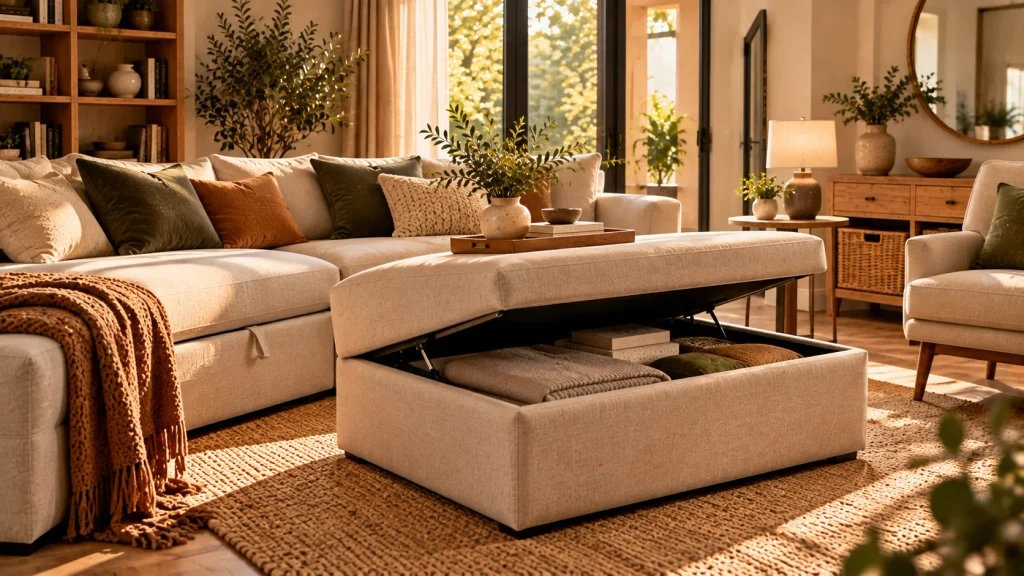
A storage ottoman, a bench with a shelf underneath, or a bed with built-in drawers keeps clutter out of sight while still looking calm. I chose a storage ottoman for my own living room, and it replaced a coffee table, a basket, and a footstool in one go. Measure the space first, and don’t buy more than two or three multi-purpose pieces per room, or the room starts to feel crowded again. IKEA and Target have many options between $60 and $250.
16. Use Mirrors and Warm Light to Make the Room Feel Bigger
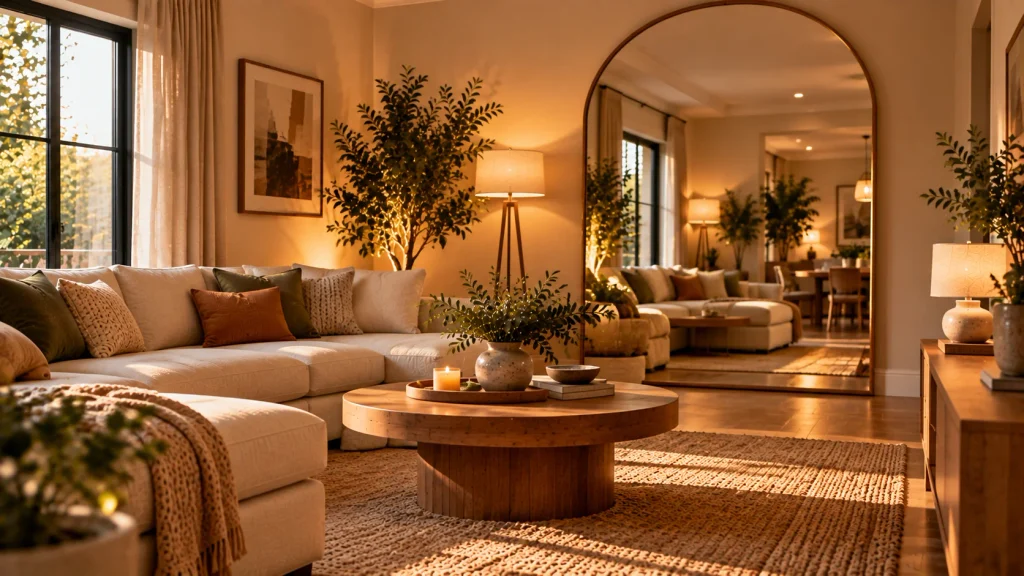
One large mirror opposite a window bounces natural light around the room. Pair it with a warm lamp in the evening and a small room feels open instead of cramped. Check what the mirror reflects before you hang it, because a mirror facing a messy corner doubles the mess. A simple round or arched mirror from IKEA or HomeGoods costs roughly $40 to $150.
17. Make Rental-Friendly Swaps You Can Take With You
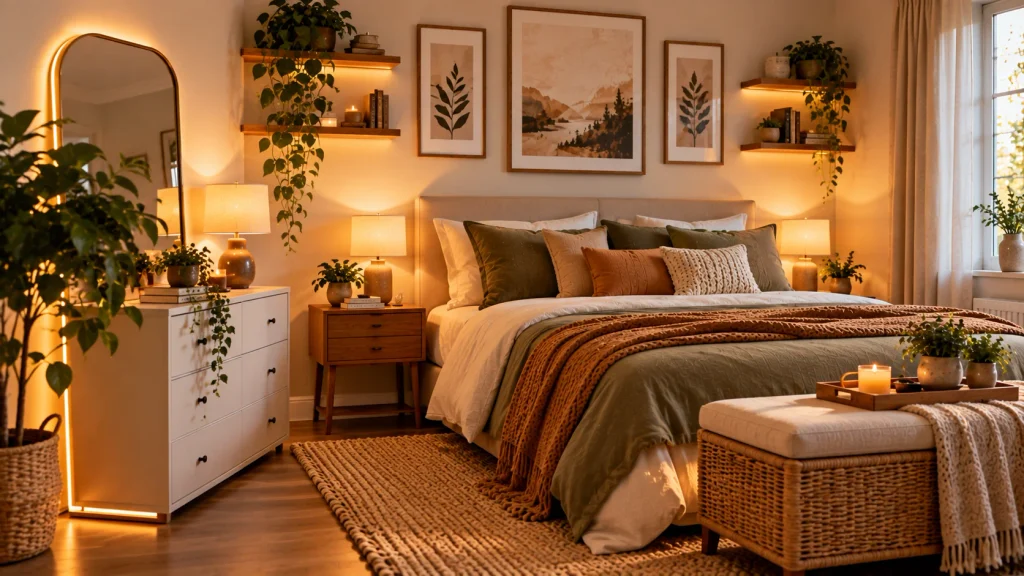
If you rent, you can still get the full minimalist aesthetic without touching the walls. Swap your light bulbs for warm ones, add a plug-in wall lamp, lay down a rug, and use removable hooks for art. These changes are cheap, reversible, and they make a bigger difference than most people expect. Check the weight limit on any removable hook before you hang a frame.
Common Mistakes That Make Minimalist Spaces Feel Cold
After helping a few friends with their homes, I see the same mistakes again and again:
- Too much gray. Cool gray everywhere makes a room feel sterile, so lean toward warm neutrals.
- One light source. A single ceiling fixture will flatten any room.
- No texture. A room with only smooth surfaces looks good in a photo but feels empty in person.
- Removing everything personal. Minimalism doesn’t mean no personality. Keep a few things you love.
- Buying too fast. Fewer pieces means each one matters more, so take your time.
Where to Shop for Minimalist Cozy Interiors on a Budget
- IKEA: simple furniture, lamps, rugs, and textiles at low prices.
- Target (Threshold, Hearth & Hand): neutral decor, bedding, and small furniture pieces.
- West Elm and Pottery Barn: investment pieces like sofas and bedroom furniture. Watch for seasonal sales.
- HomeGoods: ceramics, lamps, and throws that look far more expensive than they are.
- Thrift stores and Facebook Marketplace: solid wood pieces at a fraction of the price.
Frequently Asked Questions
What is cozy minimalism? Cozy minimalism keeps the clean lines and low clutter of minimalist design but adds warmth through soft textures, warm neutral colors, natural materials, and layered lighting. Think fewer objects, but ones that feel inviting, like a linen sofa, a wool throw, and a warm lamp instead of bare surfaces and cold white walls.
How has minimalist design evolved? Minimalist design started with very clean, bare, and often cool-toned spaces. Over time it has softened, with more natural textures, earthy neutrals, and cozy details, which is exactly what minimalist cozy interiors are about. The goal is still a calm, uncluttered home, with more comfort and personality added in.
How do I make a minimalist room feel cozy without adding clutter? Focus on a few things that add warmth instead of many small objects. Choose warm neutral colors, add two or three textures like linen, wool, and wood, and layer your lighting at different heights. Pick a few larger, meaningful pieces over lots of small ones, and keep one or two personal objects on display, like a framed print or a ceramic bowl you love.
What colors work best for minimalist cozy interiors? Cream, warm white, beige, oatmeal, soft taupe, and light greige work best. Small accents in terracotta, olive green, or muted brown add depth without breaking the calm look.
Can this style work in a small apartment? Yes, and it often works better in small spaces. Fewer, multi-purpose pieces and warm layered lighting make a small room feel bigger and more comfortable.
Final Thoughts
Minimalist cozy interiors work because they ask you to slow down and choose with care. Start with one room, add one warm texture and one softer light source, then notice how it changes the feel of the space. You don’t need to redo everything at once.
If I had to pick just one place to begin, I’d start with the bedroom, since a calm, cozy bedroom changes your mornings and evenings the most. And if you’re working with a tight budget, my guide to making your home look luxury on a budget pairs well with this list. Pin your favorite ideas from this list, and tell me in the comments which room you’re tackling first.

Emily Johnson writes about affordable home styling and budget-friendly decor for Pretty Home. She focuses on practical, easy-to-follow ideas that help homeowners and renters create beautiful, high-end looking spaces without overspending.