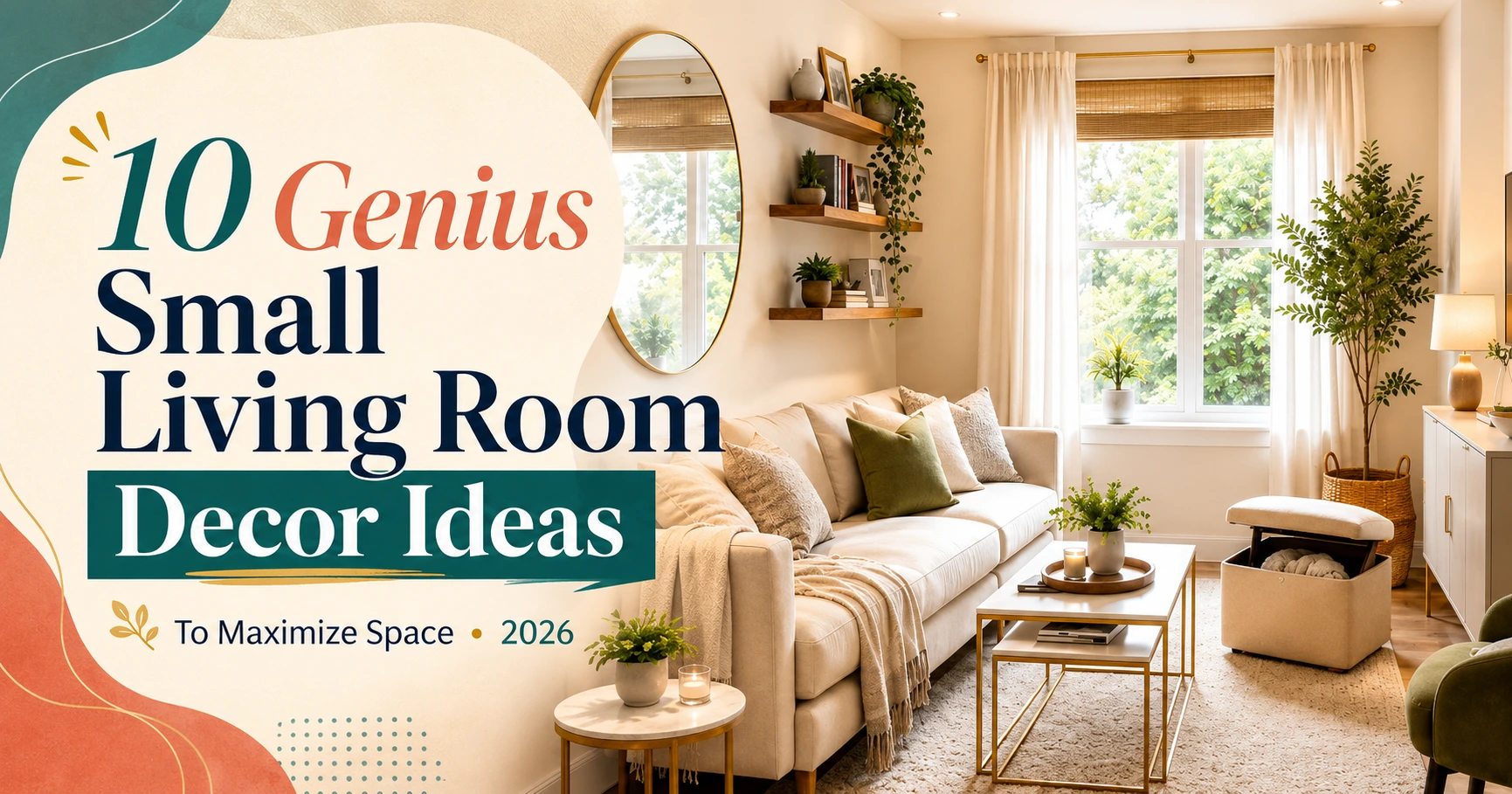
The best small living room decor ideas start with one rule: fix the layout before you buy anything. In a compact room, a sofa that’s just a few inches too long can block your walking path and make the whole space feel cramped, no matter how good it looks online.
If your living room feels tight, you’re not alone. According to HireAHelper, the average U.S. studio is about 440 square feet and a one-bedroom is about 804 square feet, and studios and one-bedrooms together make up roughly 46% of U.S. rentals. The good news is that you rarely need a renovation. A smart layout, multi-purpose furniture, light colors, and layered lighting do most of the work.
In this guide, you’ll find 10 practical ideas covering layout, color, lighting, storage, and styling, with measurements and simple guidelines you can check against your own room.
1. Start With a Layout, Not a Shopping List
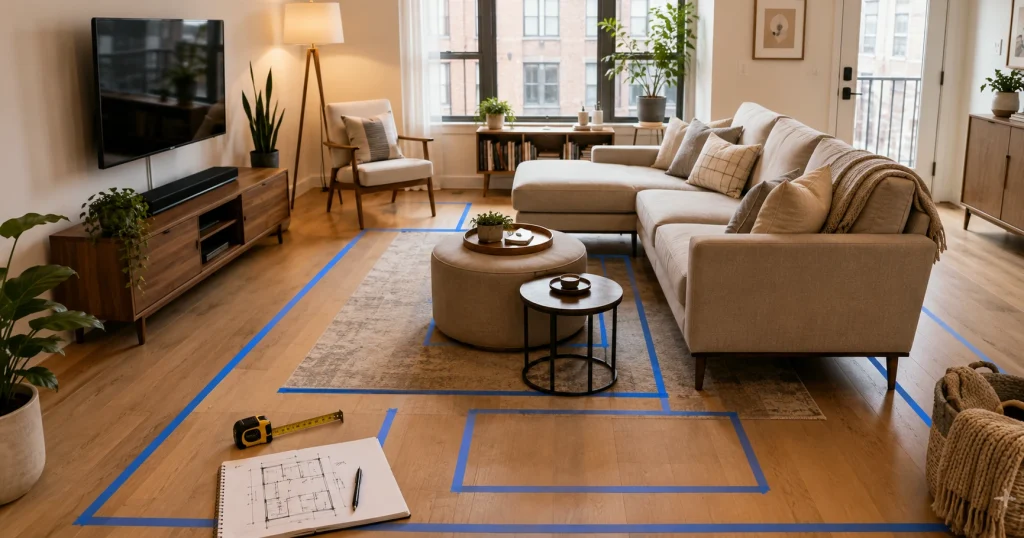
A layout is the foundation of every small living room idea in this guide. If the layout is wrong, even beautiful furniture will make the room feel cramped. So measure first, shop second.
Step 1: Measure the room and the path
Write down the room’s width and length, plus the position of doors, windows, and radiators. Then plan a clear main walkway. Interior design guidelines commonly recommend about 30 to 36 inches of open path, wide enough to walk through without turning sideways.
Step 2: Tape it out before you buy
Use painter’s tape on the floor to outline the footprint of your sofa, coffee table, and TV stand. It takes about ten minutes and shows you right away if a piece is too long, too deep, or blocking the path, before you pay for delivery or a return.
Step 3: Do the math with a real example
Here is how the numbers work in a sample room (this is an example, not a specific home):
- Room width: 12 ft (144 in.)
- IKEA KLIPPAN loveseat: about 69⅝ in. wide, 34⅝ in. deep, 26 in. high
- Space left along that wall: roughly 74 in., enough for a slim side table and a clear walkway
Now compare that with an 84-inch sofa in the same room. You would have 60 inches left, which is tight once you add a side table. Small differences in sofa width decide whether a room feels open or crowded.
Furniture placement guidelines
| Element | What to aim for | Why it matters |
|---|---|---|
| Main walkway | 30–36 in. clear | You can cross the room without squeezing past furniture |
| Sofa to coffee table | About 14–18 in. | Close enough to reach, far enough to walk past |
| Sofa size | Loveseat or compact sofa, under about 72 in. wide | Leaves the center of the room open |
| Storage | Ottoman or coffee table with built-in storage | Seating or a surface plus hidden storage in one piece |
A compact sofa worth checking: IKEA KLIPPAN loveseat
KLIPPAN is a long-running IKEA loveseat with a removable, machine-washable cover. Its regular price was listed at $349 for the gray cover on IKEA’s U.S. site, while other covers cost more (the black cover was listed at $449). Prices change often, so check IKEA’s current price before you buy.
Pro tip: If your walkway allows it, try pulling the sofa a few inches off the wall or angling one chair slightly. This can break up the boxed-in look of furniture lined along every wall. In a very narrow room, keep the sofa against the wall to protect your walking path.
Before you order any sofa, also measure doorways, hallways, and stairs. A sofa that fits the room but not the entrance is a common and expensive mistake.
2. Choose a Color Palette That Opens the Room Up
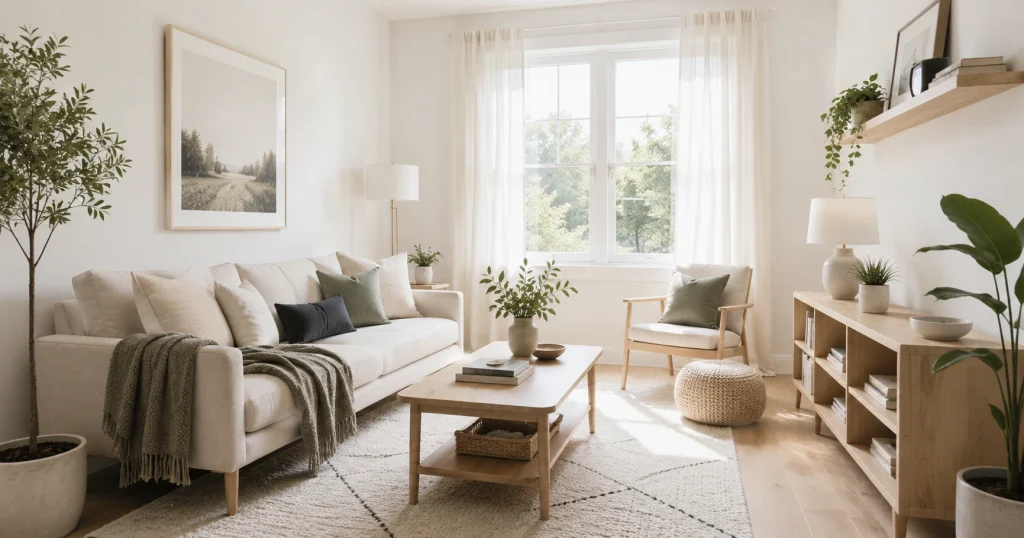
Paint is one of the lowest-cost small living room decor ideas, because you change the whole feel of the room without buying a single piece of furniture. The reason light colors work comes down to one number: LRV.
What LRV means and why it matters
LRV stands for Light Reflectance Value. It is a scale from 0 (absorbs all light, like black) to 100 (reflects all light, like pure white). The higher the number, the more light a color bounces back into the room. In a small living room with limited natural light, that bounced light makes walls feel like they step back instead of closing in.
For example, Benjamin Moore lists Simply White (OC-117) at an LRV of 89.52, which puts it among the highest-reflecting whites in its range. Most paint brands list the LRV on the color’s product page or on the back of the paint chip, so you can compare options before you buy.
Light shades to try
| Shade | Best for | Watch out for |
|---|---|---|
| Soft white | Rooms that need to feel as bright as possible | Can look stark in cool, north-facing light |
| Warm beige | Cozy rooms with warm wood or fabric tones | Some beiges turn yellow or pink at night |
| Light gray | Modern rooms and cool-toned furniture | Can feel cold in rooms with little sun |
| Sage green | Adding color without darkening the room | Pick a pale, gray-leaning sage so it stays light |
How to test a color before you commit
- Buy a sample and paint a large patch (about 2 by 2 feet) on two different walls.
- Check it in the morning, at midday, and in the evening with your lamps on. The same color can look very different in each light.
- Look at it next to your sofa, floor, and curtains, since those will change how the color reads.
Pro tip: Many designers suggest painting the trim and ceiling in the same color or a lighter shade, because fewer contrasting lines can make a small room look more continuous. A satin or eggshell finish also reflects slightly more light than a flat finish, but it shows wall imperfections more, so check your walls first.
Why Scandinavian-style rooms use this approach
The Scandinavian look relies on pale walls, natural wood, and simple furniture to keep rooms feeling bright and calm. You don’t need to copy the whole style. Borrowing the light wall color and one or two wood tones is enough to get the same open feeling.
Love dark colors? Use them in small doses
You don’t have to avoid dark colors completely. Use them where they add depth without taking over the room:
- A dark accent wall behind a bookshelf or TV unit
- Patterned or deep-colored cushions
- A bold rug that anchors the seating area
Keep the walls around them light, and the room keeps its personality without feeling smaller.
3. Invest in Multi-Functional Furniture
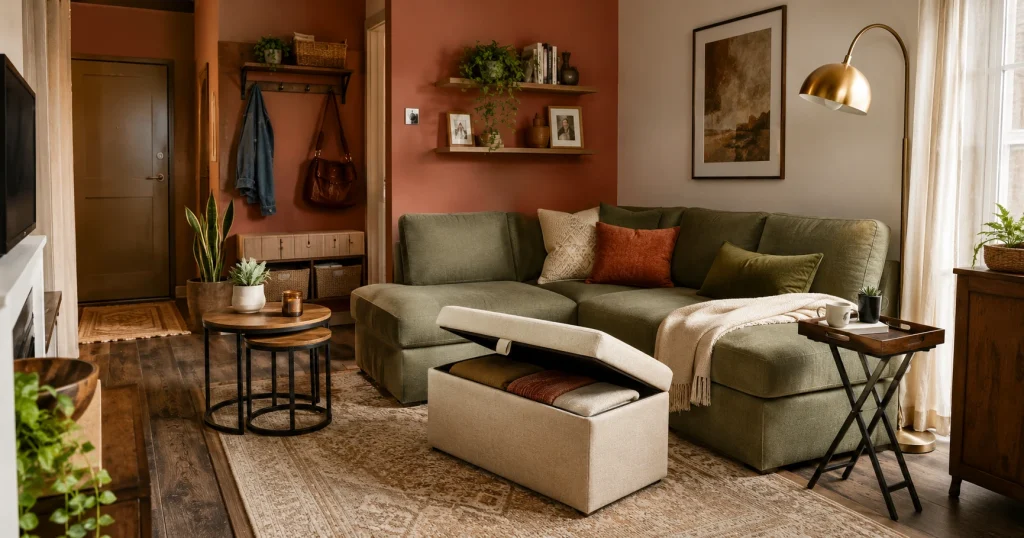
When floor space is limited, every piece should earn its spot by doing more than one job:
- Storage ottoman — doubles as a coffee table, extra seating, and hidden storage for blankets. Prices vary widely by size and material, so compare current listings.
- Sofa bed or daybed — turns your living room into an occasional guest room. Check the opened size, not just the folded size, because a pull-out takes much more floor space when in use. Prices vary widely by brand, so compare current listings.
- Nesting tables — pull apart for movie night, tuck together the rest of the time.
- Foldable side tables — disappear entirely when not in use.
Swapping a fixed coffee table for a storage ottoman is one of the easiest ways to free up floor space, because it adds seating and storage in the same footprint.
Common mistake to avoid: shopping by how furniture looks in a showroom instead of how it fits your actual room. Measure first, then shop with those numbers in hand.
If you’re considering a sectional, it can absolutely work in a small living room — but only a compact model with the corner against a wall, not floating in the middle of the room.
4. Maximize Vertical Space With Wall Storage
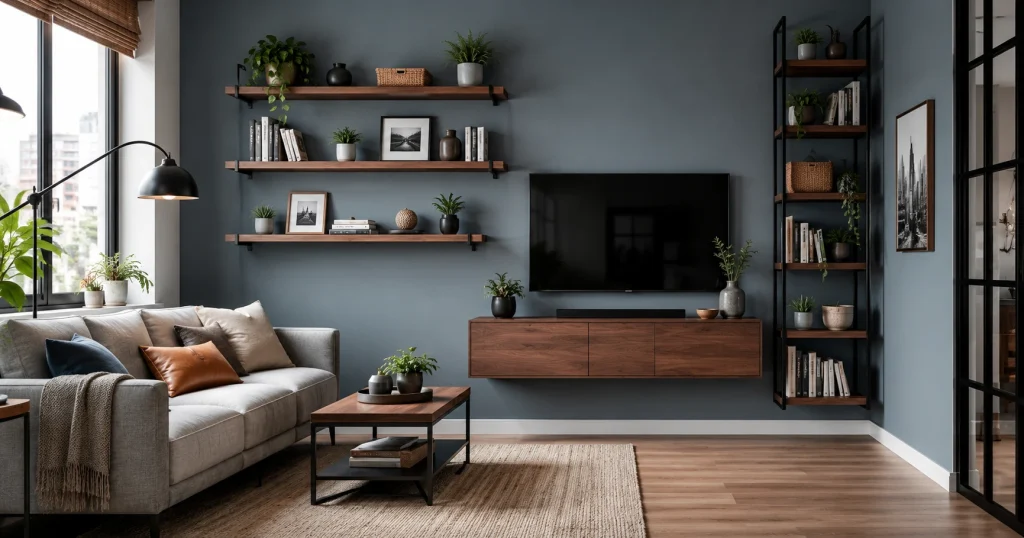
Walls are one of the most underused resources in a small living room. Floating shelves, wall-mounted cabinets, and tall narrow bookcases store books, decor, and media equipment without eating floor space.
A good rule of thumb: shelves or cabinets under about 12 inches deep are barely noticeable but hold a surprising amount: books, small plants, framed photos, baskets for loose items. Before you buy, compare each shelf’s depth and weight limit, and mount heavy loads into wall studs or use anchors rated for the weight.
5. Layer Your Lighting — Don’t Rely on One Overhead Fixture
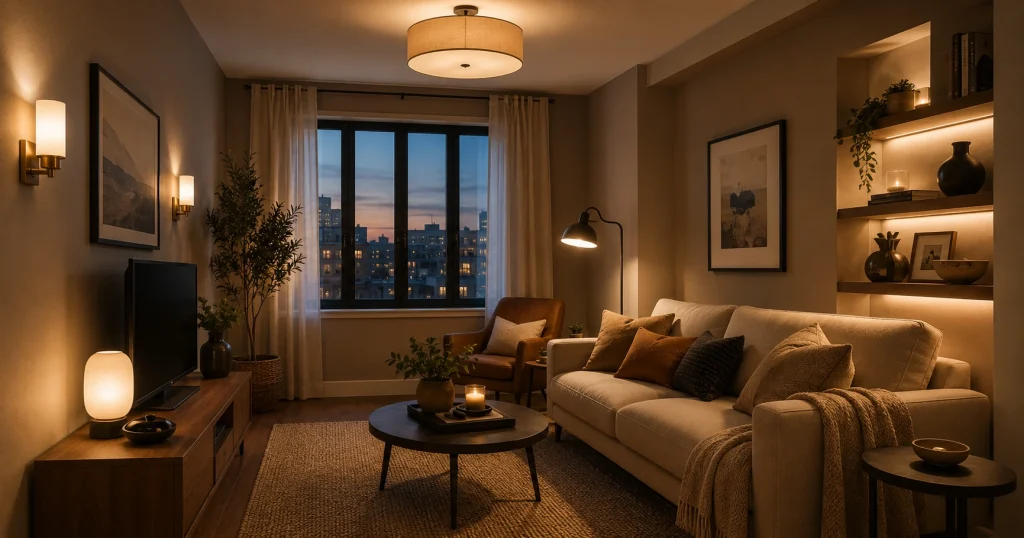
A single overhead light can make a room feel flat. Instead, aim for three light sources at different heights: ambient (ceiling), task (a floor lamp or wall-mounted reading lamp), and accent (sconces or shelf lighting).
| Type | Where to Use | Effect |
|---|---|---|
| Ambient | Ceiling fixture | Base illumination for the room |
| Task | Floor lamp or wall-mounted reading lamp | Adds function, saves floor space if wall-mounted |
| Accent | Wall sconces, shelf lighting | Depth and a cozier feel |
Warm white bulbs, generally in the 2700K–3000K range, tend to feel more inviting in a living room than cooler daylight bulbs, which read closer to office lighting than home lighting. The Kelvin number is printed on the bulb’s packaging, and a dimmer lets you adjust the mood through the day. If you rent, plug-in wall sconces give you wall-level light without any wiring.
6. Use Mirrors and Curtains to Trick the Eye
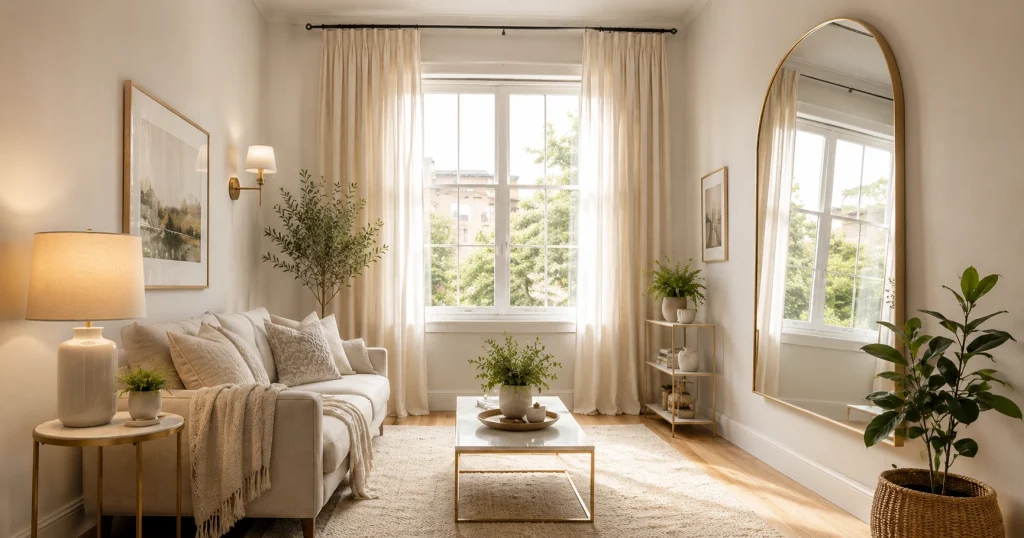
A mirror placed directly across from a window bounces natural light across the room and can make a small space feel brighter. A large mirror, such as an arched or full-length one, usually has the biggest effect.
| Placement | Effect |
|---|---|
| Opposite a window | Reflects daylight deeper into the room |
| Side wall | Visually expands the width of the room |
| Behind the sofa | Adds a sense of depth |
A mirror reflects whatever is in front of it, so check what it will show before you hang it. A view of a window, a plant, or a shelf looks great, but a mirror facing clutter or a bare corner just doubles it. Also make sure it won’t bounce direct sunlight into your eyes or onto the TV. Heavy mirrors should be mounted with anchors rated for their weight, or into wall studs.
Hanging curtains closer to the ceiling — rather than right above the window frame — also tricks the eye into perceiving taller walls, making the whole room feel more spacious.
7. Declutter With Hidden Storage
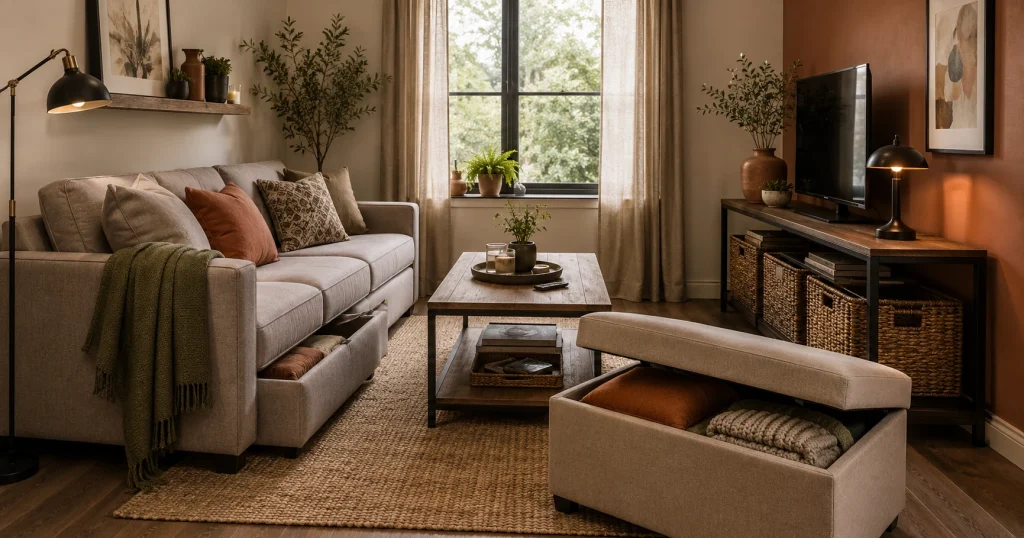
Clutter is one of the fastest ways to make a small living room feel even smaller. In tight spaces, hidden storage is often a better choice than open, decorative storage, because it keeps everyday items out of sight without needing extra floor space:
- Sofas or ottomans with built-in compartments
- Baskets that slide under console tables
- A coffee table with a lower shelf for remotes, magazines, or games
The goal isn’t to remove everything. It’s to give everyday items a place to go. Keep the things you use daily in the easiest-to-reach spot, and store seasonal items, like extra blankets, in the harder-to-reach compartments. A simple “one in, one out” habit also stops new items from piling up again.
8. Add Personality Without Visual Noise
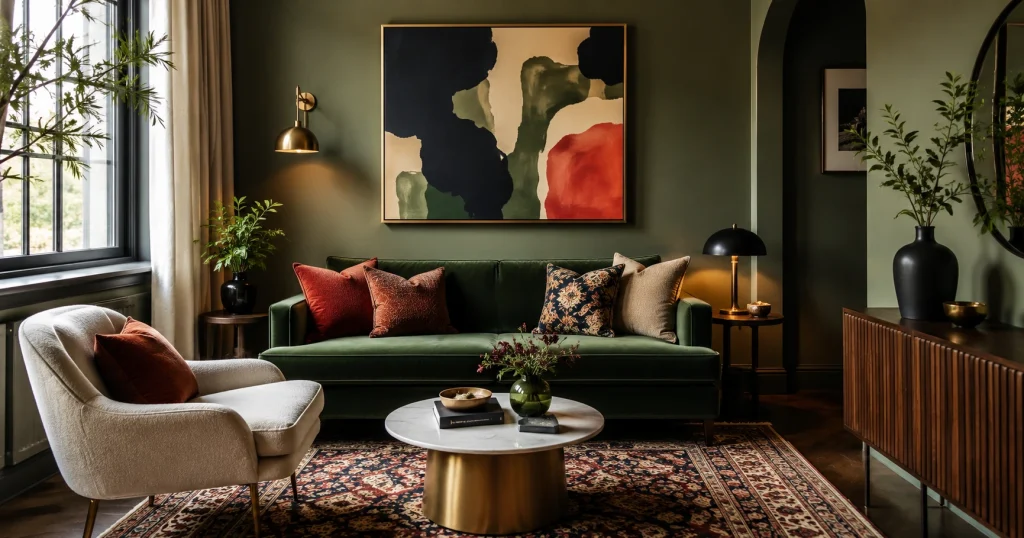
Small rooms can absolutely have personality. One or two pieces of statement art, a textured rug, or a coordinated set of throw pillows add warmth without clutter.
The mistake to avoid: layering too many patterns or small decorative pieces at once. In a small room, a handful of well-chosen items reads as “curated,” while too many small items read as cluttered, even if each piece is nice individually.
A few simple guidelines help:
- Pick one focal point, such as one large piece of art above the sofa, and keep the rest of the decor quieter.
- Art above a sofa is commonly recommended at about two-thirds the width of the sofa, hung with its center near eye level (around 57 inches from the floor).
- Stick to one or two patterns and repeat your wall color in the pillows or rug so everything feels connected.
- Use fewer, larger items instead of many small ones.
9. Zone the Room for Multiple Uses
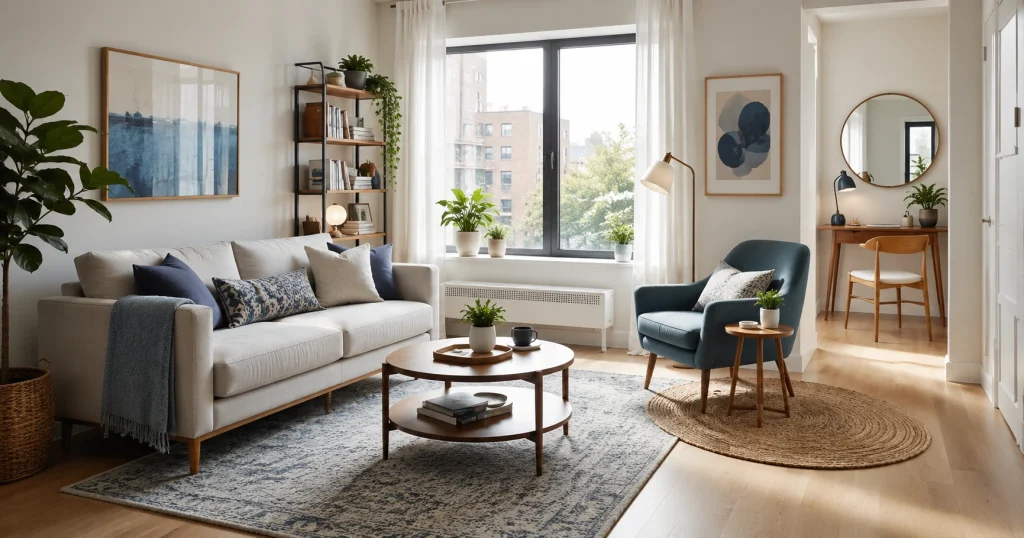
Even a single-room apartment can feel like it has distinct areas. A rug defines a seating zone. A floor lamp and a single chair angled away from the main seating area create a small reading nook. This kind of zoning is one of the more underrated small living room decor ideas because it makes the space feel intentional rather than like one undivided block of furniture.
A few simple guidelines make zoning work:
- Choose a rug large enough that at least the front legs of your sofa and chairs sit on it. A rug that is too small makes the room look smaller.
- For a reading nook, you only need three things: a comfortable chair, a lamp, and a small side table or wall shelf for a book and a drink.
- Keep your main walkway clear between zones, so each area feels separate without blocking movement.
- Use one visual cue per zone, such as a rug, a lamp, or a change of wall color, instead of adding extra furniture.
10. Edit Before You Decorate
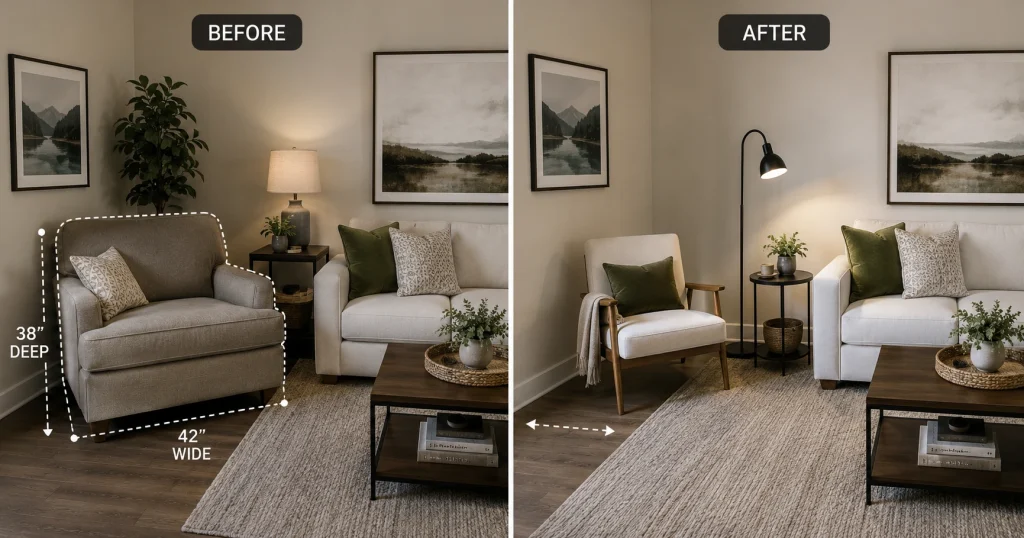
Before adding anything new, take an honest look at what’s already there. It’s common for small living rooms to have one oversized piece that doesn’t fit the scale of the room: an armchair that’s too deep, a coffee table that’s too large. Removing or swapping just one oversized item can often open up more visual space than a new purchase.
How to spot the piece that’s too big:
- Check the walkways. If you have to turn sideways to pass a piece, it’s too large for the room.
- A coffee table is commonly recommended at about two-thirds the length of the sofa. Anything much larger takes over the seating area.
- Try the one-week test: move the piece out of the room (or into another room) for a week and see how the space feels before you decide to replace it.
- If you do replace it, choose a slimmer version with visible legs, since seeing the floor underneath makes furniture look lighter.
Conclusion
A small living room isn’t a limitation, it’s a chance to be intentional with every choice. Focus on a functional layout, a light and cohesive color palette, smart storage, and layered lighting, and the room can feel more open without a full renovation. If you’re working on other tight spaces in your home, these same principles carry over well into a small dining room or even a small kitchen, and if budget is the main constraint, our guide on making your home look luxury on a budget goes deeper into stretching a small budget across a whole home.
Frequently Asked Questions
How do you decorate a very small living room?
Start with what you already own — rearranging existing furniture with the layout tips above solves part of the problem for free. Then prioritize one or two higher-impact purchases, like a well-placed mirror or floating shelves, before spending on decorative extras.
What is the 3-5-7 rule of decorating?
It’s a styling principle where objects are grouped in odd numbers — three, five, or seven — because odd-numbered groupings tend to look more natural and balanced than even ones, especially on shelves or coffee tables.
What is the 2/3 rule for a living room?
There is no single official “2/3 rule” for living rooms, and definitions vary. In small living rooms it is most often used for sizing: art about two-thirds the width of the sofa, and a coffee table about two-thirds the length of the sofa.
Is a sectional sofa a good choice for a small living room?
Yes, as long as it’s a compact model positioned with its corner against a wall rather than floating in the middle of the room. An oversized sectional in a small space will usually block walking paths and make the room feel tighter, not bigger.
How can I make a small living room look expensive without a big budget?
Focus on cohesion rather than cost — a matching color palette, one or two quality lighting fixtures, and decluttered surfaces read as “designed” even when most of the furniture is budget-friendly.
What’s the biggest mistake people make with small living room decor?
Buying furniture before measuring the room. A piece that looks perfect online can completely block your walking path in real life, which is why taping out the layout first helps.

Emily Johnson writes about affordable home styling and budget-friendly decor for Pretty Home. She focuses on practical, easy-to-follow ideas that help homeowners and renters create beautiful, high-end looking spaces without overspending.