How to make your home look luxury on a budget mostly comes down to a few basics: better lighting, smarter color choices, and a few well-placed pieces instead of expensive furniture. A room doesn’t need a big budget to feel high-end; it’s the choices, not the price tags, that do most of the work.
This guide breaks down 10 practical, budget-friendly upgrades that suit American homes and apartments, with price ranges and product ideas for each.
Why Luxury Doesn’t Have to Be Expensive
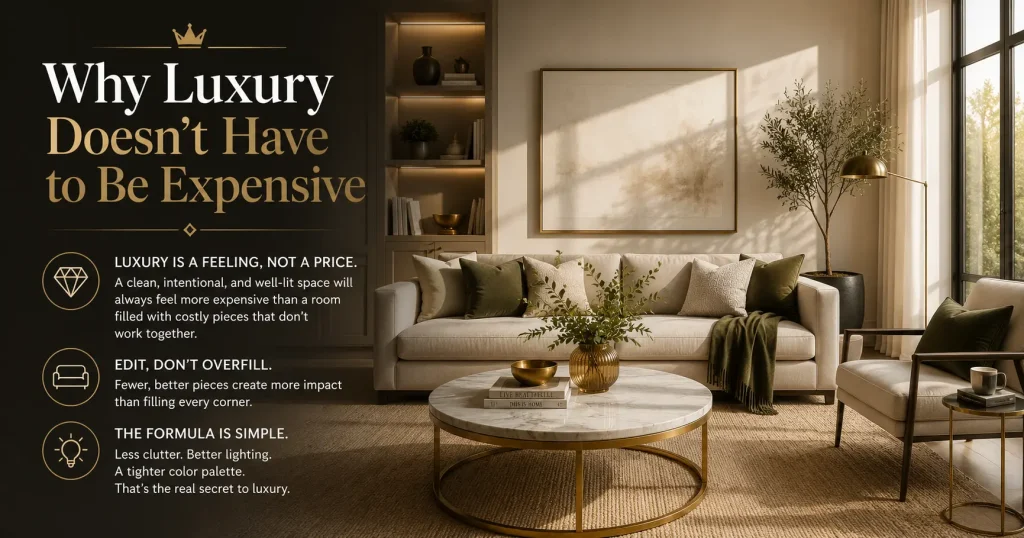
Luxury is mostly about how a room is put together, not what it costs. A room that’s clean, intentional, and well-lit often looks more expensive than one crammed with pricey furniture that doesn’t work together. Designers often call this “editing”: choosing fewer, better pieces instead of filling every corner.
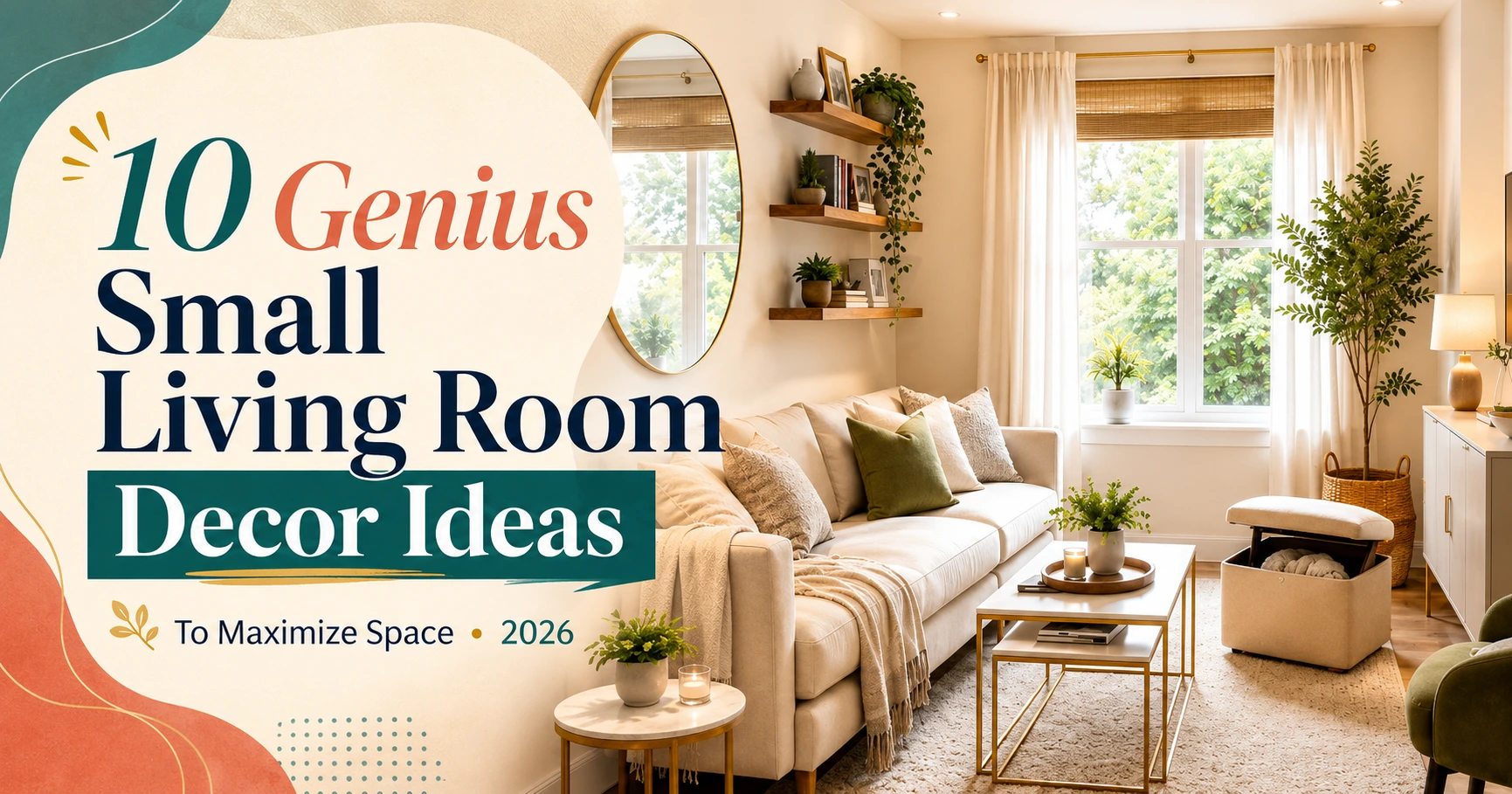
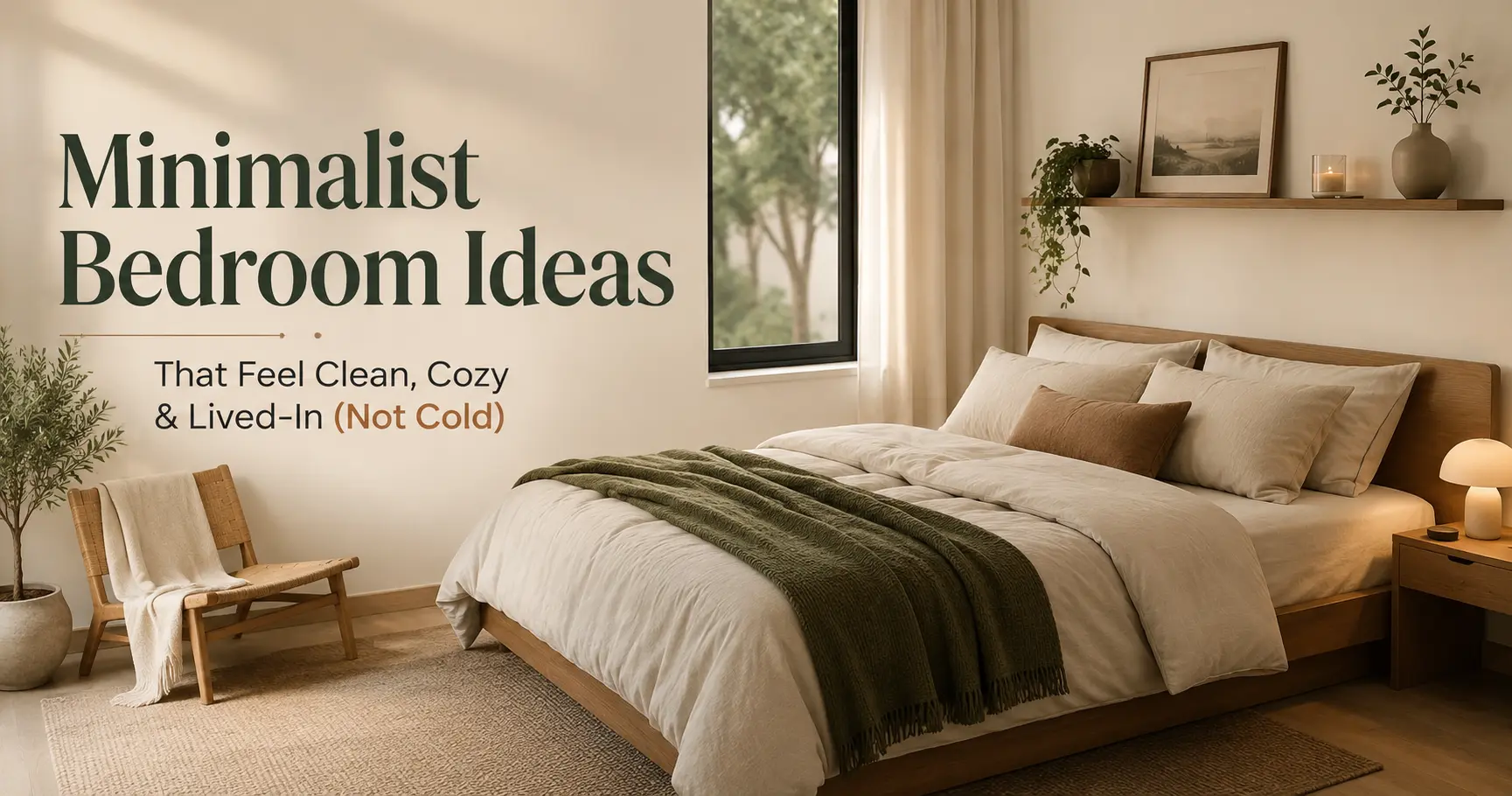
If you’re also working on other rooms, the same idea applies whether you’re setting up a small living room or a minimalist bedroom: less clutter, better lighting, and a tighter color palette usually do more than adding extra decor.
1. Declutter First — It’s Free, and It Works Immediately
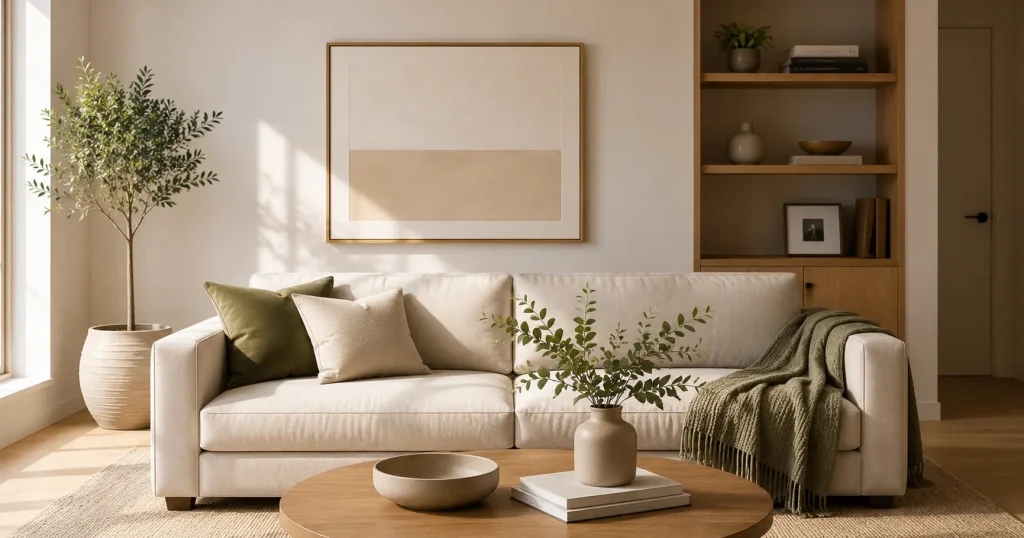
Before spending a single dollar, clear your surfaces. Countertops, coffee tables, and shelves look best with just 2-3 objects out, not ten. Hotel rooms often feel high-end partly because nothing is left out that doesn’t serve a purpose.
How to do it cheaply: A set of three woven baskets from Target starts at about $43 and can absorb remote controls, mail, and everyday clutter in under an hour. As a rule of thumb, donate or store anything you haven’t used in 6 months.
2. Stick to a Neutral, Cohesive Color Palette
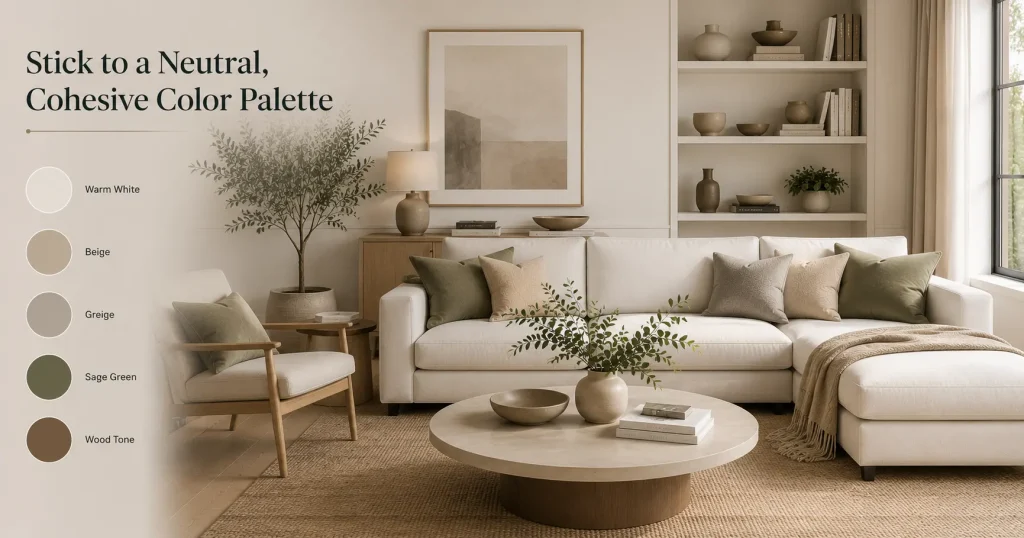
A simple way to keep a room looking polished is to stick to about 3 colors: a dominant neutral (white, warm beige, or greige), a secondary tone, and one accent color. The 60-30-10 rule (60% dominant color, 30% secondary, 10% accent) helps keep a space from feeling busy or mismatched.
Budget move: A gallon of warm white or greige paint, like Behr “Swiss Coffee” at about $29-$39 per gallon at Home Depot or Sherwin-Williams “Agreeable Gray” at roughly $45-$85 per gallon depending on the line, can unify a room with mismatched wall colors or trim.
3. Upgrade Your Lighting — the Single Biggest Change You Can Make
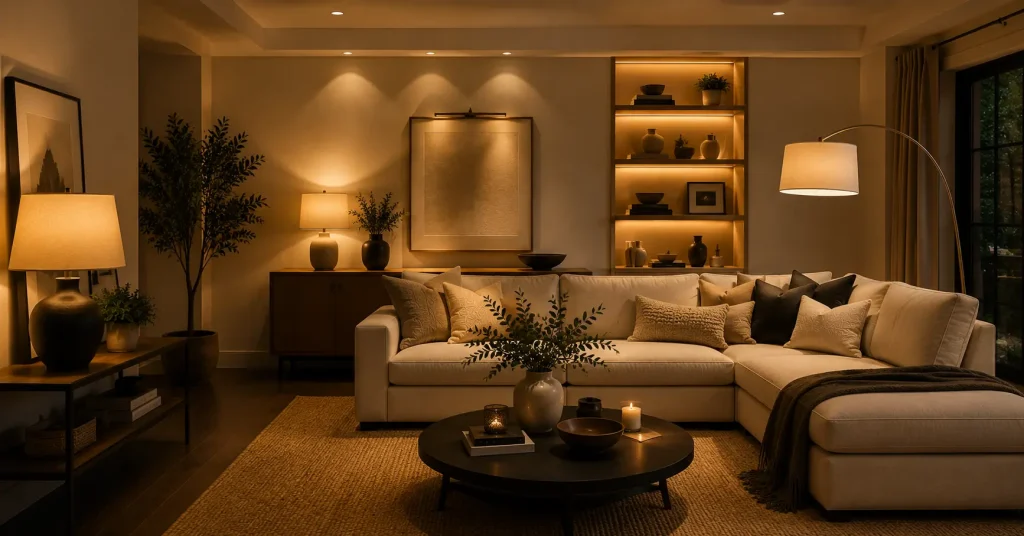
Harsh overhead lighting can make a room feel flat. Warm-toned bulbs (2700K-3000K) give off a soft glow similar to traditional incandescent bulbs, while bright white/blue-toned bulbs (5000K+) tend to feel clinical in living spaces. The ENERGY STAR program notes that LED bulbs use at least 75% less energy than incandescent bulbs, so switching also saves money on your electric bill over time.
Budget move: Add one floor lamp ($17-$46 at Walmart) and one or two table lamps ($13-$43 each) so the light comes from multiple heights rather than a single ceiling fixture. This “layered lighting” makes a room feel warmer than a single ceiling fixture does.
4. Add One Properly Sized Area Rug
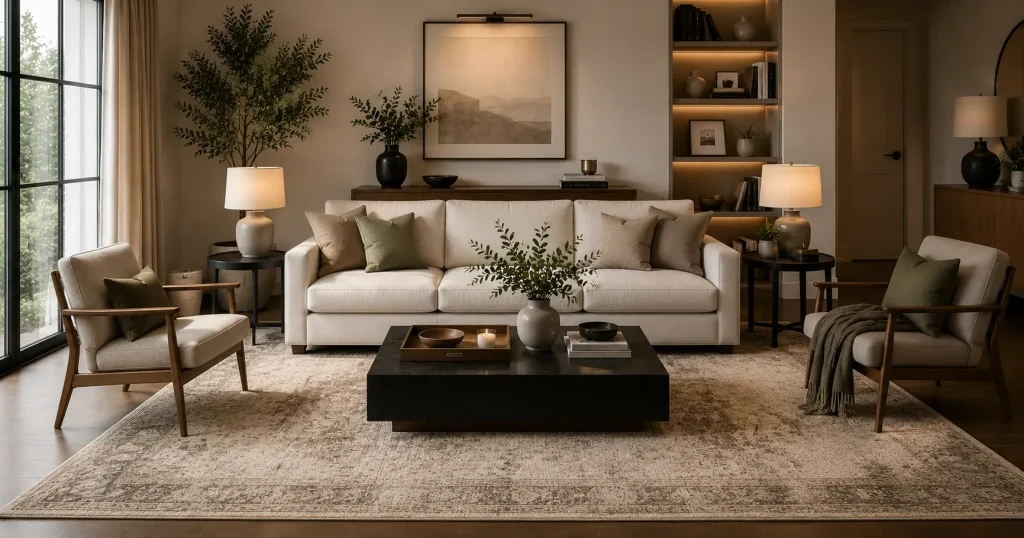
An undersized rug is one of the most common reasons a room feels unfinished. The rug should be large enough that at least the front legs of your furniture sit on it — for a standard living room, that usually means 8×10 ft; for a bedroom, 8×10 or 9×12 under the bed.
Budget move: Ruggable, Rugs USA, and IKEA all carry 8×10 rugs in the $80-$180 range that look far more expensive than their price once placed correctly under furniture.
5. Layer Textures, Not Just Colors
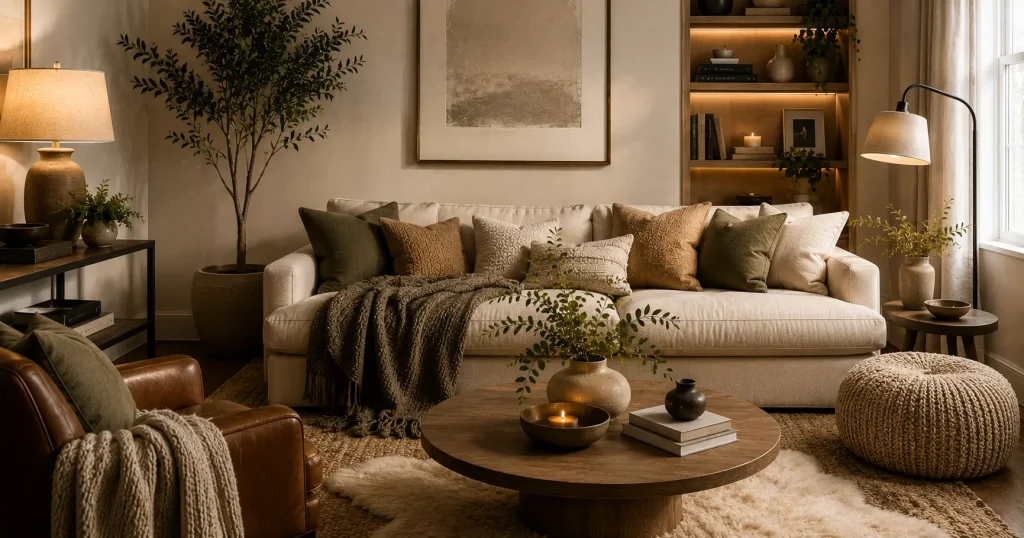
Mixing materials (a wool throw, a linen pillow, a wood side table, a metal lamp base) adds visual depth and keeps a room from feeling flat. A room painted in one neutral color can still look boring if every surface has the same texture.
Budget move: 2-3 textured throw pillows or pillow covers ($7-$13 each) and one chunky-knit throw blanket (about $20-$23) add this layered look to a plain sofa.
6. Choose One Large Statement Piece Over Several Small Ones
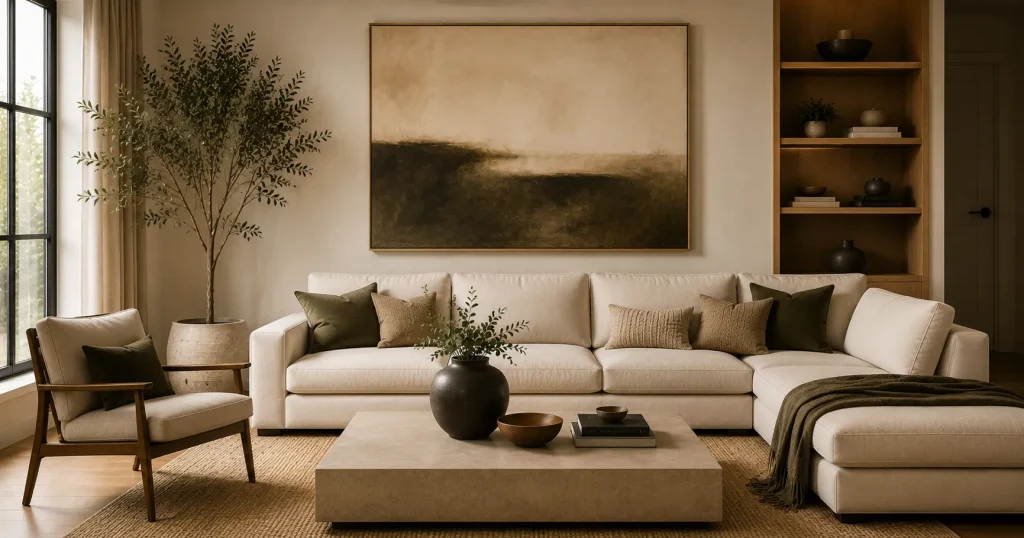
A single large piece of wall art (24×36 inches or bigger) tends to look intentional. A cluster of small, mismatched frames can look cluttered instead. Galleries and museums typically hang art at eye level, roughly 57 inches from the floor to the center of the piece. Above a sofa, leave about 6-12 inches between the furniture and the bottom of the frame.
Budget move: A framed 24×36-inch canvas print from budget sellers like wall26 starts at about $73 at Walmart, enough to anchor the wall above a sofa.
7. Hang Curtains Close to the Ceiling, Not Just Above the Window
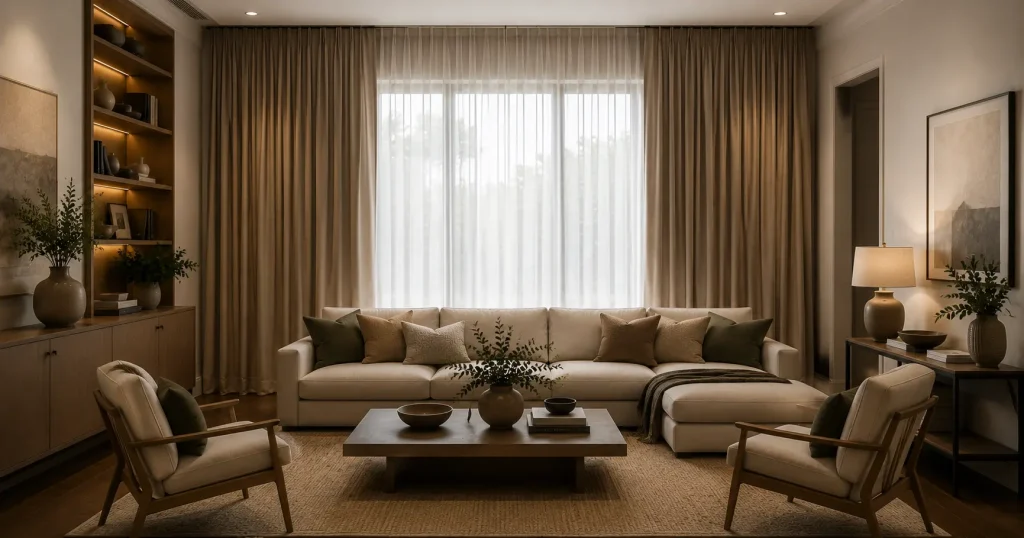
This is one of the cheapest tricks: mounting curtain rods higher than the window frame (4-6 inches above it, or about halfway up toward the ceiling) makes ceilings look taller and rooms feel more spacious. It’s a common staging trick.
Budget move: A basic adjustable curtain rod (about $17 at Walmart) plus two linen-blend curtain panels (about $14-$15 each) achieves this for roughly $45-$50 per window. Choose 95-inch panels so they still reach the floor when the rod is hung higher.
8. Use Mirrors to Add Light and Depth
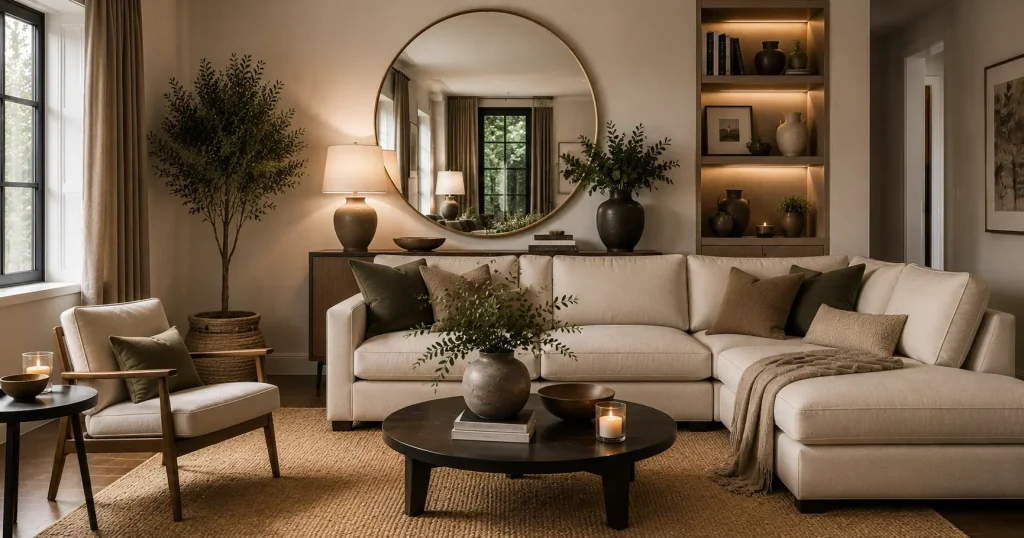
A well-placed mirror reflects both natural and lamp light, which can make small rooms feel bigger and brighter, especially in apartments with limited windows. Placing a mirror opposite a window or light source usually gives the biggest effect.
Budget move: A 30×40-inch metal-framed mirror starts at about $38-$41 at Walmart, with prices going up to $100 or more depending on the frame. Secondhand mirrors on Facebook Marketplace are another budget option.
9. Bring in Real Wood and Live Plants
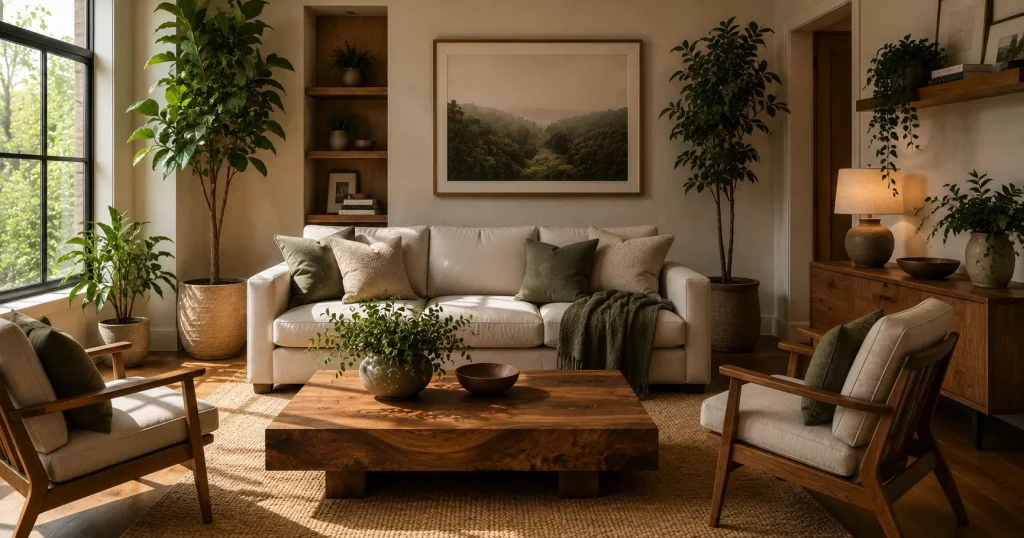
Natural materials (wood, rattan, live greenery) soften a room and help keep it from feeling like a showroom. Even one or two plants can add noticeable warmth.
Budget move: Low-maintenance plants like pothos or snake plants need little care and add life to an empty corner. A 6-inch snake plant costs about $19 at Home Depot (sold as a 2-pack for about $38), while a pothos in a decorative ceramic pot runs closer to $45. For wood, a thrift-store or Marketplace side table or tray adds the same warmth. Both plants are toxic to cats and dogs if eaten, so keep them out of reach of pets.
10. Upgrade Small Hardware and Accessories
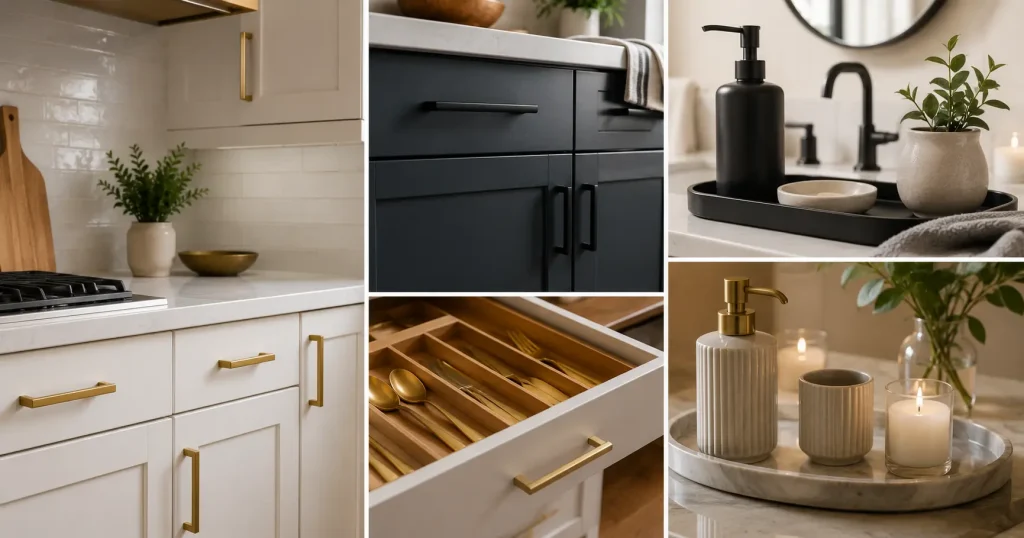
Cabinet handles, drawer pulls, soap dispensers, and trays are inexpensive to replace but are touched constantly, so small upgrades here can change how “finished” a home feels. This works especially well in kitchens and bathrooms; see our guide on small kitchen decor ideas if you’re tackling that room too.
Budget move: A 10-pack of matte black cabinet pulls costs about $21-$49 at Home Depot, so count your cabinets and drawers first, since a full kitchen can take more than one pack. Check your hole spacing (center-to-center) before buying. A ceramic soap dispenser, tumbler, and tray set costs about $15 at Walmart.
Common Mistakes That Make a Home Look Cheap
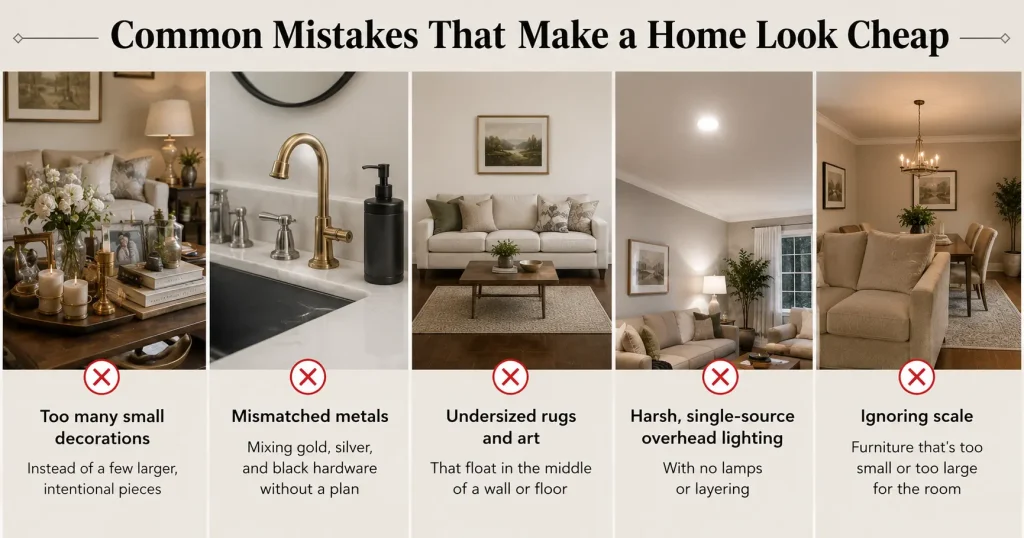
- Too many small decorations instead of a few larger, intentional pieces. Group small items on a tray or swap them for one bigger piece so surfaces stay calm.
- Mismatched metals (mixing gold, silver, and black hardware without a plan). Mixed metals can work, but pick one main finish and use a second as an accent.
- Undersized rugs and art that float in the middle of a wall or floor. A rug should reach at least the front legs of your furniture, and art should be sized to the furniture below it.
- Harsh, single-source overhead lighting with no lamps or layering. Add a floor or table lamp so light comes from more than one height.
- Ignoring scale: furniture that’s too small or too large for the room. Measure the room and the piece before buying, and leave space to walk around it.
Pro Designer Habits Worth Copying
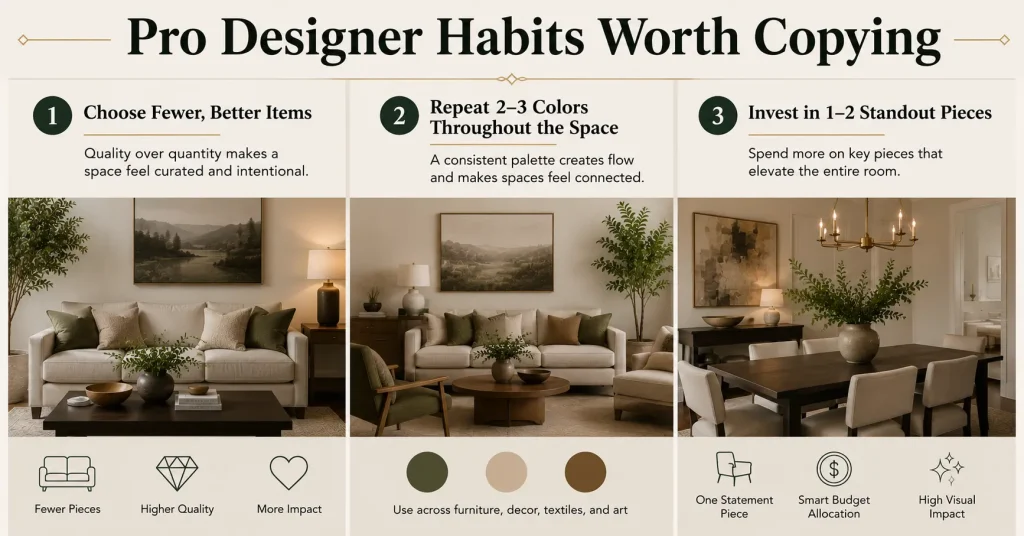
A few habits help any budget go further: choose fewer, better items; repeat 2-3 colors from room to room instead of introducing new ones every time; and spend your budget on one or two standout pieces rather than spreading it thin across many small purchases.
Final Thoughts
Making a home look expensive depends less on how much you spend and more on editing, lighting, and a handful of intentional choices. Start with decluttering, which is free, and lighting, which can be as simple as adding a lamp or two, then build from there with a rug, textures, and one statement piece. Small, consistent changes add up to a home that feels more put together.
Frequently Asked Questions
How do I make my home look luxurious on a budget?
Start by decluttering, which is free, then add warm-toned lighting with a lamp or two. After that, add one properly sized rug, a large statement art piece, and a consistent palette of about 3 colors.
What is the 60-30-10 rule in decorating?
It means about 60% of a room is a dominant color, 30% is a secondary color, and 10% is an accent color. It’s also an easy way to keep a room to about three main colors.
How high should I hang wall art?
A common guideline is to hang art so the center of the piece sits about 57 inches from the floor, which is average eye level. Above a sofa, leave about 6-12 inches between the furniture and the bottom of the frame.
How high should I hang curtain rods?
Mount the rod at least 4-6 inches above the window frame, or about halfway between the frame and the ceiling, to make the ceiling look taller. Leave about 2 inches between the rod and the ceiling.
How big should a living room rug be?
It should be large enough that at least the front legs of your sofa and chairs sit on it. For a standard living room, that usually means an 8×10 ft rug.

Emily Johnson writes about affordable home styling and budget-friendly decor for Pretty Home. She focuses on practical, easy-to-follow ideas that help homeowners and renters create beautiful, high-end looking spaces without overspending.