Three summers ago I redid my own backyard in Austin, Texas, and I made almost every mistake a homeowner can make with patio flooring ideas. I picked a dark stamped concrete because it looked incredible in photos, then found out the hard way that it was too hot to walk on barefoot by 10 a.m. in July. I ended up tearing out 220 square feet of it a year later and replacing it with light travertine — an expensive lesson that cost me almost $3,400 in redo work.
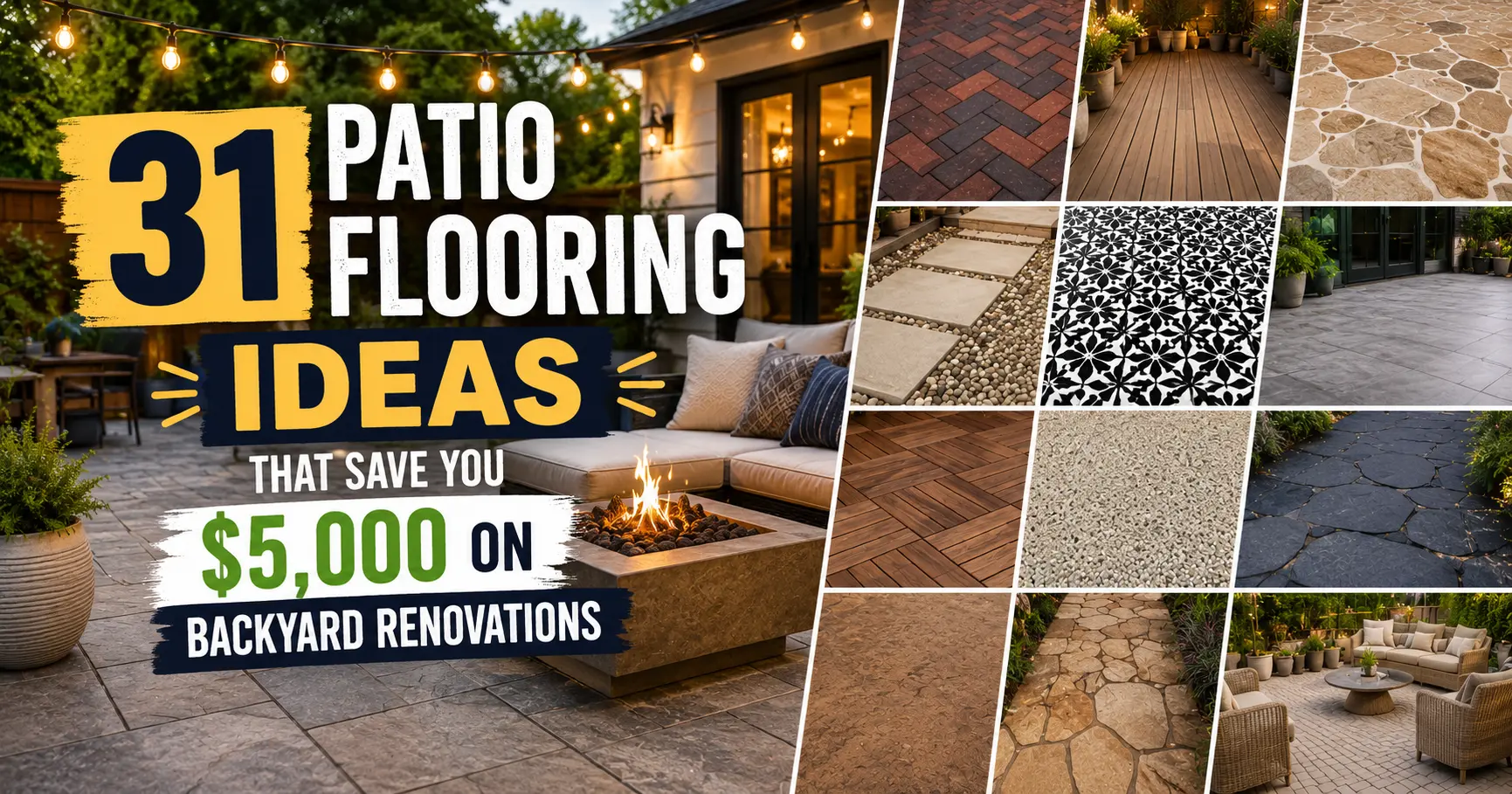
That mistake is exactly why this guide exists. Below are 31 patio flooring ideas I’ve either installed myself, watched friends and clients install, or researched in depth — with real 2026 pricing, honest pros and cons, and the climate/maintenance trade-offs nobody tells you about before you buy. Whether you want a $200 weekend refresh or a $10,000 stone patio, you’ll find a plan here that fits your budget and doesn’t need to be redone in three years.
How to Choose the Best Patio Flooring for Your Backyard
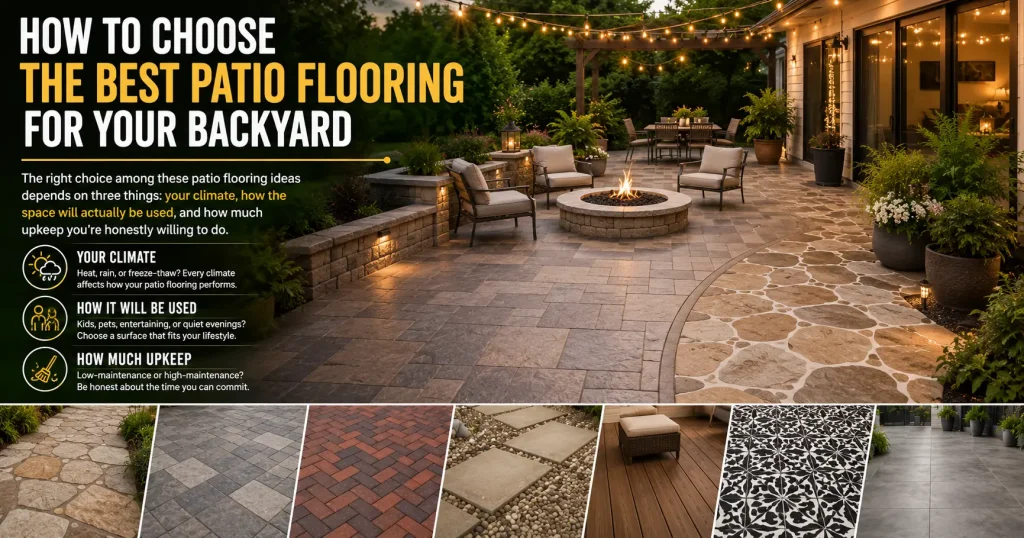
The right choice among these patio flooring ideas depends on three things: your climate, how the space will actually be used, and how much upkeep you’re honestly willing to do. A material that’s perfect in Phoenix, Arizona, can crack apart in a Minneapolis winter because of freeze-thaw cycles — I’ve seen this happen to a neighbor’s flagstone patio within two seasons.
Before you fall in love with a material because of a photo, ask yourself: Will kids or pets be running across this barefoot in summer? Does it rain a lot where you live, or does it freeze? Are you installing this yourself on a weekend, or hiring a contractor? These three questions eliminate about half the patio flooring ideas below almost instantly.
Consider Your Budget First
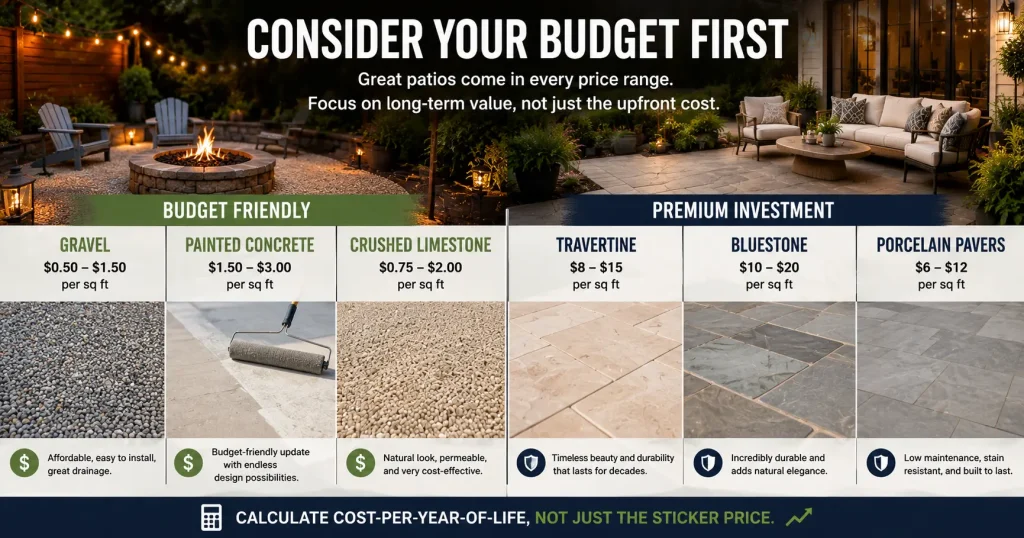
The cost per year of life: Gravel, painted concrete, and crushed limestone all deliver real visual impact for a small investment — I’ve used pea gravel for a fire pit zone that cost me under $300 total, materials included. Premium options like travertine, bluestone, and porcelain pavers cost more upfront but often work out cheaper per year of use because they last 25+ years with almost no repair costs. When you’re comparing patio flooring ideas, always calculate the cost per year of life, not just the sticker price.
Match Flooring to Your Climate
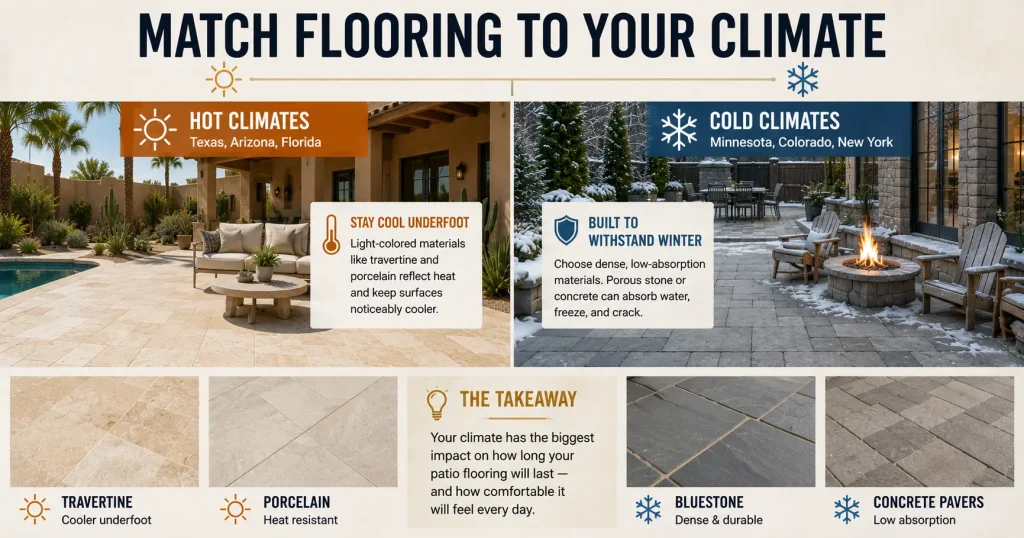
In hot southern states (Texas, Arizona, Florida), light-colored materials like travertine and porcelain stay noticeably cooler underfoot — this is the single biggest lesson from my own stamped concrete mistake. In colder states, prioritize dense, low-absorption materials; anything porous that soaks up water will crack when that water freezes and expands.
Think About Maintenance Requirements
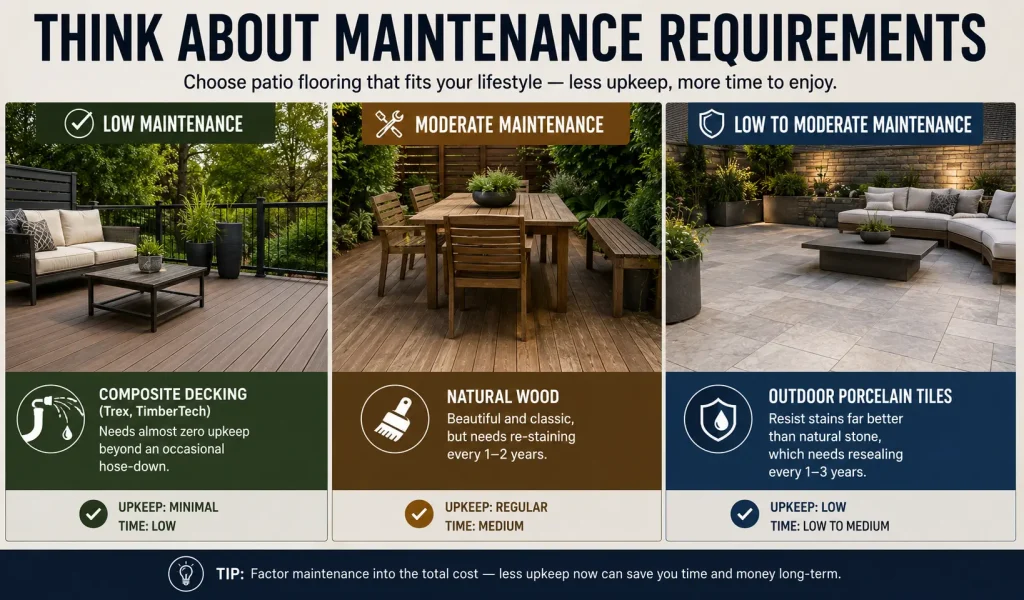
Among low-maintenance patio flooring ideas, composite decking (brands like Trex and TimberTech) needs almost zero upkeep beyond an occasional hose-down, while natural wood needs re-staining every 1–2 years. Outdoor porcelain tiles resist stains far better than natural stone, which needs resealing every 1–3 years depending on the sealant used.
DIY vs. Professional Installation Costs
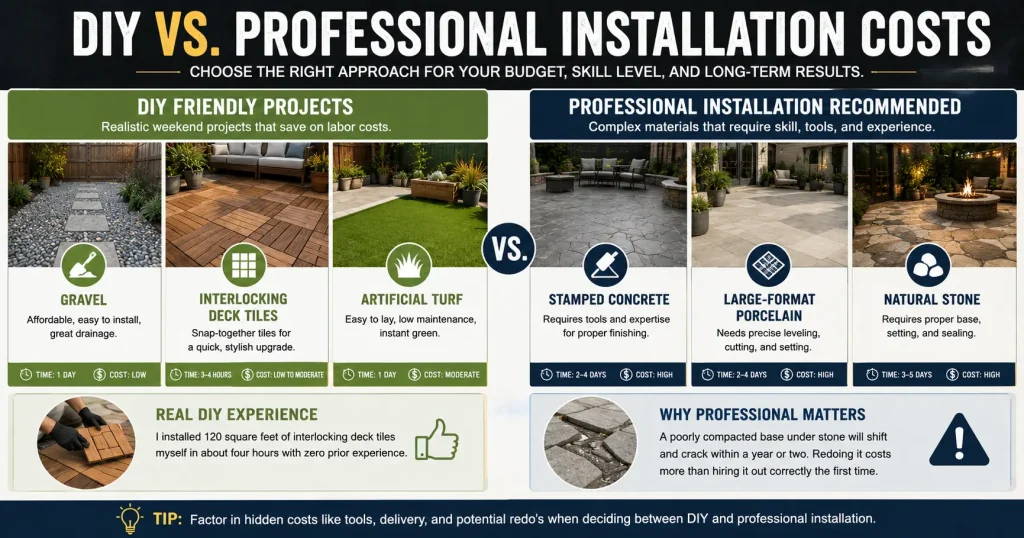
Gravel, interlocking deck tiles, and artificial turf are realistic weekend DIY projects — I installed 120 square feet of interlocking deck tiles myself in about four hours with zero prior experience. Stamped concrete, large-format porcelain, and natural stone genuinely need a professional; a poorly compacted base under stone will shift and crack within a year or two, and redoing it costs more than hiring it out correctly the first time.
Quick Comparison of Popular Patio Flooring Materials
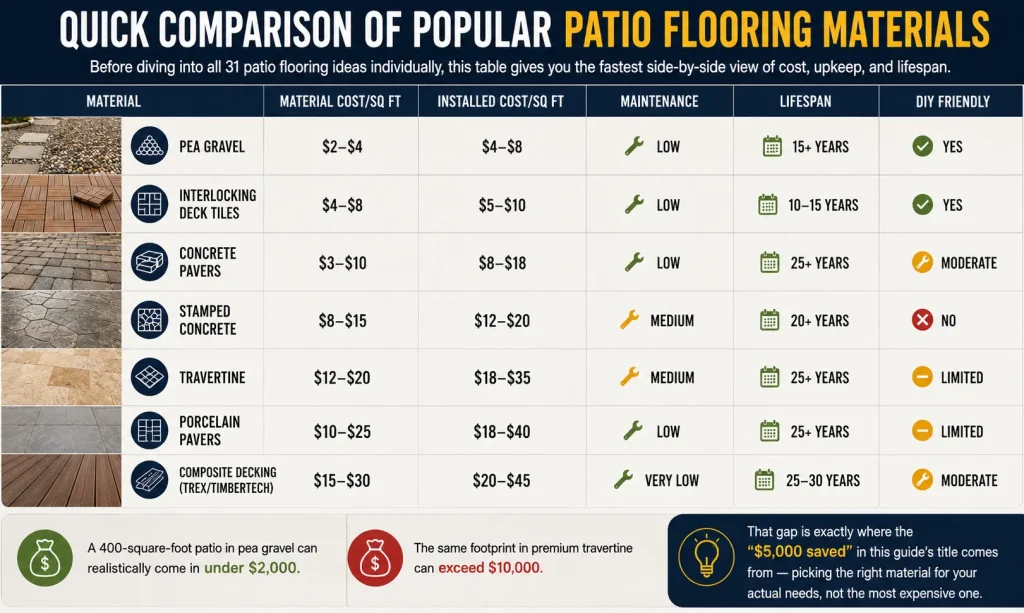
Before diving into all 31 patio flooring ideas individually, this table gives you the fastest side-by-side view of cost, upkeep, and lifespan.
| Material | Material Cost/Sq Ft | Installed Cost/Sq Ft | Maintenance | Lifespan | DIY Friendly |
|---|---|---|---|---|---|
| Pea Gravel | $2–$4 | $4–$8 | Low | 15+ years | Yes |
| Interlocking Deck Tiles | $4–$8 | $5–$10 | Low | 10–15 years | Yes |
| Concrete Pavers | $3–$10 | $8–$18 | Low | 25+ years | Moderate |
| Stamped Concrete | $8–$15 | $12–$20 | Medium | 20+ years | No |
| Travertine | $12–$20 | $18–$35 | Medium | 25+ years | Limited |
| Porcelain Pavers | $10–$25 | $18–$40 | Low | 25+ years | Limited |
| Composite Decking (Trex/TimberTech) | $15–$30 | $20–$45 | Very Low | 25–30 years | Moderate |
A 400-square-foot patio in pea gravel can realistically come in under $2,000. The same footprint in premium travertine can exceed $10,000. That gap is exactly where the “$5,000 saved” in this guide’s title comes from — picking the right material for your actual needs, not the most expensive one.
31 Patio Flooring Ideas, Ranked by Value
1. Natural Flagstone Pavers
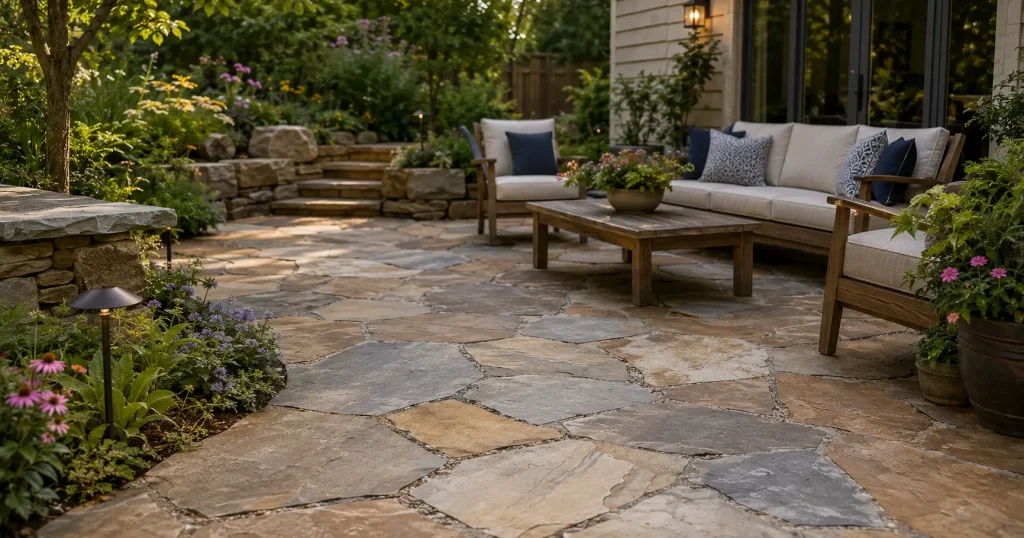
Irregular, organic shapes that blend into garden landscaping. Runs $15–$30 installed per square foot. Flagstone stays noticeably cooler than concrete in direct sun, but it needs a properly compacted gravel base — skip that step and you’ll see shifting within two years.
2. Interlocking Deck Tiles
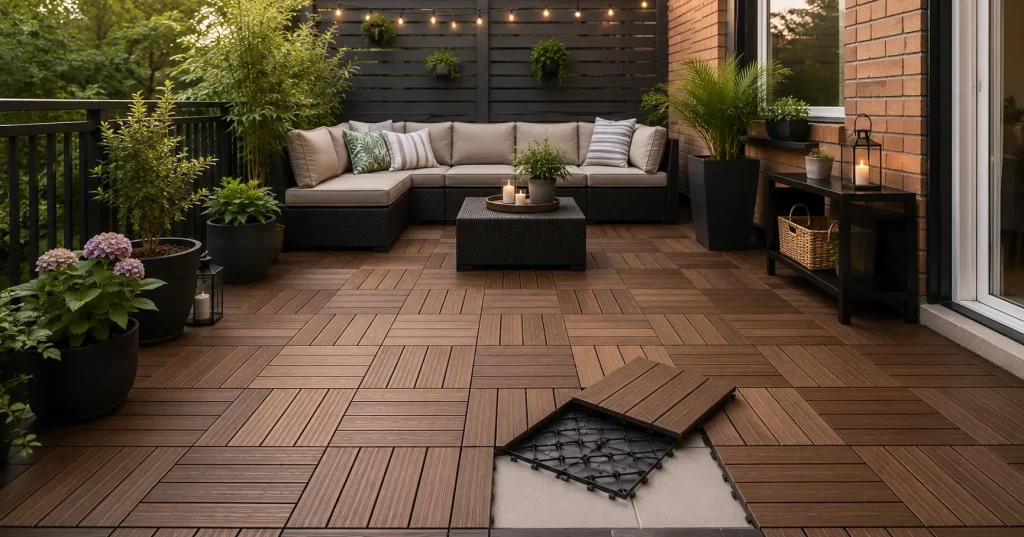
My personal favorite for renters or anyone who wants results in a weekend. These snap together over existing concrete or dirt for $5–$10 per square foot installed, and damaged tiles pop out individually for replacement.
3. Stamped Concrete
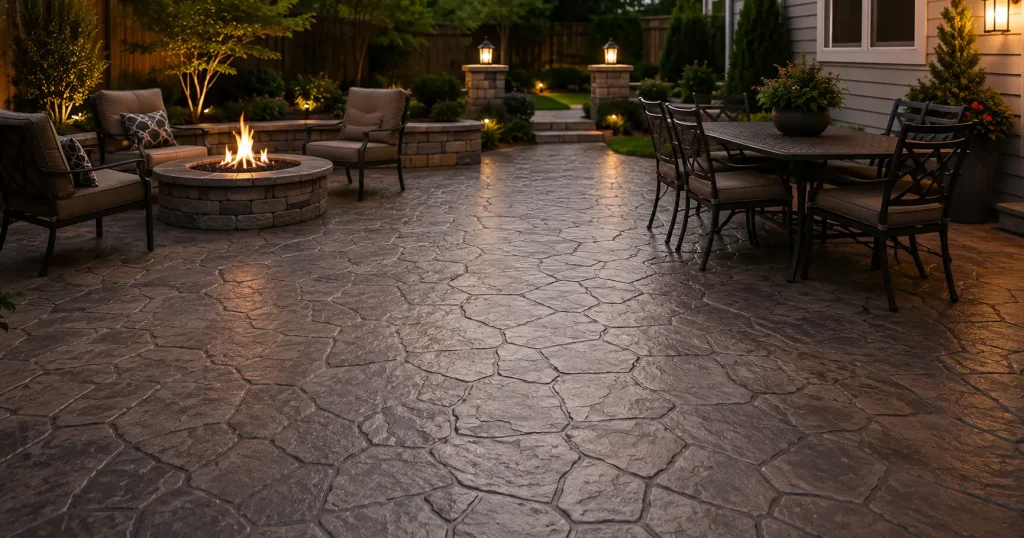
Mimics slate, brick, or cobblestone for $12–$20 per square foot installed. Great value — just avoid dark colors in hot-sun climates (learned that one the expensive way).
4. Outdoor Porcelain Tiles
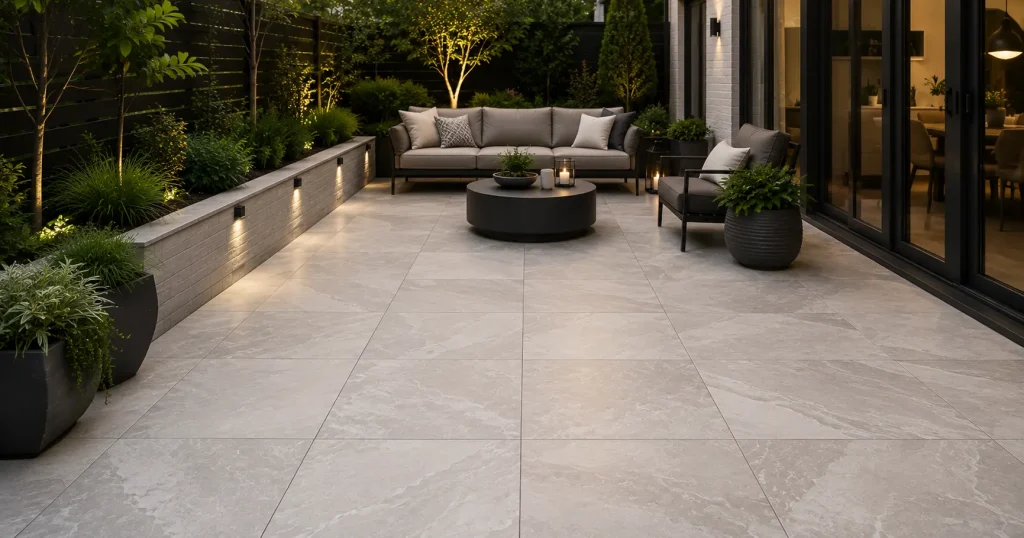
Engineered specifically to handle freeze-thaw and UV exposure, unlike indoor ceramic. At $18–$40 installed, it’s not cheap, but it resists staining and fading better than almost anything else on this list.
5. Reclaimed Brick Patio
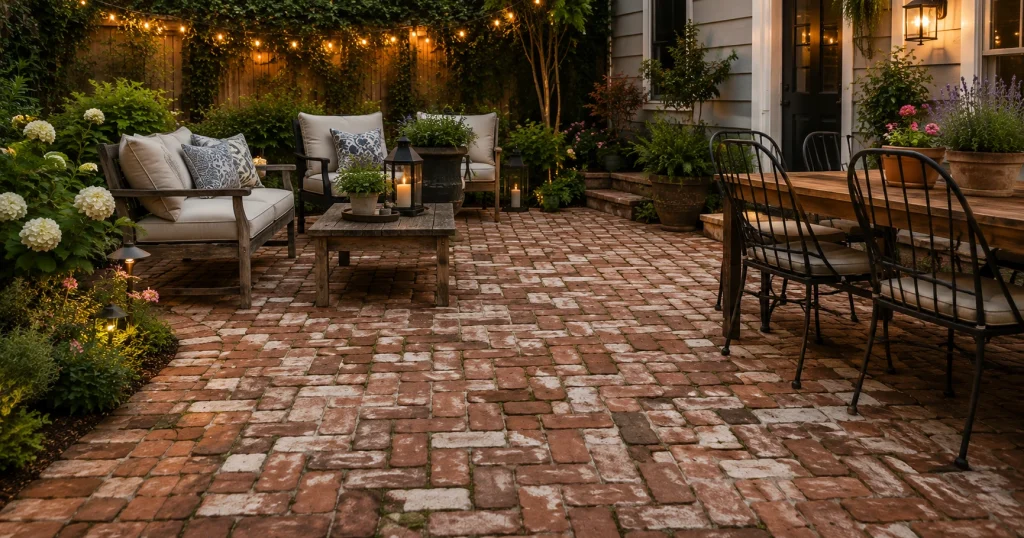
Salvaged brick adds instant age and character, especially for farmhouse or cottage-style homes. Costs $10–$18 installed and drains well when laid in sand.
6. Pea Gravel Flooring
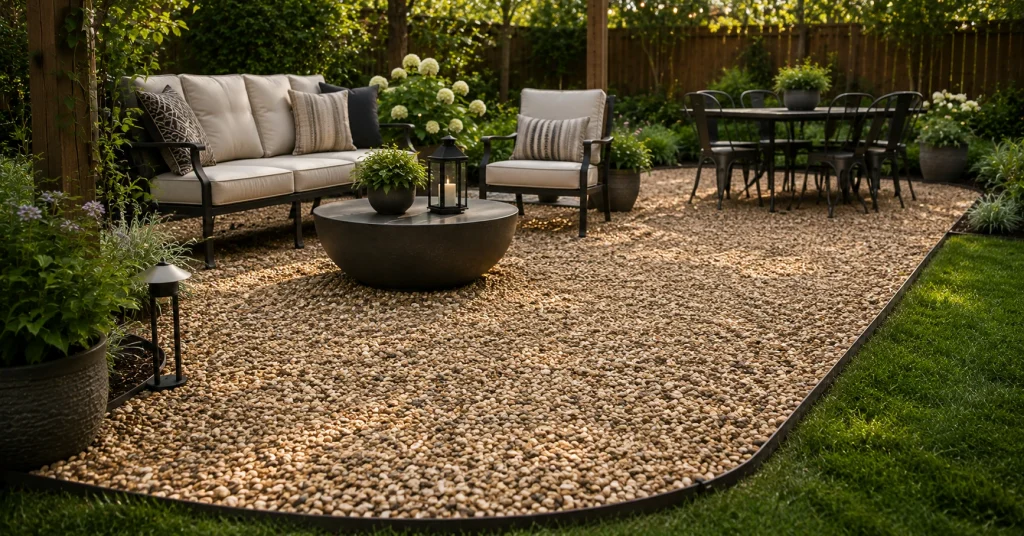
The cheapest real option on this list at $4–$8 installed. Needs solid metal or timber edging or it migrates into your lawn within a season — ask me how I know.
7. Composite Decking
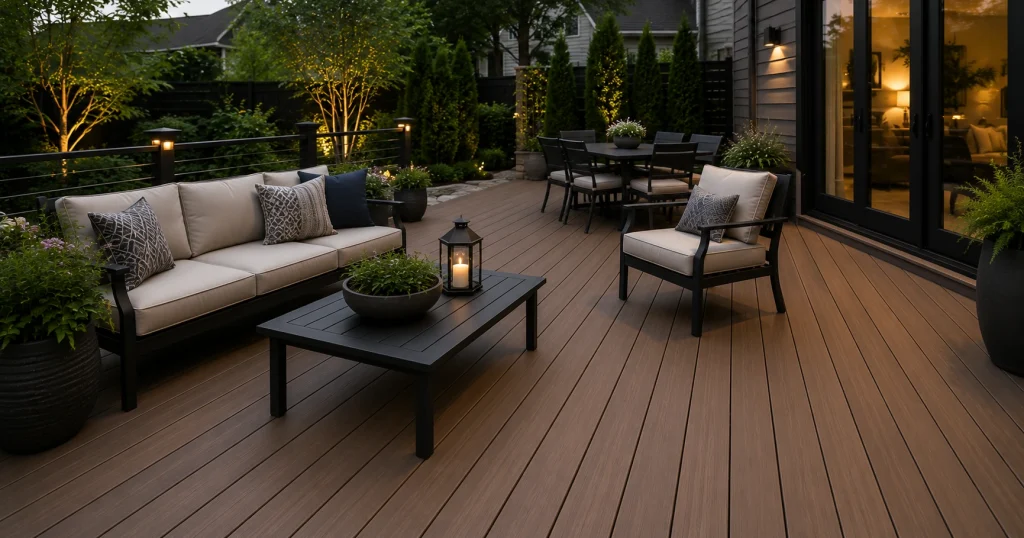
Trex and TimberTech boards resist rot, splintering, and insects, and never need staining. At $20–$45 installed it’s pricier than wood upfront but pays for itself in avoided maintenance within about 5 years.
8. Slate Stone Patio
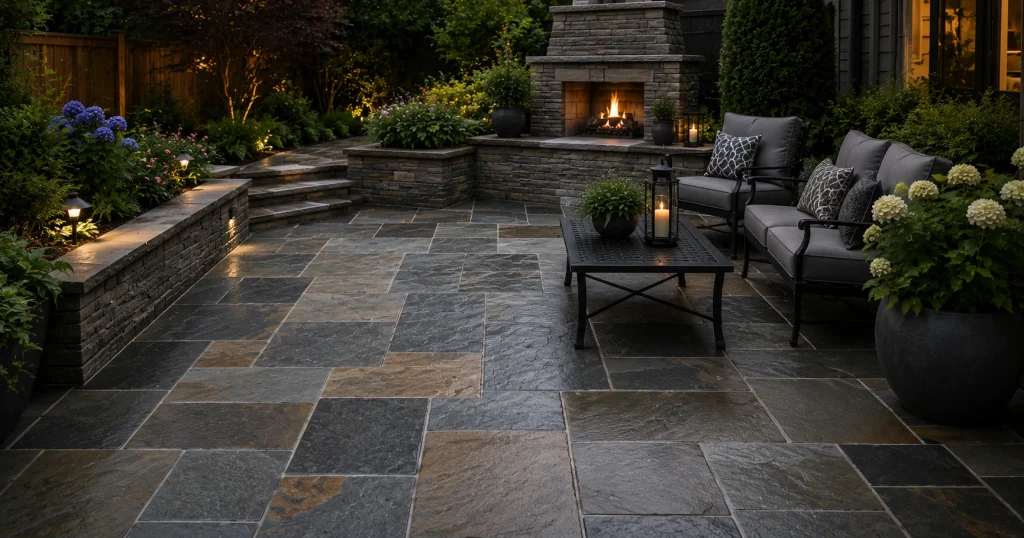
Textured, slip-resistant surface that performs especially well in rainy climates. $18–$32 installed; higher cost but exceptional longevity.
9. Polished Concrete Flooring
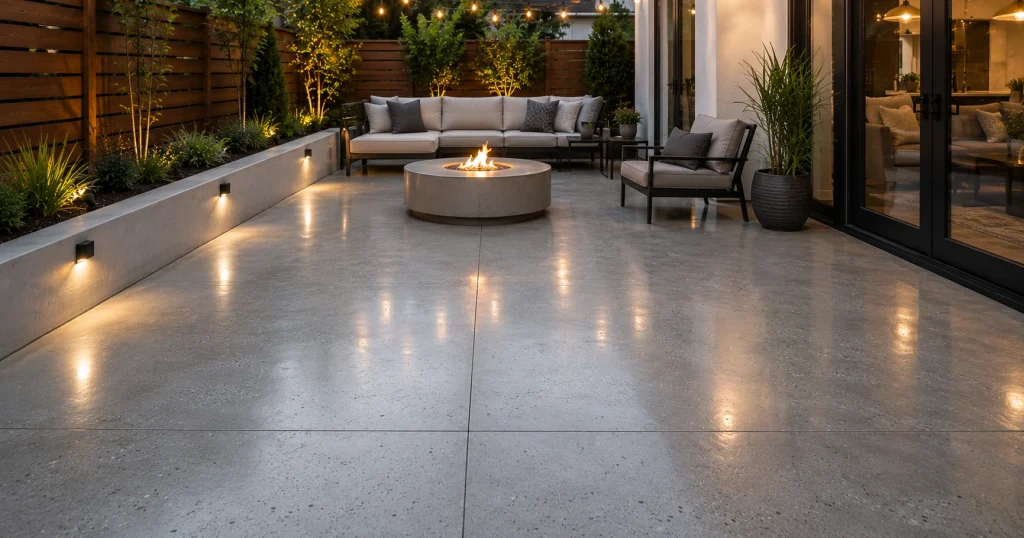
A clean, modern look at $10–$18 installed — noticeably cheaper than most stone while still resisting stains when properly sealed.
10. Grass Joint Pavers
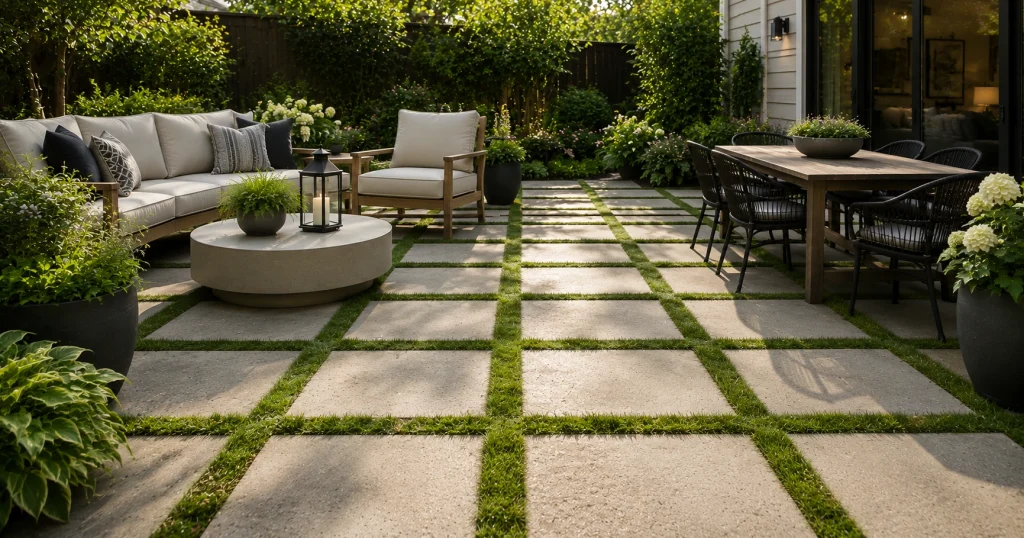
Large pavers with grass growing through the gaps — improves drainage and cuts surface heat significantly. Runs $14–$25 installed.
11. Travertine Stone Tiles
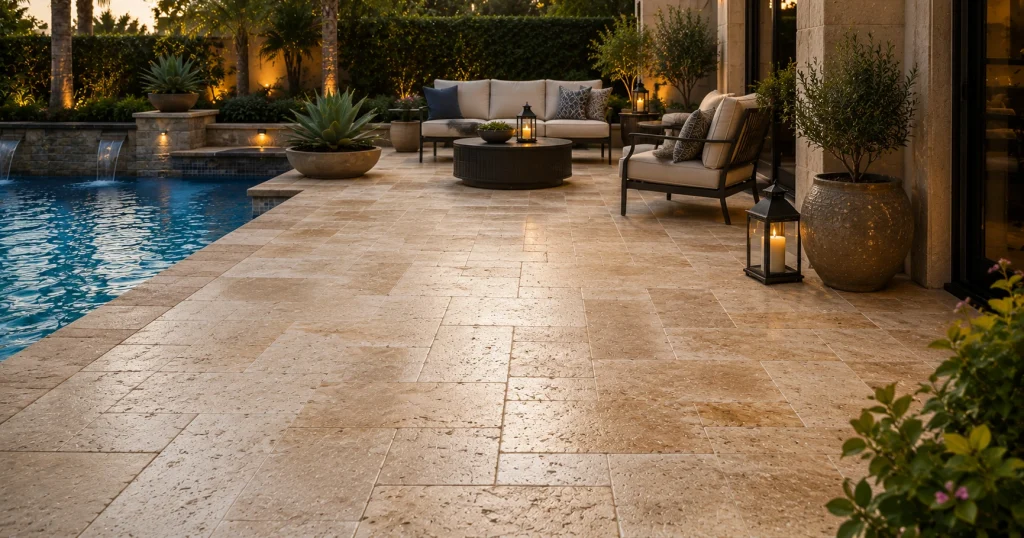
My personal choice after the stamped-concrete redo. Naturally cool underfoot even in Texas summers, $18–$35 installed. Worth the investment around pools specifically.
12. Cedar Wood Squares
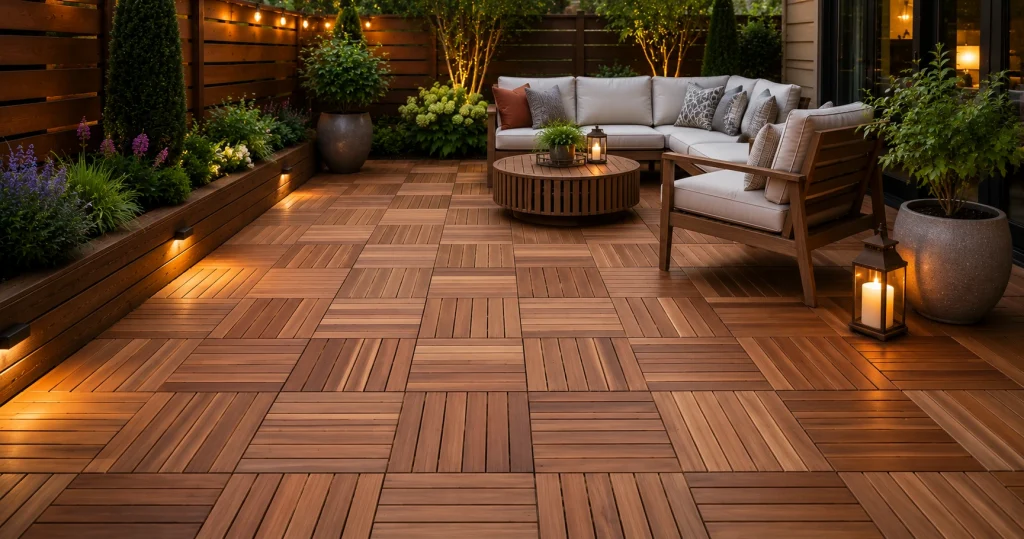
Naturally insect- and moisture-resistant compared to other softwoods. $12–$22 installed; needs re-oiling roughly every 18 months to keep its color.
13. Painted Concrete Stencils
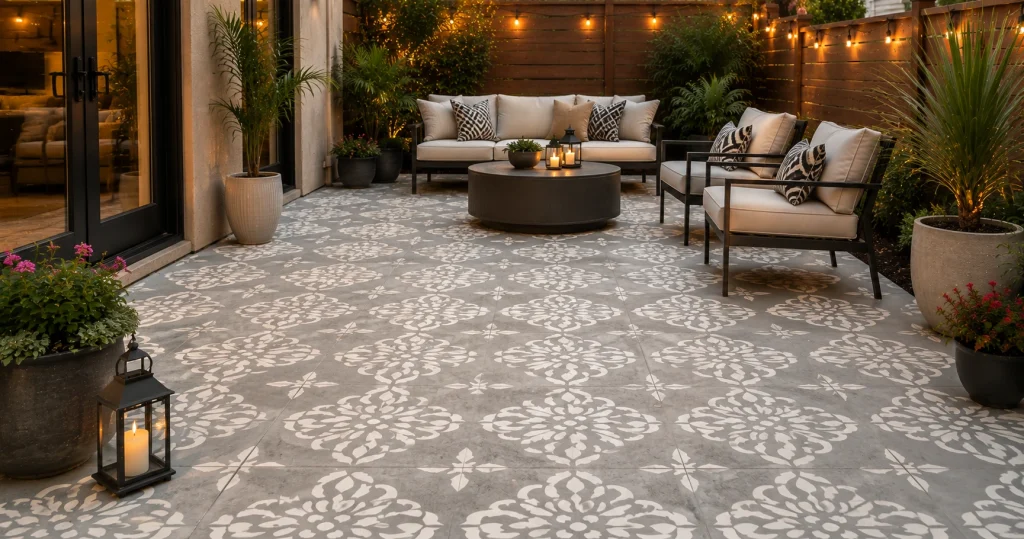
The best budget refresh for existing plain concrete — $3–$7 per square foot for paint and stencil kits (Home Depot and Lowe’s both carry ready kits under $80).
14. Crushed Limestone Surface
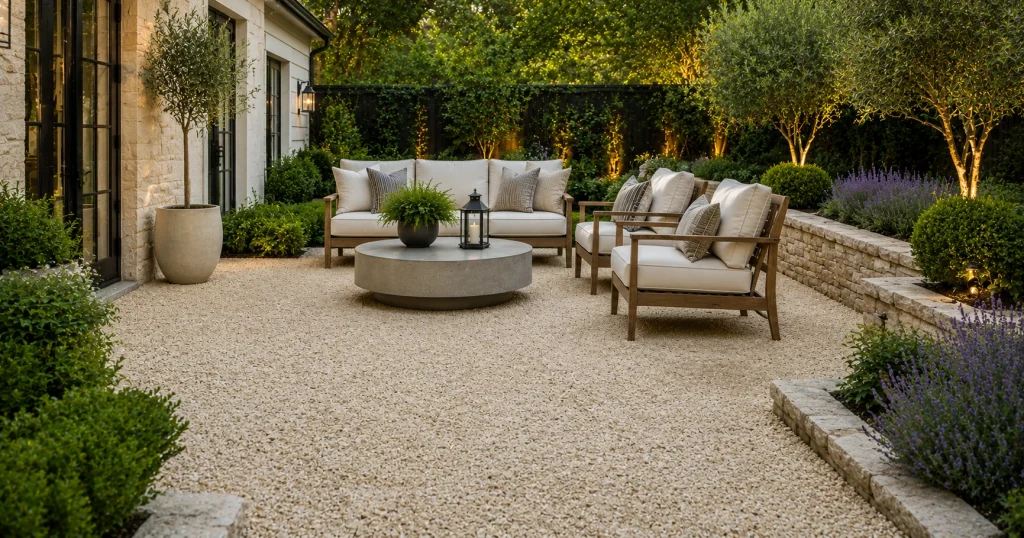
Smoother and more refined-looking than gravel, $4–$9 installed, with excellent natural drainage.
15. Rubber Patio Mats
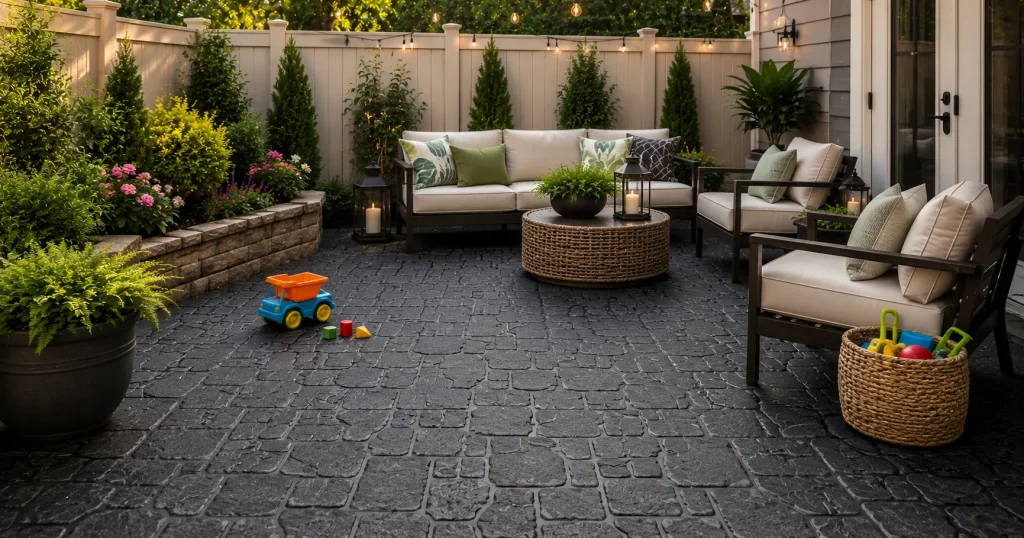
Underrated for families with young kids — soft underfoot and slip-resistant. $6–$14 installed, with styles that now convincingly mimic stone.
16. Moroccan Encaustic Tiles
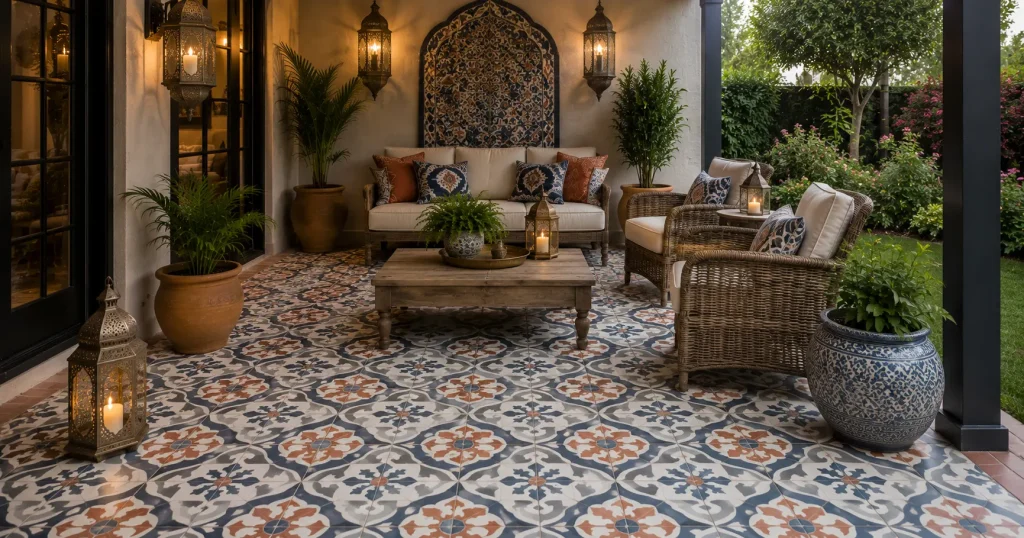
Bold, patterned, and best reserved for covered patios since UV exposure fades the pigment over time. $20–$40 installed.
17. Granite Cobblestones
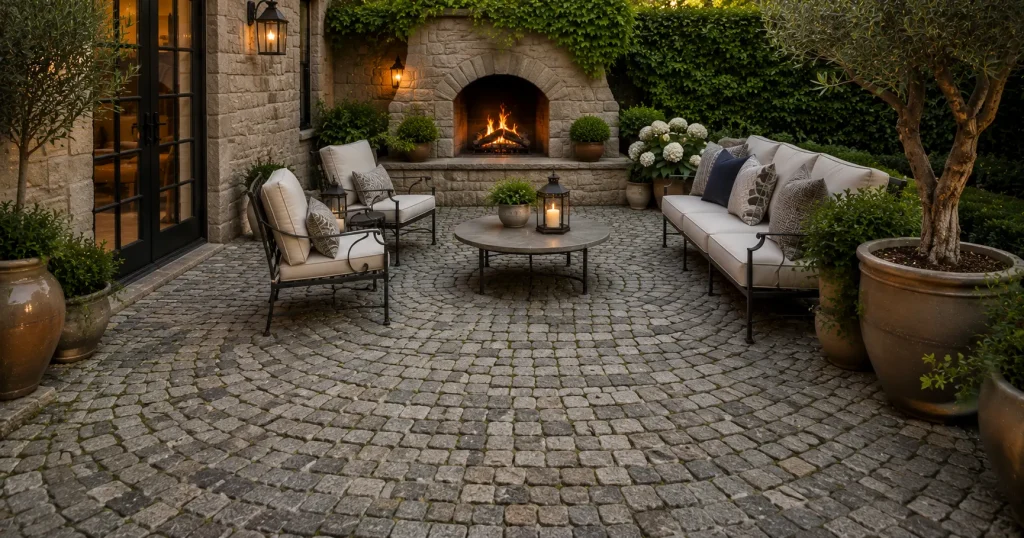
Centuries-proven durability. $25–$45 installed — a premium choice, but essentially permanent.
18. Outdoor Area Rugs
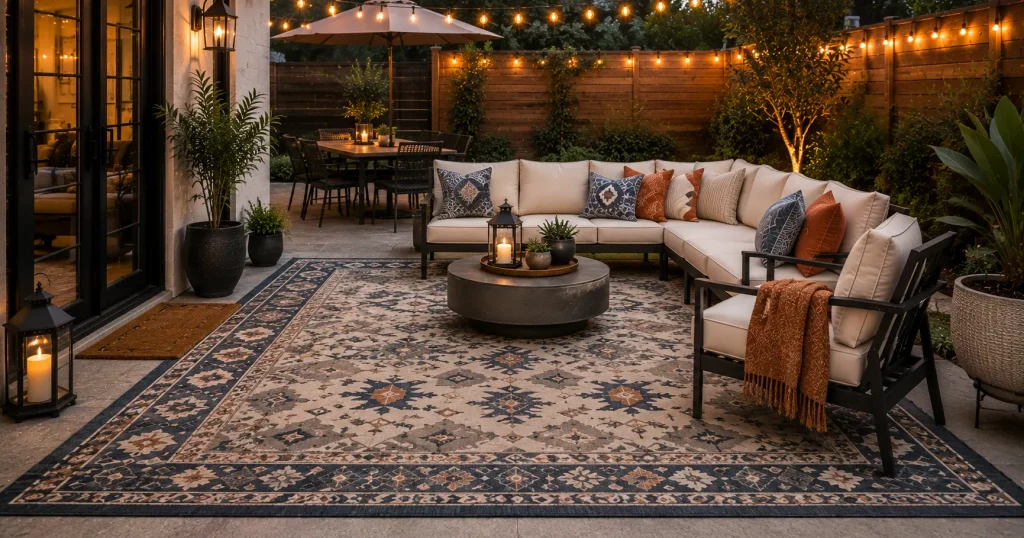
Not flooring on its own, but a $50–$300 rug over any existing surface instantly zones a dining or lounge area without construction.
19. Artificial Grass Turf
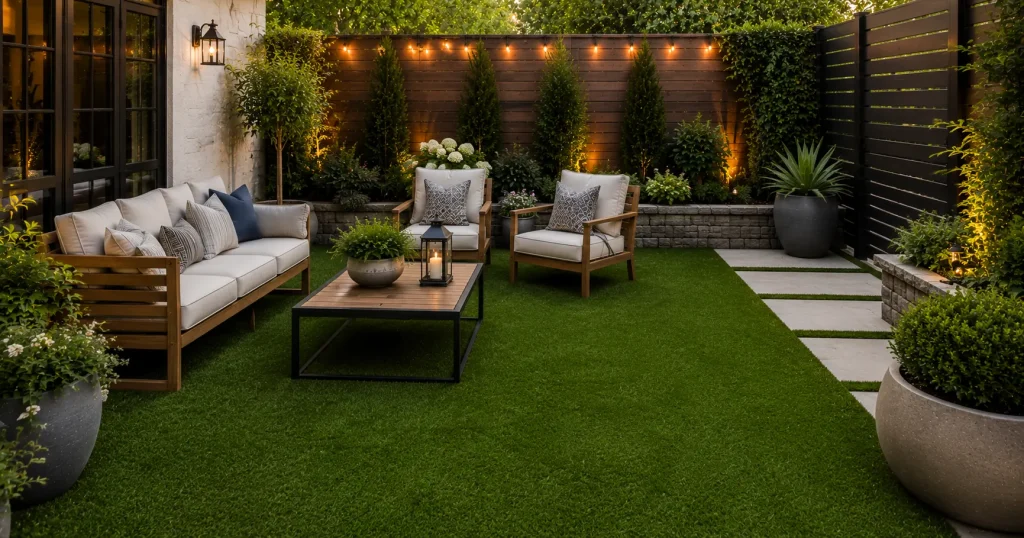
Modern turf ($8–$16 installed) looks convincingly real and needs no watering or mowing — ideal for shaded or high-traffic yards where real grass struggles.
20. Limestone Flagstone Blend
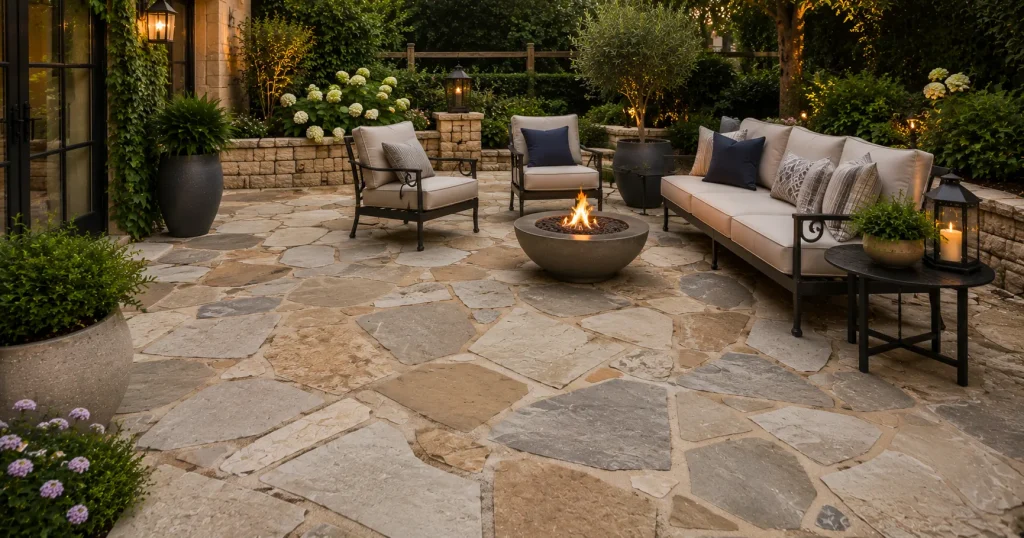
Mixed stone sizes and tones hide dirt and wear better than a single uniform material. $16–$28 installed.
21. Bluestone Patio Tiles
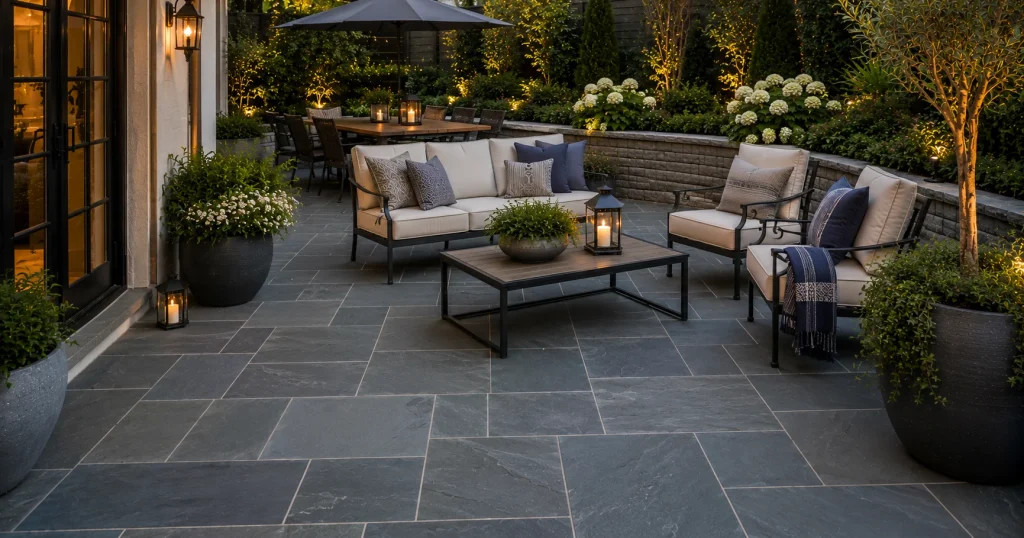
Rich blue-gray tone favored by landscape architects. $20–$38 installed; performs well across most US climates.
22. Sandstone Paving Slabs
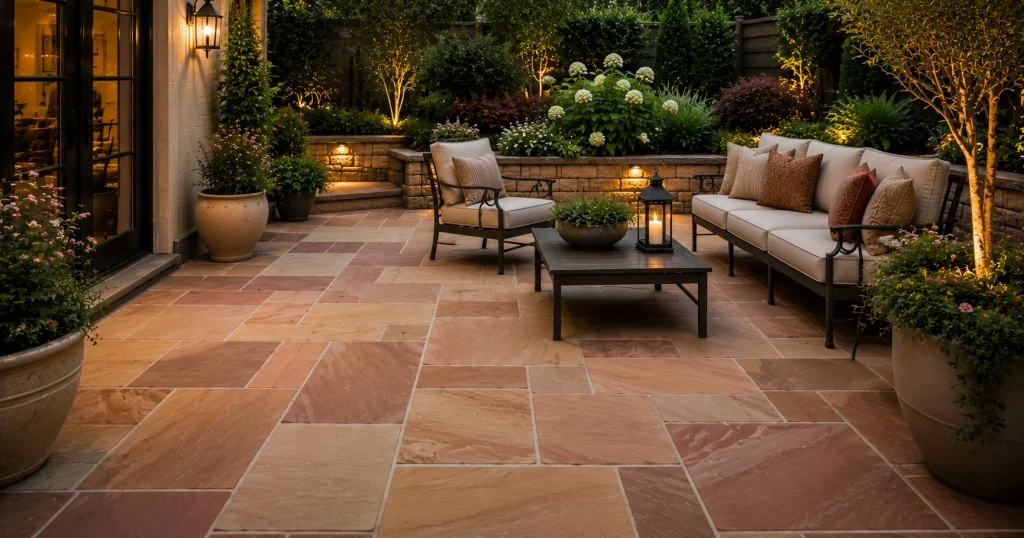
Warm, earthy tones from beige to deep red. $14–$24 installed; needs resealing every 2 years to prevent staining.
23. Recycled Plastic Decking
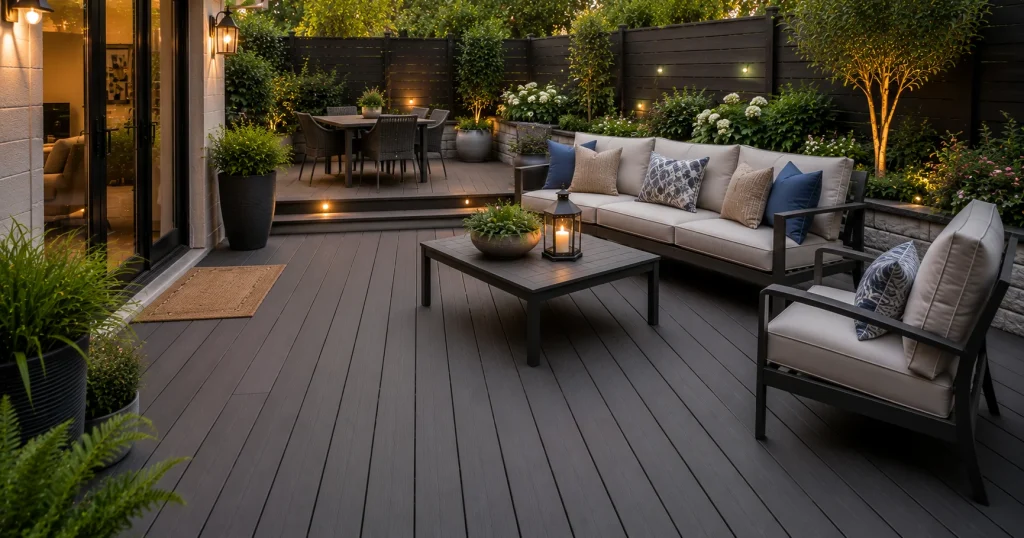
A genuinely sustainable option that resists rot and insects entirely. $16–$28 installed.
24. Concrete Pavers
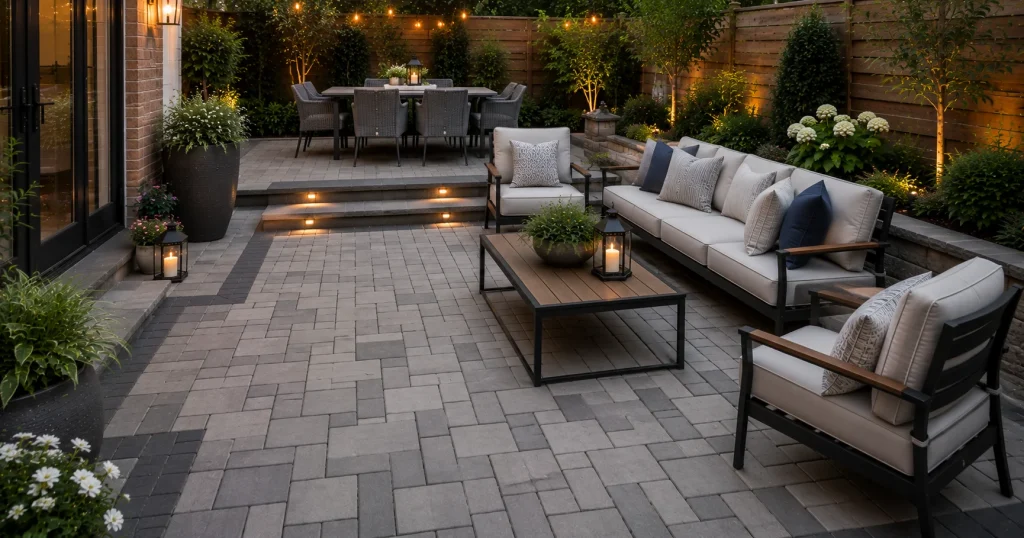
Extremely versatile — individual pavers can be swapped if one cracks, unlike a poured slab. $8–$18 installed.
25. Exposed Aggregate Concrete
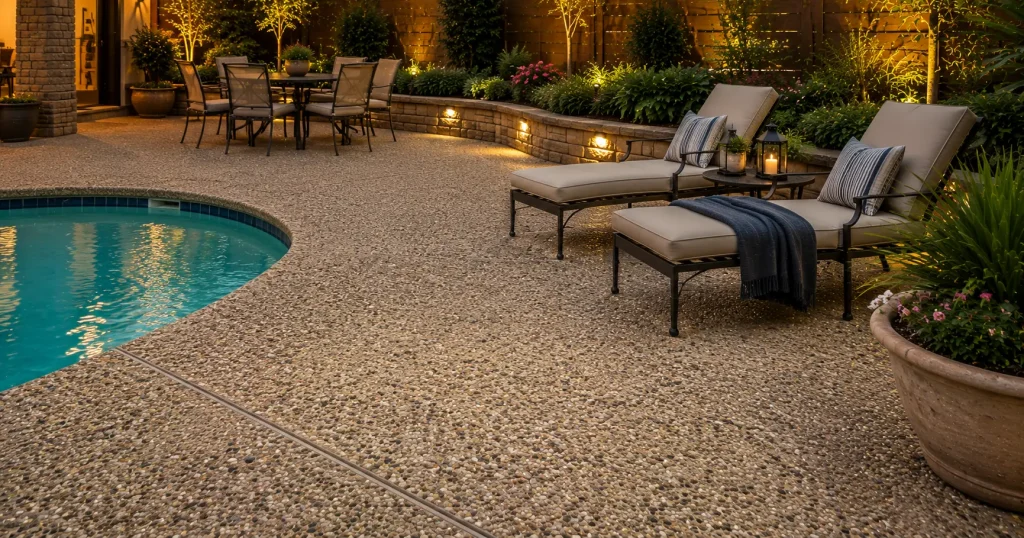
Small stones embedded in the surface add real traction, making it a smart pick for pool decks. $9–$16 installed.
26. River Rock Flooring
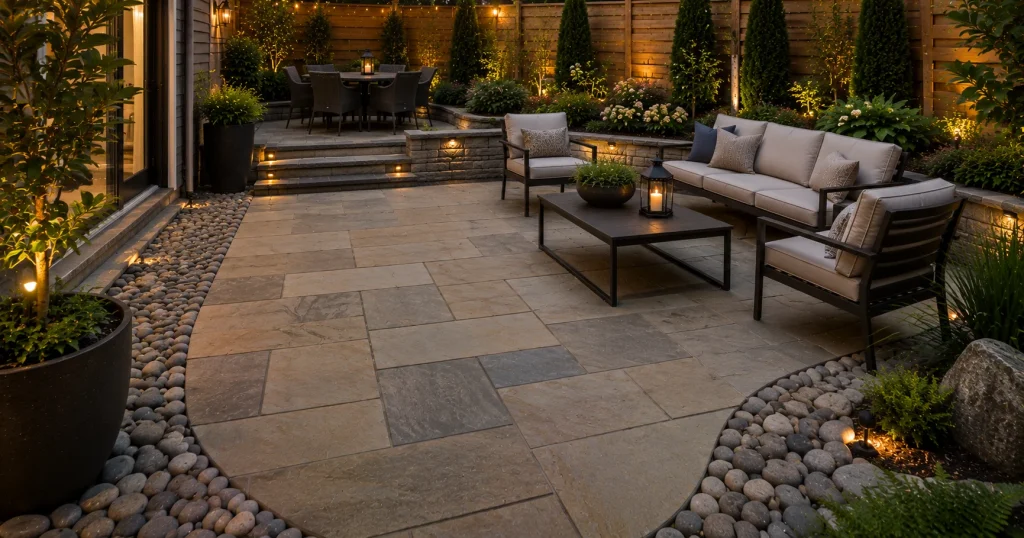
Best used as an accent border or drainage zone rather than the full patio. $6–$14 installed.
27. Decomposed Granite Patio
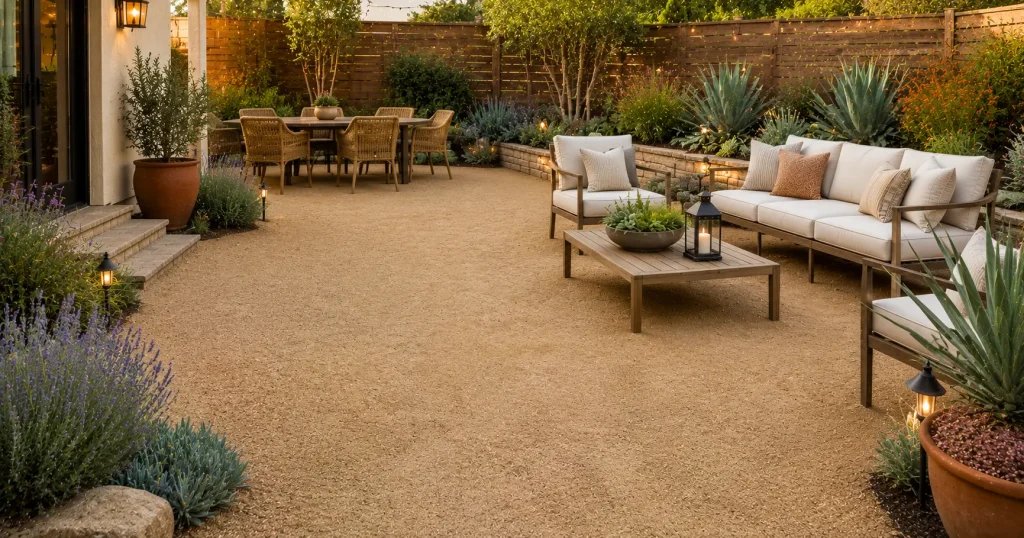
An affordable, stable surface once compacted. $4–$9 installed, popular in xeriscaped and drought-conscious yards.
28. Brick Paver Patio
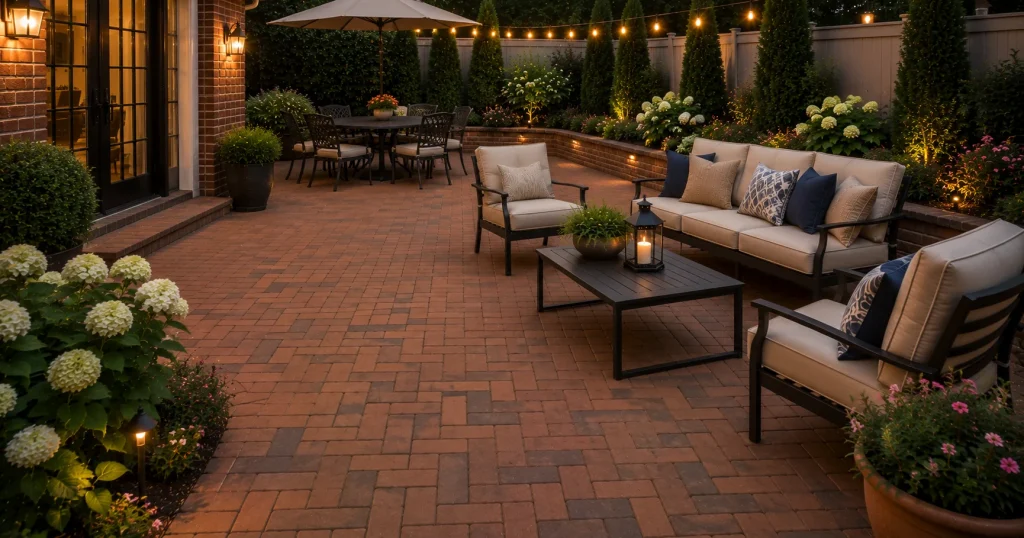
Classic and long-lasting, especially with colonial or traditional-style homes. $10–$20 installed.
29. Wood Pallet Deck Flooring
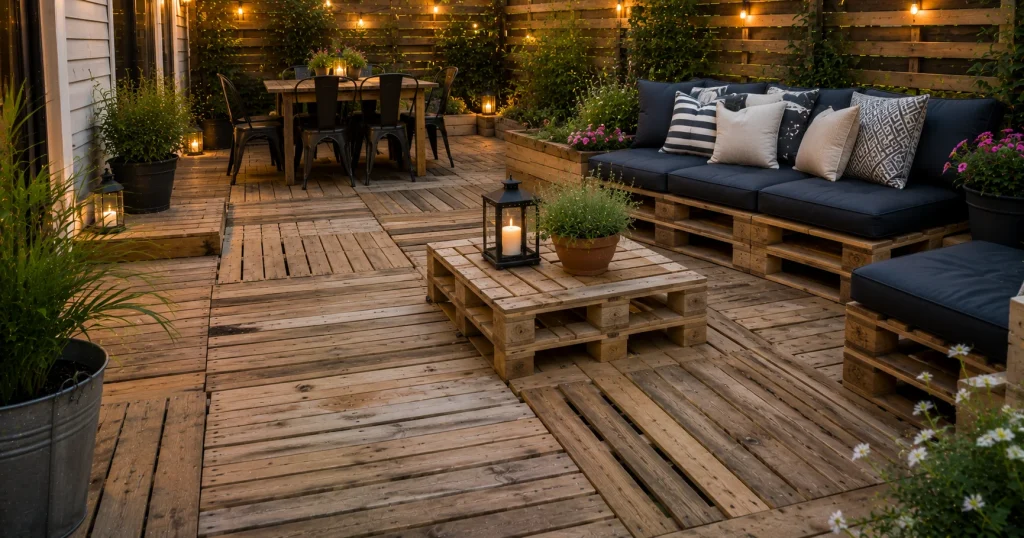
The lowest-cost DIY option if you can source free pallets — budget $150–$400 for sealant, hardware, and tools for a small area.
30. Outdoor Vinyl Flooring
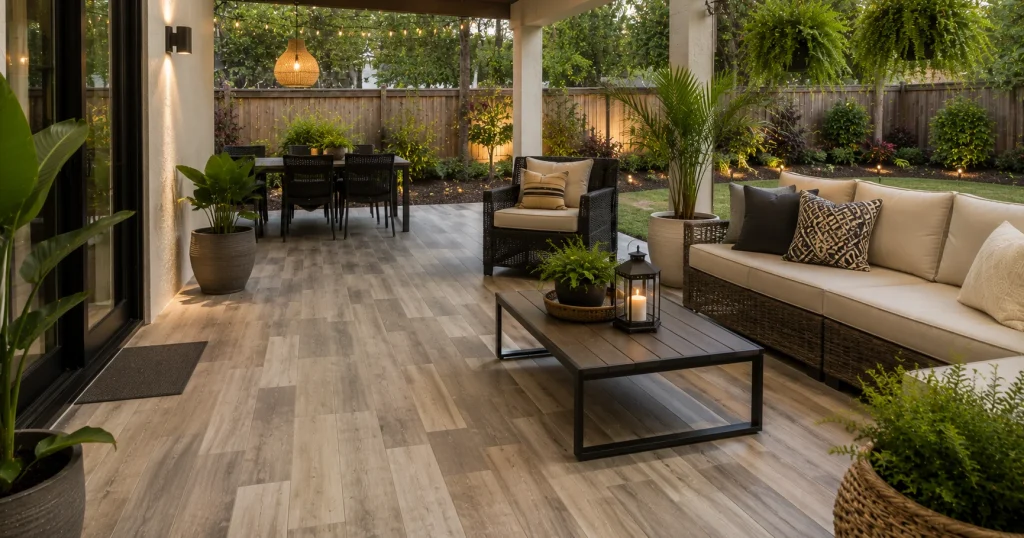
Convincingly imitates wood or stone at a lower cost, $10–$20 installed, and works especially well on covered patios out of direct sun.
31. Resin Bound Gravel Surface
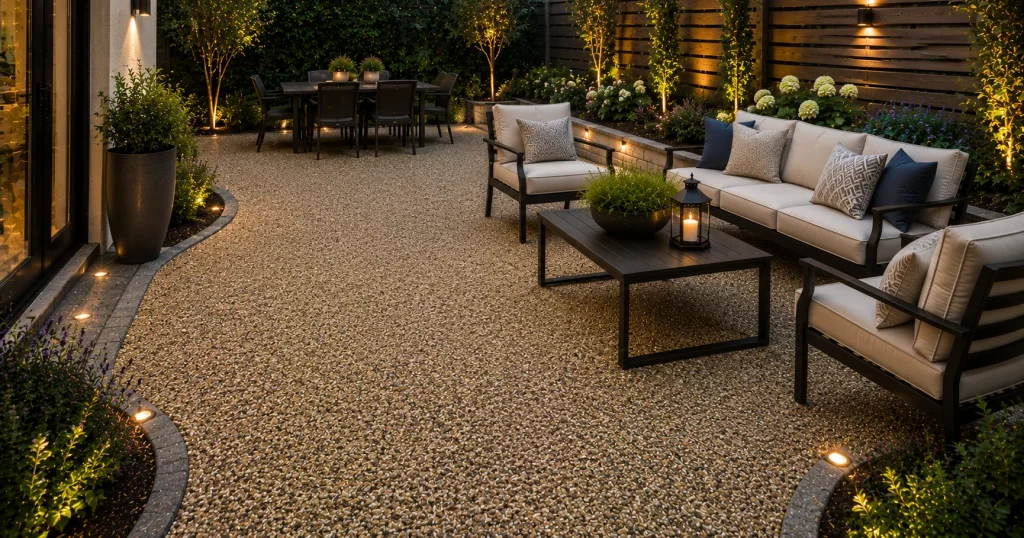
Stone bonded with resin for a smooth, fully permeable surface. $14–$26 installed — one of the newer, less common patio flooring ideas but growing fast for its drainage performance.
Real Homeowner Case Study: How $12,000 Became $6,500
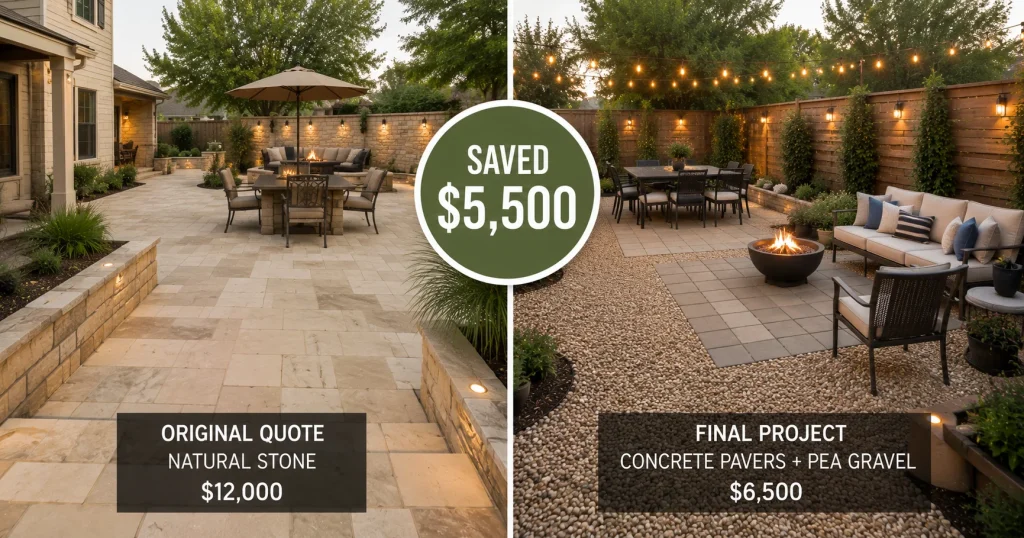
A reader in San Antonio, Texas reached out after reading an earlier version of this guide. She had a 500-square-foot backyard entertainment area and a contractor quote of nearly $12,000 for full natural stone. Instead of accepting it outright, she compared patio flooring ideas using the table above and landed on a mix of concrete pavers for the main dining area and decorative pea gravel for a surrounding lounge zone.
Total project cost, professional installation included: about $6,500 — a savings of $5,500 over the original quote, with a finished look she says her contractor’s photos “made look like the $12,000 version anyway.” This is the exact strategy this guide is built around: mixing one durable “anchor” material with a cheaper accent material instead of paying premium prices across the entire footprint.
Patio Flooring Mistakes That Cost Homeowners Thousands
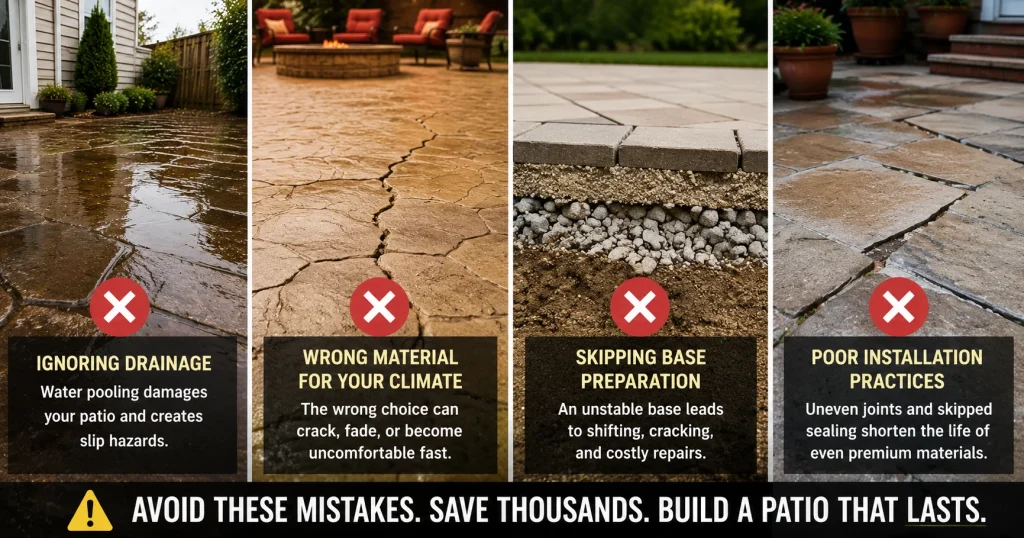
Ignoring drainage. Water that pools on a flat surface breaks down joints, undermines the base, and creates slip hazards. Every patio should slope slightly away from the house — most installers recommend at least a 1-inch drop per 4 feet.
Choosing the wrong material for your climate. Dark stamped concrete in Texas heat is the mistake that cost me over $3,000 — don’t repeat it. Not every one of these patio flooring ideas works everywhere; porous stone in freeze-thaw states is the northern equivalent mistake.
Skipping base preparation. A stunning surface over an unstable base fails within a year or two. Proper excavation and compaction, even under a modest gravel patio, is worth the extra day of labor.
Poor installation practices. Uneven spacing, weak joints, or skipped sealing shorten the life of even premium materials like bluestone or travertine. For anything over $10 per square foot in materials, professional installation is usually worth it — according to This Old House’s patio guide, improper installation is the single most common cause of early patio failure, more than material choice itself.
Expert Tips for Maximizing Patio Value
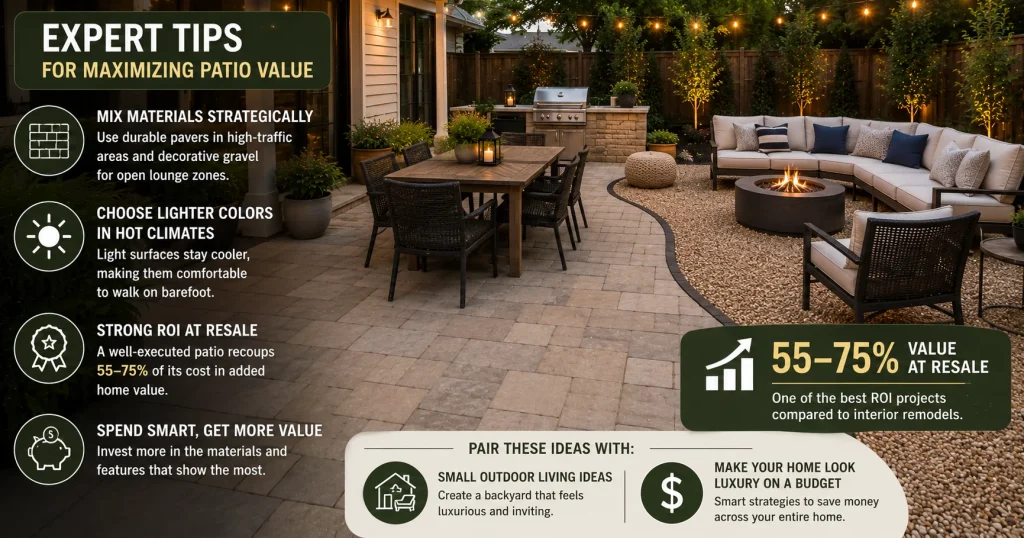
The best patio flooring ideas rarely use just one material. Mix them strategically — solid pavers under furniture, decorative gravel for open lounge space — the way the San Antonio case study above did. Choose lighter colors in hot climates specifically to keep the surface walkable in bare feet during peak summer. And per Family Handyman’s outdoor renovation data, a well-executed patio can recoup 55–75% of its cost in added home value at resale, making it one of the better ROI projects compared to interior remodels.
If you’re also working on the rest of the backyard, our guide to small outdoor living ideas that feel luxurious pairs well with any of the flooring choices above, and if your renovation budget is tight across the whole house, see how to make your home look luxury on a budget for more cost-saving strategies that use the same “spend more where it shows” logic.
Cheapest Patio Flooring Ideas Ranked
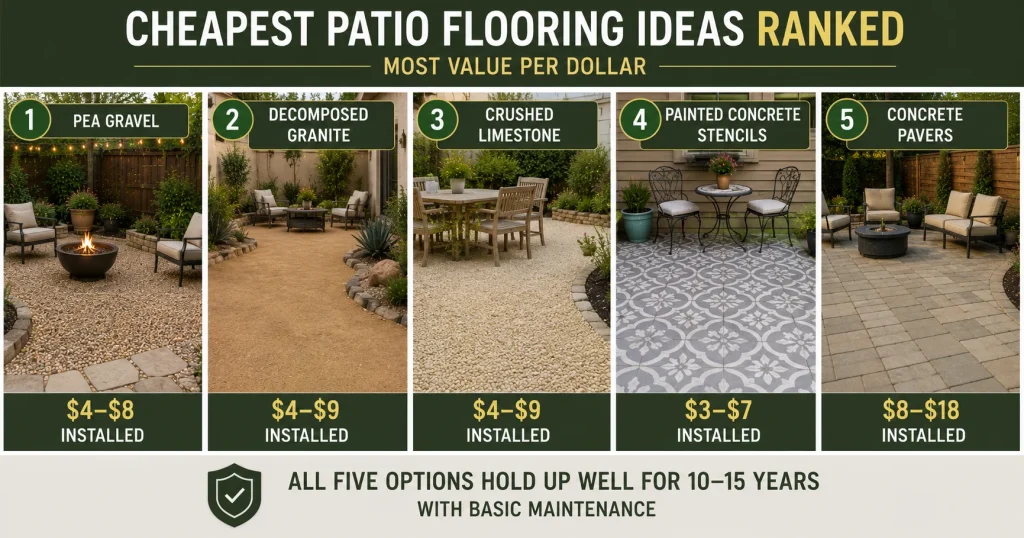
If budget is your main constraint, these patio flooring ideas deliver the most value per dollar. For pure budget, the order is: pea gravel ($4–$8 installed), decomposed granite ($4–$9), crushed limestone ($4–$9), painted concrete stencils ($3–$7), and concrete pavers ($8–$18). All five hold up well for at least 10–15 years with basic maintenance, which is longer than many homeowners expect from a “budget” material.
Best Patio Flooring for Different Climates
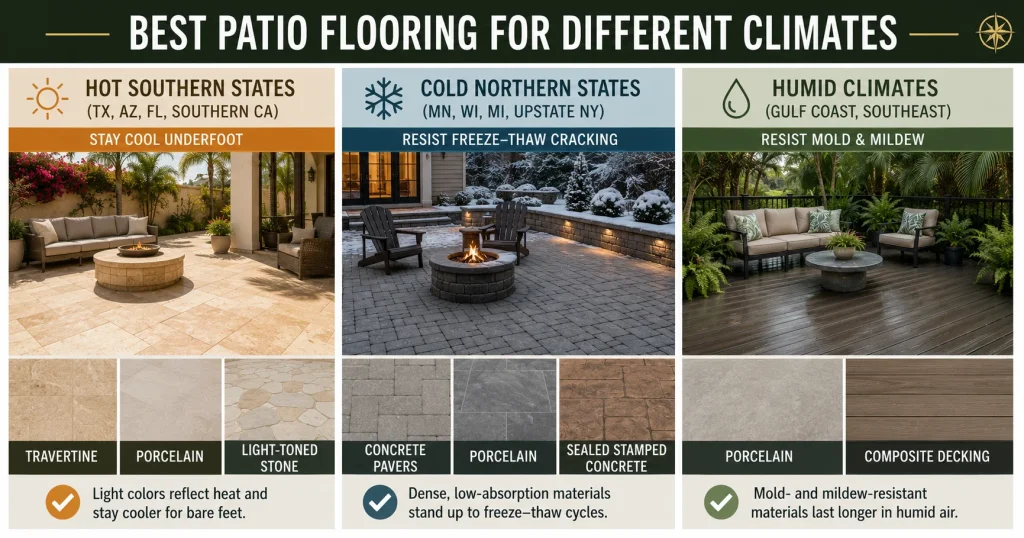
Hot southern states (TX, AZ, FL, southern CA): travertine, porcelain, and light-toned stone stay coolest underfoot — this is non-negotiable if you plan to walk barefoot.
Cold northern states (MN, WI, MI, upstate NY): dense, low-absorption materials — concrete pavers, porcelain, and sealed stamped concrete — resist the freeze-thaw cracking that ruins porous stone.
Humid climates (Gulf Coast, Southeast): anything with strong mold and mildew resistance — porcelain and composite decking outperform untreated wood by a wide margin.
Final Thoughts on Patio Flooring Ideas
After my own $3,400 mistake with stamped concrete and years of watching friends and readers go through the same decision, here’s the one thing I’d tell anyone starting this project: the “best” patio flooring ideas aren’t the most expensive ones — they’re the ones matched correctly to your climate, your budget, and how you’ll actually use the space.
If you’re in a hot climate, don’t let a dark stamped concrete photo talk you into the same mistake I made. If you’re in a freeze-thaw state, don’t skip base preparation to save a weekend. And if your budget is tight, remember the San Antonio case study above — mixing one durable anchor material with a cheaper accent material almost always beats paying premium prices across the entire footprint.
Whichever of these 31 options you choose, spend the extra afternoon getting the base and drainage right. That single decision determines whether your patio lasts 5 years or 25.
Frequently Asked Questions
What is the best flooring for an outdoor patio?
Porcelain tiles, travertine, and concrete pavers are generally the best options because they combine durability, weather resistance, and low maintenance across most US climates.
What is the cheapest way to do a patio floor?
Pea gravel is the cheapest option, typically $4–$8 installed per square foot, and it still offers solid drainage and a clean look when properly edged.
How can I cover my existing patio floor cheaply?
Interlocking deck tiles, painted concrete stencils, or outdoor rugs are the fastest, lowest-cost ways to refresh an existing patio without demolition.
What is the best material to install over an existing concrete patio?
Interlocking deck tiles, outdoor porcelain tiles, and composite decking all install directly over existing concrete without needing to remove the slab.
How much does it typically cost to redo a 400-square-foot patio?
Anywhere from about $1,600 (pea gravel) to over $10,000 (premium travertine or porcelain), depending entirely on material choice — see the comparison table above for a full breakdown.
Do I need a professional for patio flooring installation?
For gravel, deck tiles, and turf — no, these are realistic DIY weekend projects. For stamped concrete, large-format porcelain, or natural stone, professional installation is strongly recommended since base preparation mistakes are expensive to fix later.
How long does patio flooring typically last?
Budget materials like gravel and deck tiles last 10–15 years; premium options like porcelain, travertine, and composite decking typically last 25 years or more with basic maintenance.

Emily Johnson writes about affordable home styling and budget-friendly decor for Pretty Home. She focuses on practical, easy-to-follow ideas that help homeowners and renters create beautiful, high-end looking spaces without overspending.