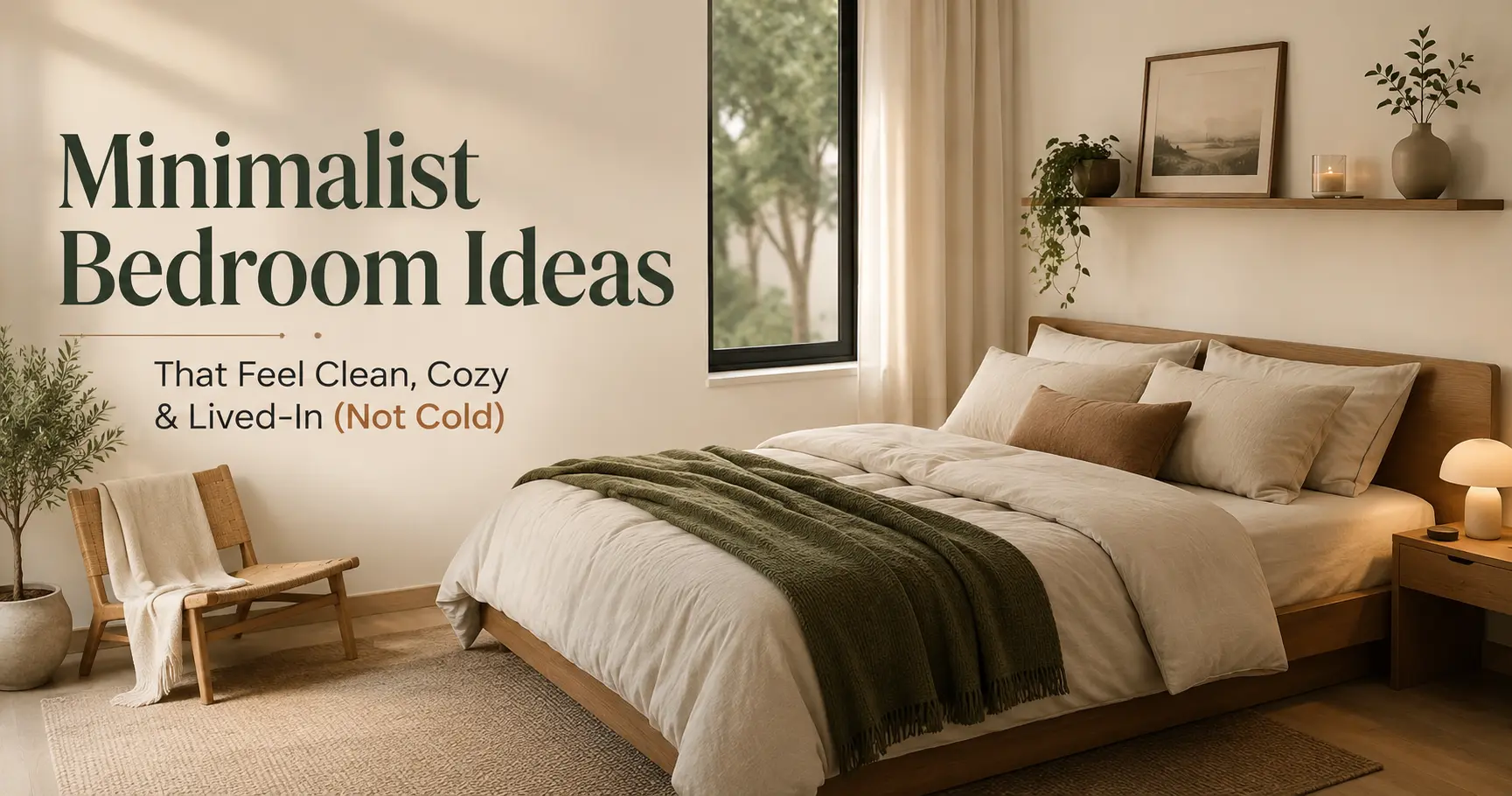
Many minimalist bedrooms end up as a white box with a bed and nothing else, the kind of room that photographs well but is hard to relax in. Minimalism isn’t about owning less for the sake of it. It can simply mean keeping what you actually use, so the space feels calm instead of empty.
This guide covers how to design a minimalist bedroom that still feels warm, personal, and comfortable, with specific color combinations, furniture choices, lighting setups, and storage tricks you can actually use, not just look at.
What Makes a Bedroom Feel “Minimalist” Without Feeling Empty
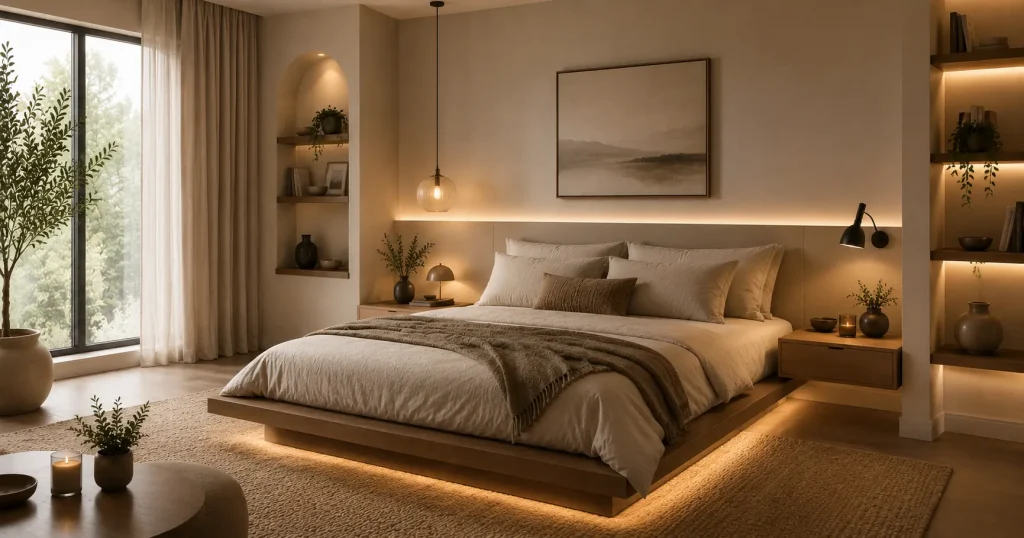
The difference between a minimalist bedroom and an empty one usually comes down to three things: a limited but intentional color palette, furniture that does more than one job, and texture to stop the room from feeling flat.
A common mistake is stripping a room of color and pattern entirely, thinking that’s what minimalism means. A calm, inviting room often has one dominant neutral, one supporting tone, and at least one layer of texture (a woven throw, a linen headboard, a wool rug) so the eye has something to rest on besides bare walls.
For example, take a bedroom with white walls, a white duvet, and a bare floor. It looks tidy, but it feels flat. Adding just a wool rug, a linen throw at the foot of the bed, and one oak nightstand gives the room warmth without adding clutter.
The 70-20-10 Rule for Bedroom Colors
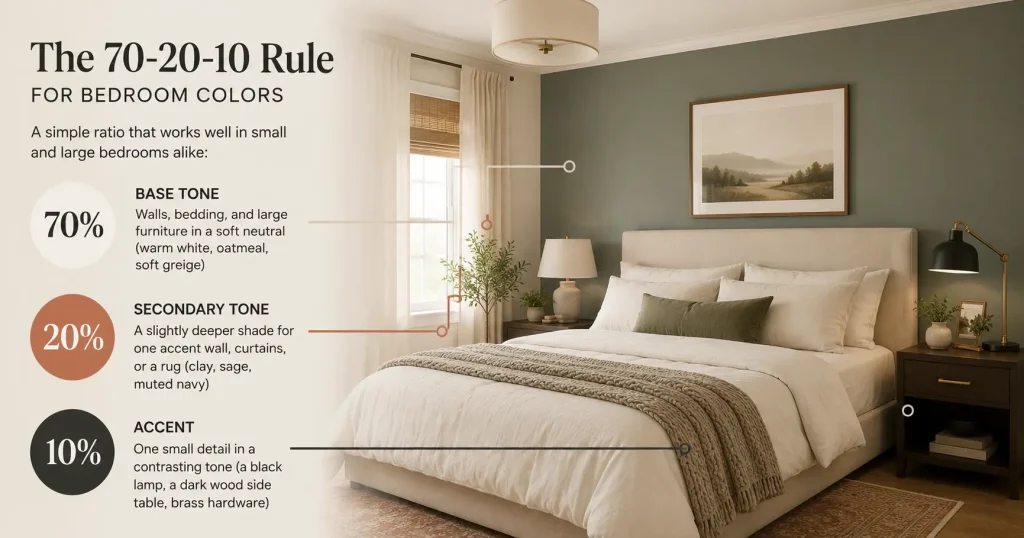
A common design guideline you can use as a starting point:
- 70% base tone: walls, bedding, and large furniture in a soft neutral (warm white, oatmeal, soft greige)
- 20% secondary tone: a slightly deeper shade for one accent wall, curtains, or a rug (clay, sage, muted navy)
- 10% accent: one small detail in a contrasting tone (a black lamp, a dark wood side table, brass hardware)
This keeps the palette cohesive and stops the room from drifting into a flat, all-white look.
Colors to Try (With Pairings)
| Main Wall Color | Paint Example | Pairs Well With | Mood |
|---|---|---|---|
| Warm white / bone | Sherwin-Williams Alabaster (SW 7008) | Natural oak, terracotta accents | Soft, airy |
| Oatmeal / greige | Sherwin-Williams Accessible Beige (SW 7036) | Charcoal, black metal accents | Grounded, modern |
| Soft sage | Sherwin-Williams Evergreen Fog (SW 9130) | Warm wood, cream linens | Calm, earthy |
| Light grey-blue | Sherwin-Williams Sleepy Blue (SW 6225) | Walnut wood, white trim | Cool, restful |
Furniture: Fewer Pieces, But Each One Working Harder
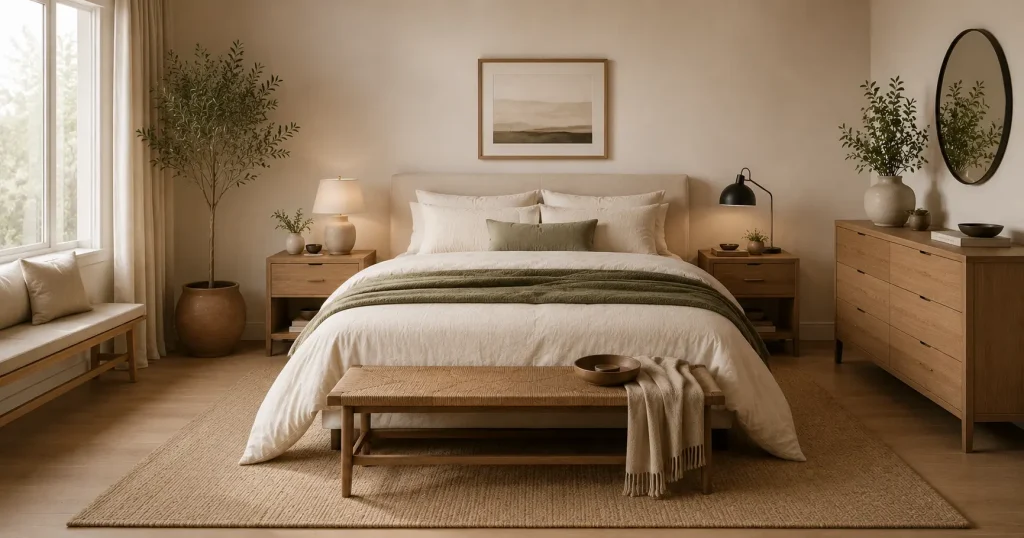
Minimalist doesn’t have to mean less furniture. What matters is that every piece has a clear purpose and nothing is duplicated. Before removing furniture, ask: Does this piece do something no other piece in the room does?
Bed Frame
Choose a low-profile frame in solid wood or upholstered linen rather than an ornate headboard. A platform bed without a box spring can make a small room feel larger, since it lowers the visual weight of the largest object in the room.
Nightstands
Skip matching pairs with drawers on both sides if only one side is used. A single floating shelf on one side and a small stool-as-nightstand on the other breaks the symmetry on purpose, so it looks intentional.
Storage That Hides in Plain Sight
- A bed with built-in drawers underneath can remove the need for a separate dresser in small rooms
- Closed cabinets instead of open shelving keep visual clutter down. Open shelving only works if you’re disciplined about what sits on it
- A slim bench at the foot of the bed doubles as seating and blanket storage
Lighting: The Detail Most Guides Skip
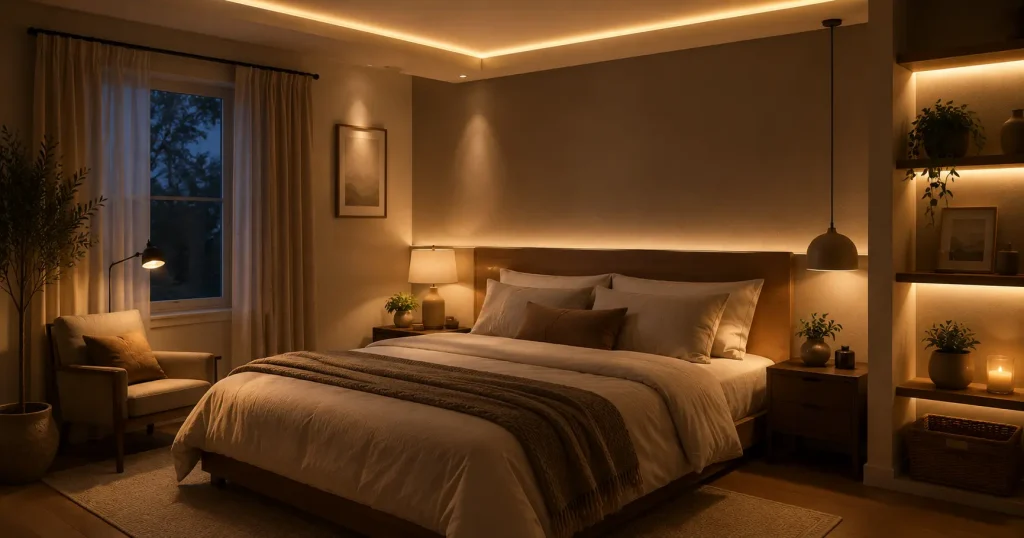
Lighting changes how “clean” a room feels, because harsh overhead light exposes every object and shadow in the room, while layered lighting hides clutter and softens edges.
Layer Three Types of Light
- Ambient — a single ceiling fixture or flush mount, kept simple (avoid ornate chandeliers in a minimalist room)
- Task — a reading lamp on the nightstand or a wall-mounted swing-arm light, which frees up surface space
- Accent — a warm LED strip behind the headboard or under a floating shelf, used sparingly
Stick to warm white bulbs (2700K to 3000K) in the bedroom. Daylight bulbs (5000K and above) can feel harsh in a bedroom, and warmer light is easier to relax and wind down in.
Textures That Keep the Room From Feeling Cold
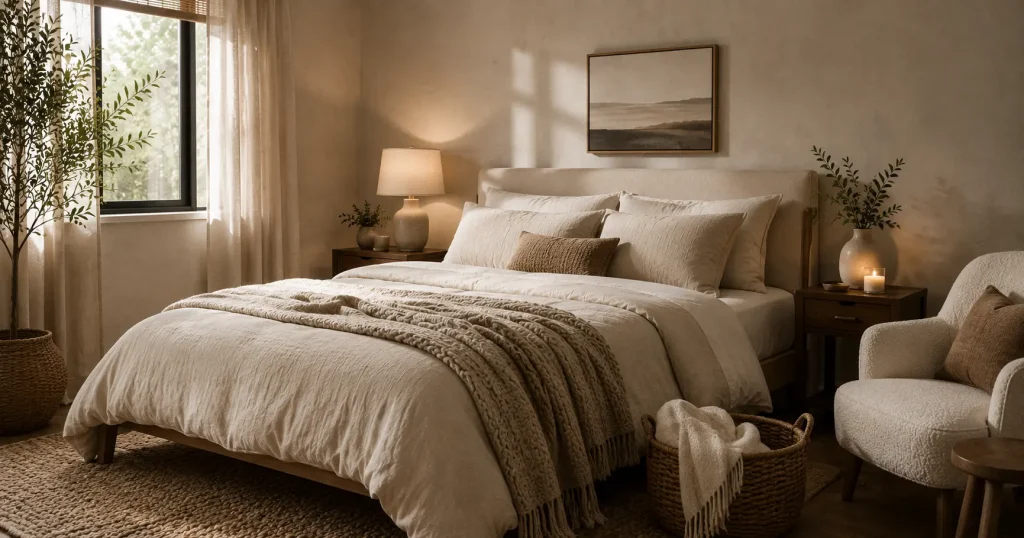
Skipping texture is a common reason a minimalist bedroom ends up feeling sterile instead of calm.
- Linen or cotton bedding instead of synthetic blends. It wrinkles naturally, which reads as lived-in rather than staged
- A wool or jute rug underfoot, even in a small room. Bare floors next to bare walls can make a room feel cold
- One woven or knit throw folded at the foot of the bed
- Wood tones somewhere in the room (frame, nightstand, or flooring) to offset cooler neutrals
Storage and Clutter Control (Without a Big Renovation)
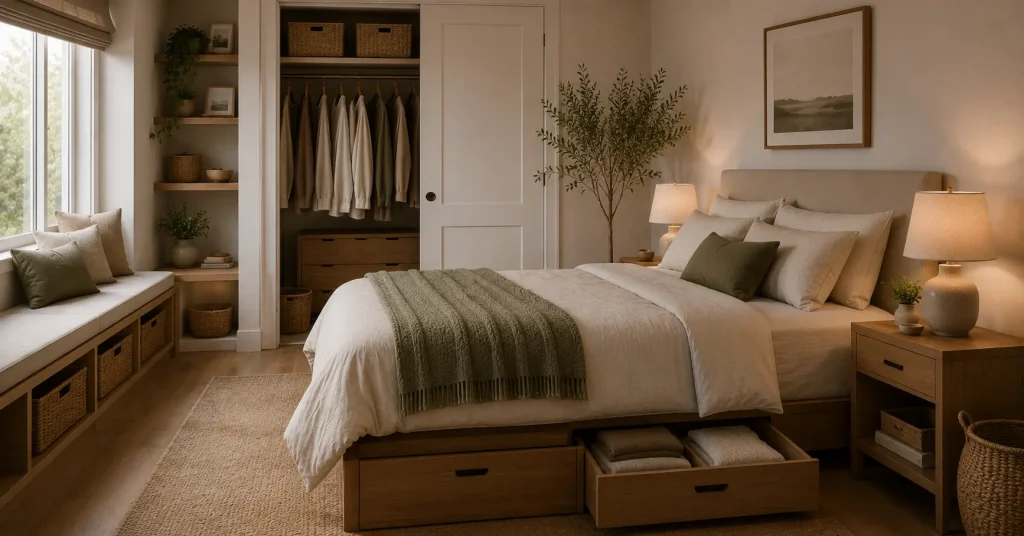
You don’t need built-in wardrobes to keep a minimalist bedroom functional. A few low-cost changes can go a long way:
- The “one in, one out” rule for anything placed on a nightstand or dresser top
- A closed hamper instead of a visible laundry basket
- A single tray on the dresser to corral small items (keys, jewelry, glasses) instead of letting them spread across the surface
- Under-bed storage boxes for out-of-season items, keeping the closet itself uncluttered
A Simple Room-by-Room Checklist
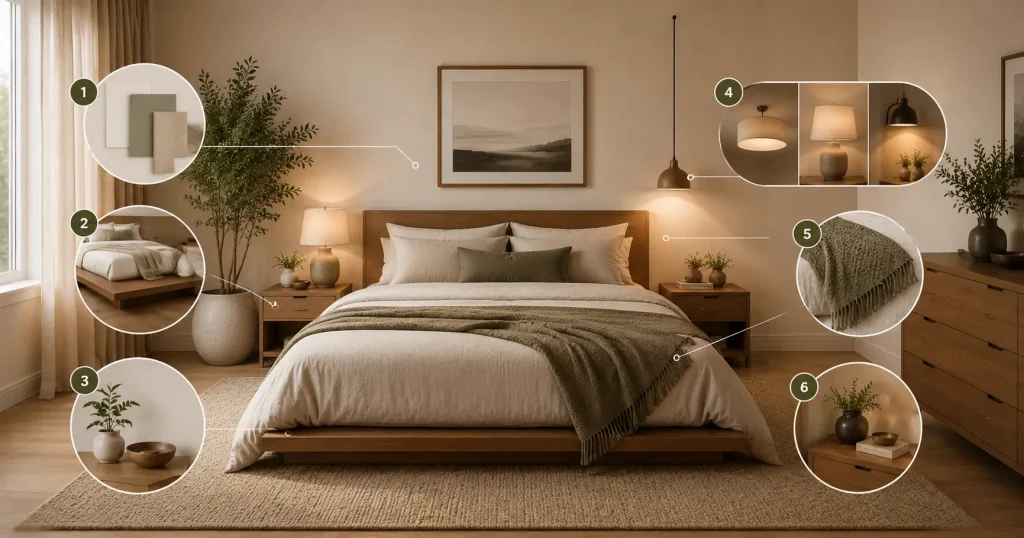
- One dominant neutral wall/bedding color, one secondary tone, one small accent
- The bed frame is low-profile or platform style
- No duplicate furniture pieces serving the same function
- At least three light sources at different heights (ambient, task, accent)
- At least one textured element (rug, throw, or linen bedding)
- Surfaces kept clear apart from the lamp, a tray, and 1 to 2 intentional objects
Final Thoughts
Start with one change from this guide, whether that’s fixing the lighting layers or adding a textured element like a wool rug, and build from there instead of redoing the whole room at once.
If you’re working on the rest of your home, check out our guide to small living room decor ideas for more room-by-room ideas.
Frequently Asked Questions
How do I make a small bedroom feel minimalist without making it feel empty?
Focus on furniture that serves more than one purpose, like a bed with built-in storage or a bench that doubles as seating and storage, rather than simply removing furniture. Layered lighting and a textured element (a rug or throw) can also help a small room feel less bare.
What’s the difference between minimalist and Scandinavian bedroom design?
Minimalist design focuses on function and restraint. Scandinavian design shares that restraint but leans more on natural wood, cozy textiles, and warmer tones. A minimalist bedroom can be cooler and more monochrome, while a Scandinavian one usually includes warm wood and layered textiles.
Is a rug necessary in a minimalist bedroom, and what size should it be?
Not strictly necessary, but it can make a noticeable difference. Bare floors combined with bare walls are a common reason a minimalist bedroom feels cold rather than calm. Under a queen bed, a common guideline is an 8×10 ft rug that extends roughly 18 to 24 inches past the sides and foot of the bed.

Emily Johnson writes about affordable home styling and budget-friendly decor for Pretty Home. She focuses on practical, easy-to-follow ideas that help homeowners and renters create beautiful, high-end looking spaces without overspending.

Pingback: 17 Stunning Minimalist Cozy Interiors Design Ideas That Feel Warm, Not Empty - Pretty Home