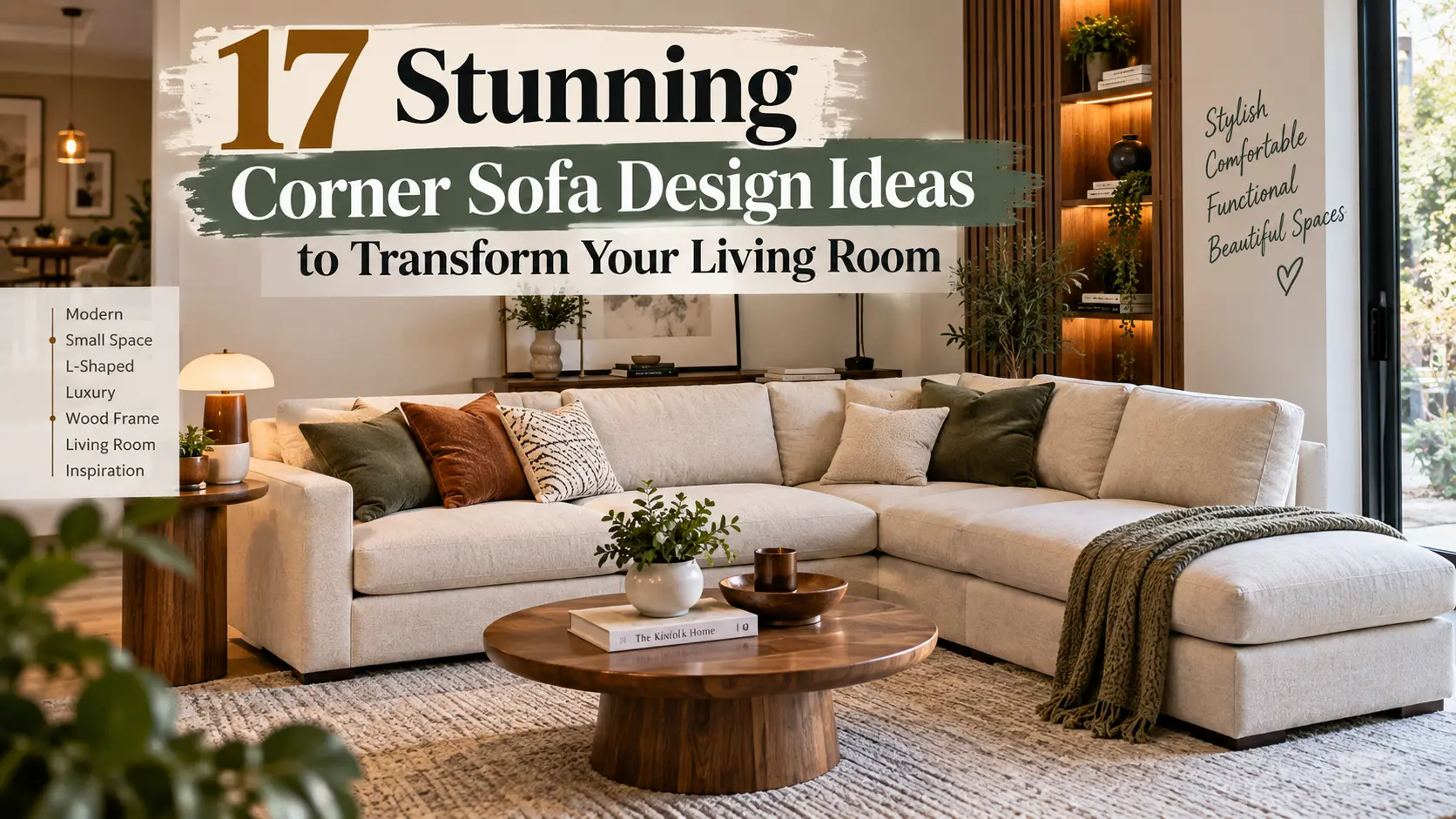
When I redesigned my own living room last year, corner sofa design was the very first decision I had to get right. Everything else — the rug, the coffee table, the lighting — followed from that one choice. After testing five different layouts in my own home, I’ve learned exactly what makes one feel intentional instead of accidental.
I’ve also spent time in showrooms comparing cushion fill and asking sales reps how their fabrics actually hold up after years of daily use — details most design roundups skip, but I’ve folded them in below.
Whether you’re working with a cozy studio or a sprawling family room, there’s an idea here that will fit. I’ve organized these ideas by style and by room situation, so feel free to jump to whichever section matches what you’re solving for right now. Let’s get into it.
What Makes a Great Corner Sofa Design
Before we dive into specific styles, I always check three things when evaluating a corner sofa design: proportion, traffic flow, and fabric durability. Skip any one of these and it ends up looking cramped or feeling impractical within a few months — I learned this the hard way with my first apartment sectional, which was two inches too deep for my doorway.
Proportion means the sofa should fill roughly a third to half of your living room’s visual footprint. Traffic flow means leaving at least 30 inches of walking space around it. And fabric durability comes down to being honest about how the room actually gets used — kids and pets need a very different approach than a quiet reading nook.
Every idea below solves for at least one of these three factors.
Modern Corner Sofa Design Ideas
1. Low-Profile Platform Sectional
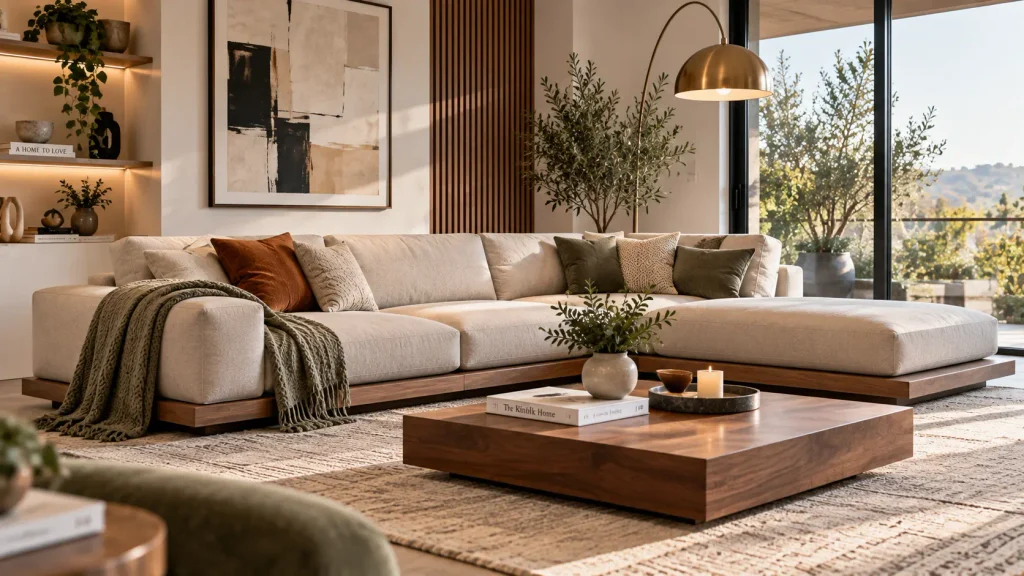
This modern sectional style almost always starts low. Dropping the seat height to around 15–16 inches instantly makes a room feel more spacious, especially in open-concept homes.
2. Two-Tone Upholstery
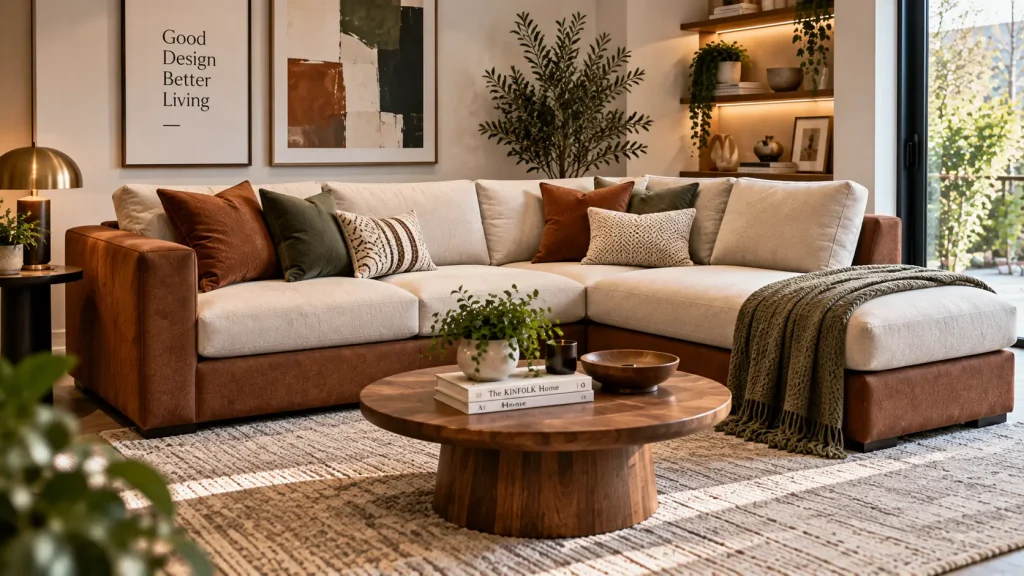
Pairing a neutral base with a contrasting bolster or throw is one of the easiest ways to modernize the look without committing to a bold color on the whole piece.
3. Exposed Metal Legs
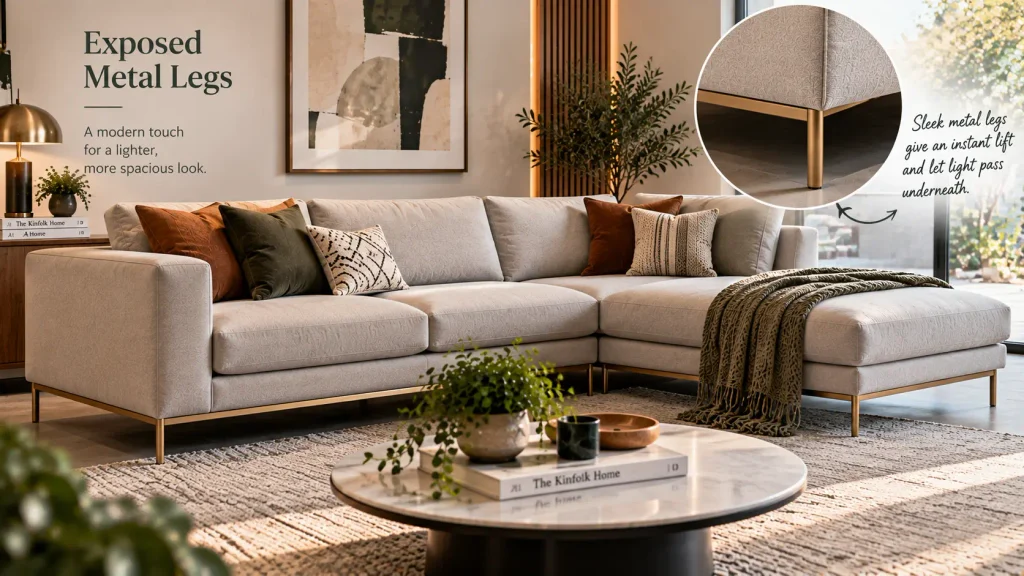
Swapping bulky wooden feet for thin brass or matte black metal legs gives it an instant lift — visually and literally, since it lets light pass underneath.
4. Modular Configuration
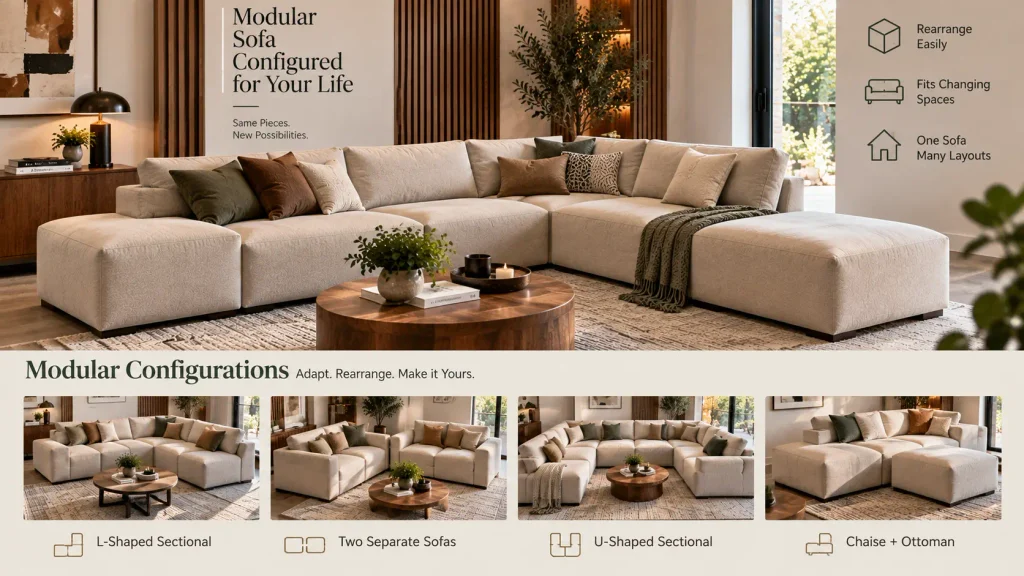
Modern corner sofa design increasingly means modular: pieces you can rearrange as your space changes. Brands like Burrow built their whole reputation on this, with modular sectionals generally priced in the mid-range to upper-mid-range bracket — and a modular piece can be reconfigured into two separate loveseats without buying anything new.
Simple Corner Sofa Designs for Small Spaces
5. Reversible Chaise Sectional
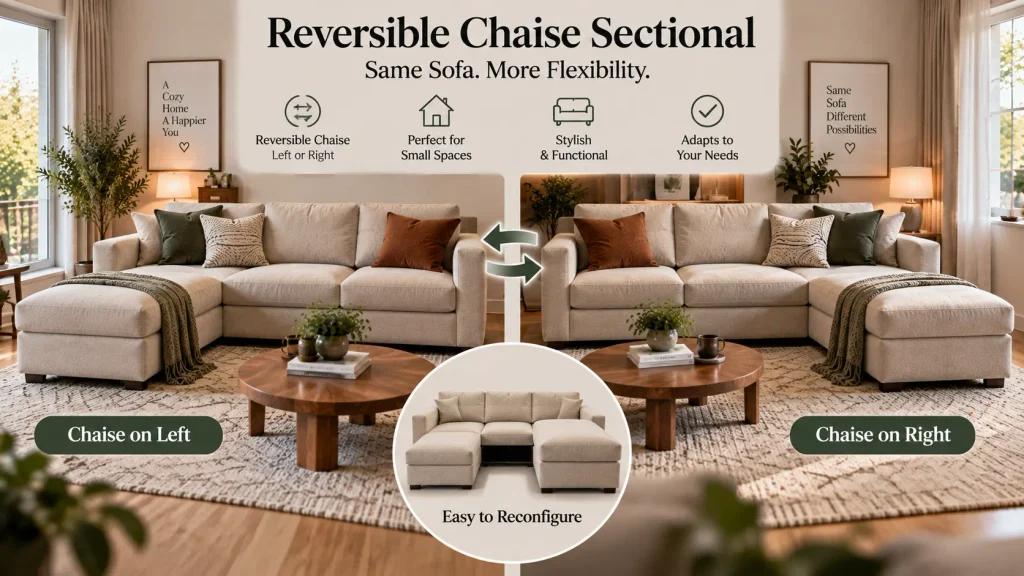
If you’re short on square footage, a simple corner sofa design with a reversible chaise lets you adapt the layout without buying a new piece. IKEA’s Vimle series is one of the most flexible, budget-friendly options I’ve tested.
6. Small Sectional Sofa with Slim Arms
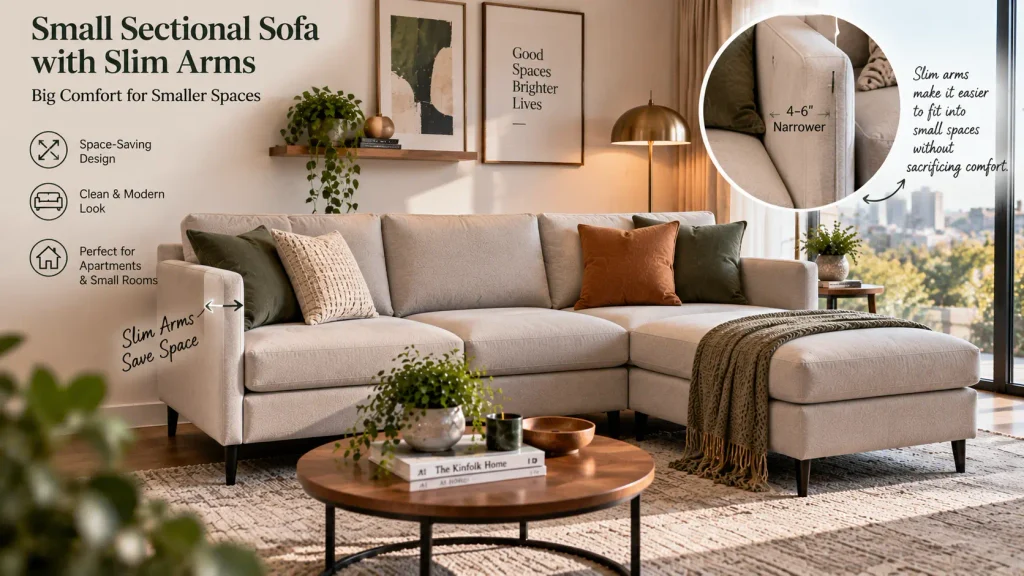
A small sectional sofa with track arms (rather than rolled or tufted arms) can save 4–6 inches of width per side — genuinely enough to change whether a piece fits your room at all.
7. Corner-Hugging Curved Frame
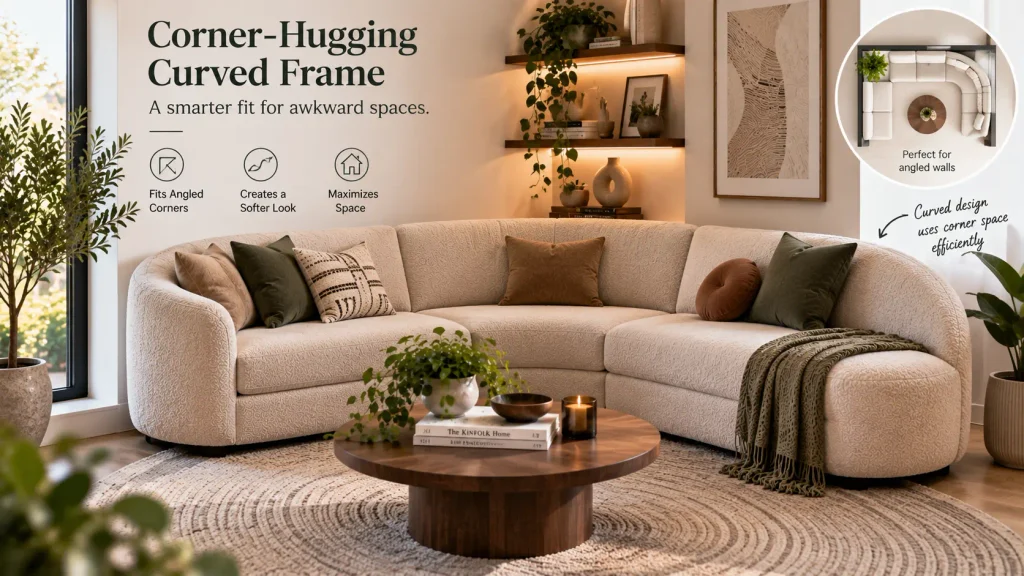
For awkward angled walls, a design that gently curves into the corner uses the space more efficiently than a standard L-shape. A textured bouclé fabric or a single patterned throw pillow keeps things visually interesting without adding bulk.
Corner Sofa Design Ideas for Living Room Layouts
8. Anchoring the TV Wall
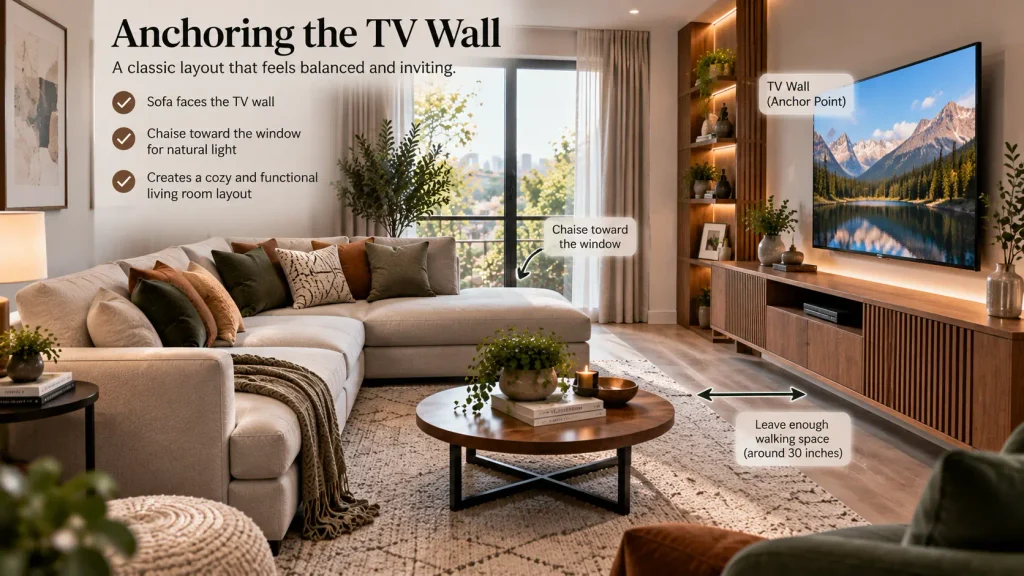
The most common corner sofa design for living room layouts places the sofa facing the media wall, with the chaise end pointed toward a window for natural light during the day.
9. Floating Corner Placement
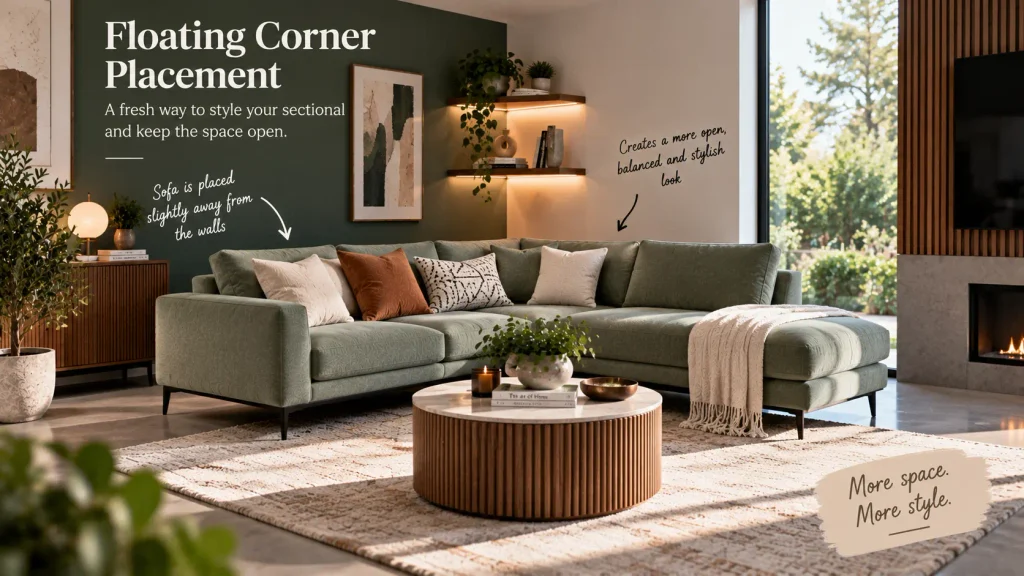
Rather than pushing it against the wall, try floating your sofa in the room with a console table behind it — this works beautifully in larger living rooms and creates a natural walkway.
10. Conversation-First Layout
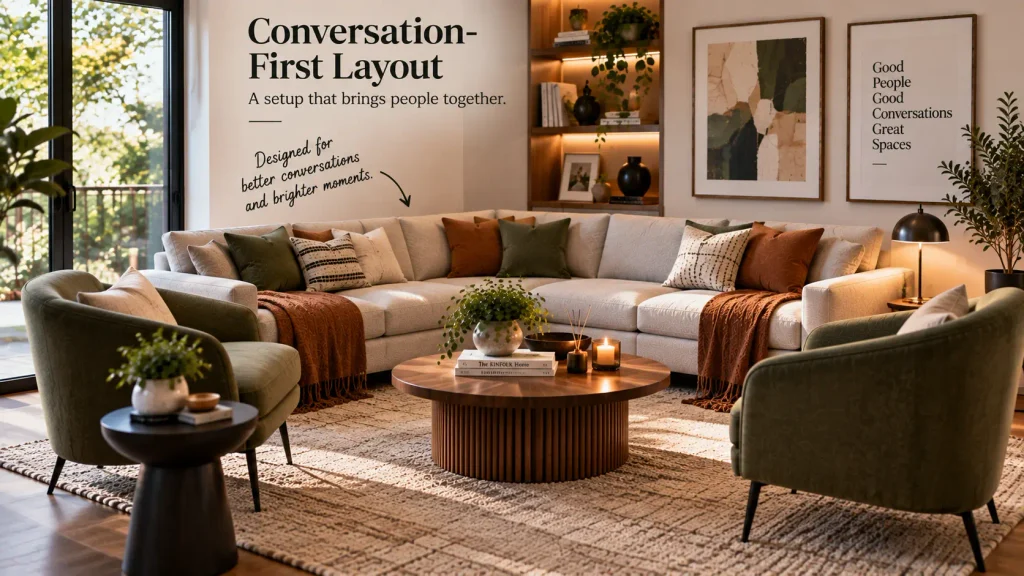
If you entertain often, angle your sofa toward an armchair pair instead of the TV — a small change that makes a big difference in how the room gets used.
Whichever layout you choose, leave clearance for a coffee table roughly two-thirds the length of the sofa.
Wood-Frame Corner Sofa Designs
11. Exposed Wood Base
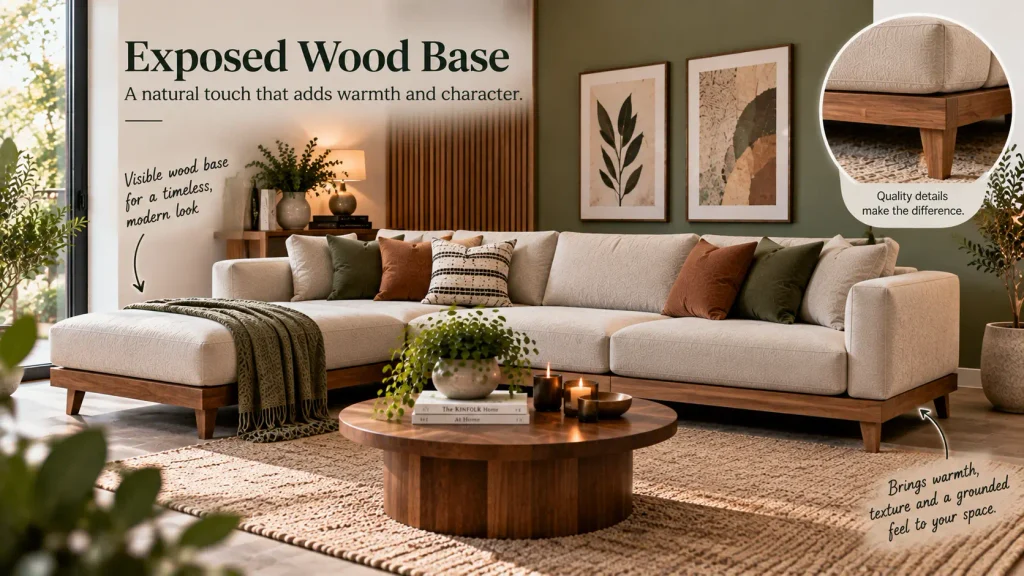
A wood-trimmed sofa base — think oak or walnut along the bottom — adds warmth that pure upholstery can’t. Article’s Sven collection, priced in the mid-range bracket, is a favorite of mine for this look.
12. Wood-Trimmed Arms
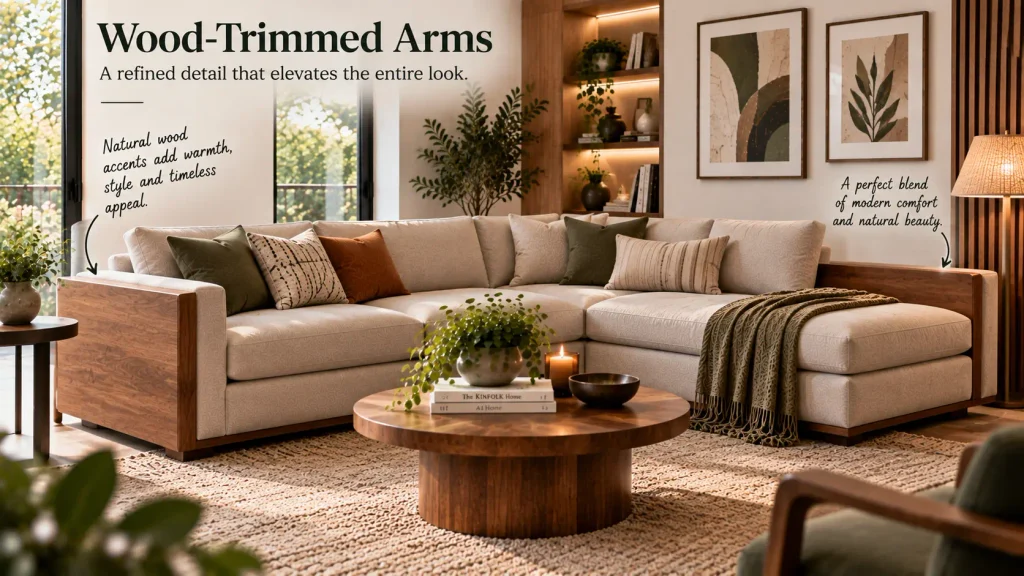
Even just wood detailing on the armrests can transform the look, especially in mid-century or Scandinavian-inspired rooms. Pair it with a low walnut coffee table for a cohesive look.
L-Shape Corner Sofa Design Inspiration
13. Classic L-Shape in Neutral Linen
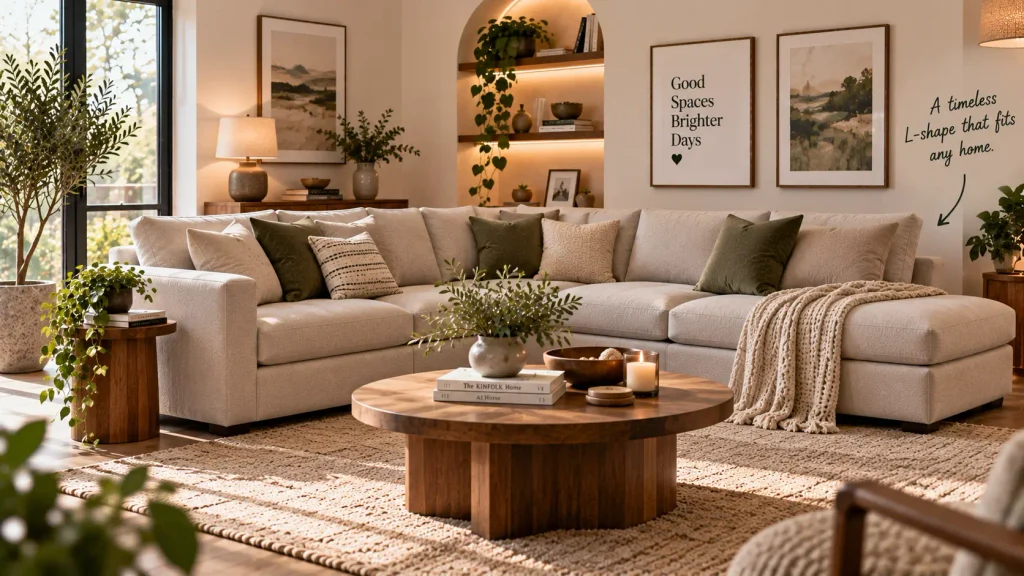
An L shape corner sofa design in a washable linen blend is, in my experience, the single most versatile piece you can buy for a family living room.
14. L-Shape with Built-In Storage
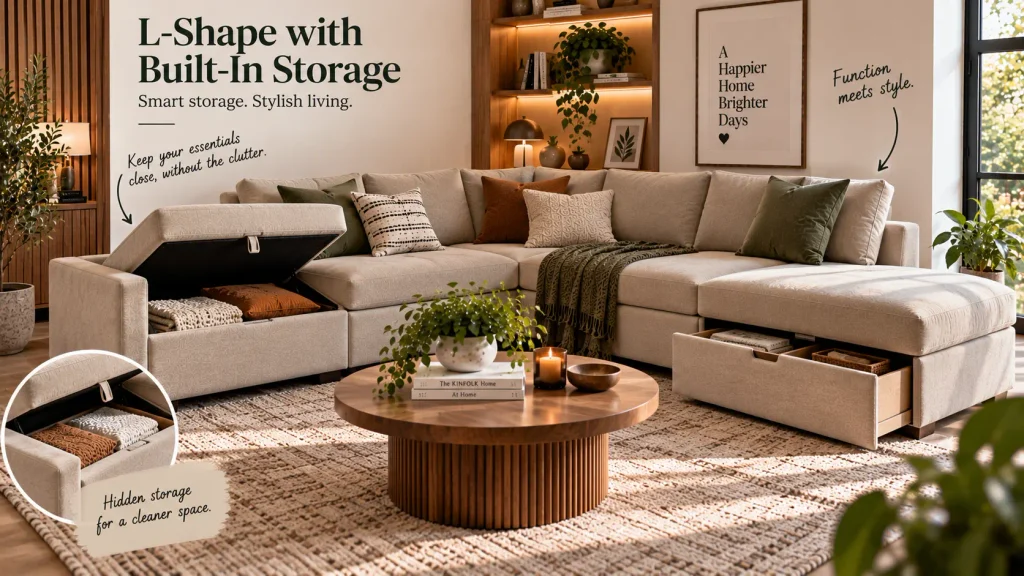
Look for an L-shape sectional with a lift-up chaise — an easy way to hide blankets, board games, or seasonal items. It’s one of the most requested features I hear about from readers with young kids.
Luxury Corner Sofa & Chesterfield-Inspired Styles
15. Tufted Chesterfield Corner Sofa
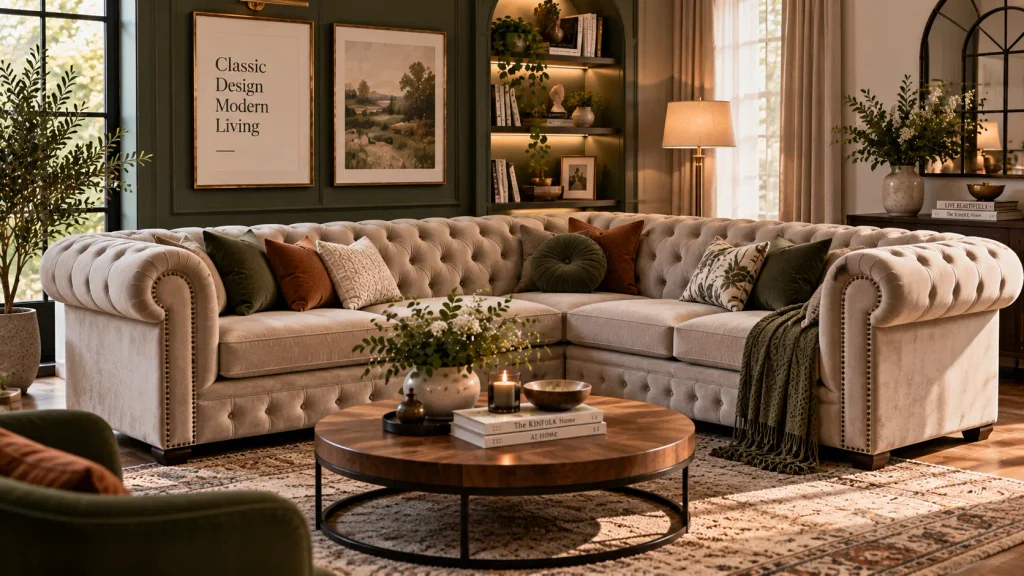
A chesterfield sofa living room look — deep button-tufting, rolled arms — translates surprisingly well into a corner configuration, and it instantly reads as luxury corner sofa design.
16. Velvet Upholstery in Jewel Tones
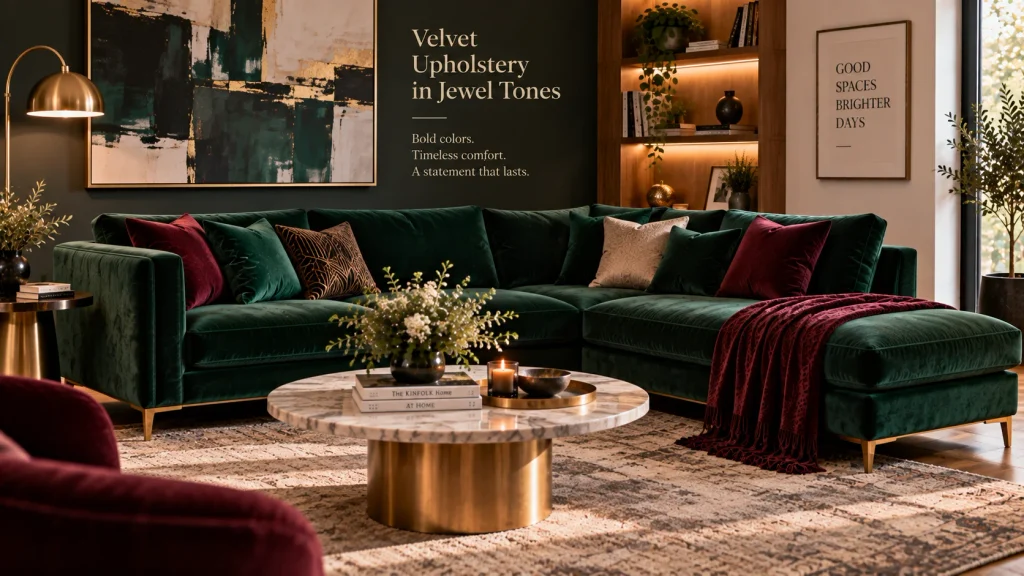
For a genuinely luxury look, velvet in emerald, navy, or burgundy does more visual work than almost any other choice. Just know velvet shows crush marks more than performance fabrics, so it suits formal rooms better than high-traffic ones.
Trending Sectional Styles: Curved, Boneless, U-Shaped & Reclining
17. The New Wave of Sofa Shapes
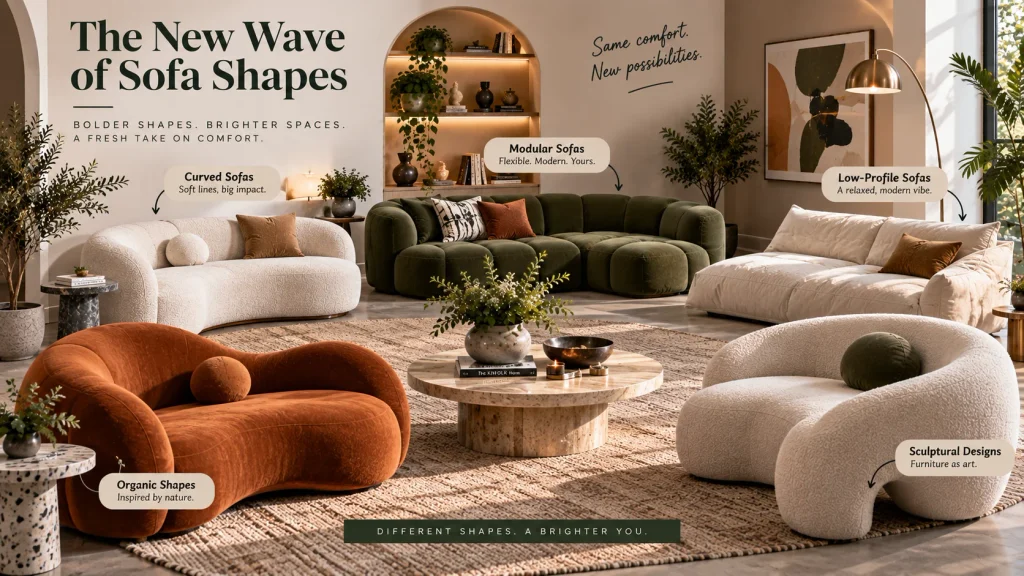
This is where Pinterest trends and corner sofa design overlap most right now. Curved, boneless, U-shaped, and reclining sectionals are all gaining ground. Curved silhouettes soften sharp-cornered rooms and photograph beautifully, while the soft, pillow-like “boneless” look has become one of the most-saved styles on Pinterest this year. U-shaped configurations maximize seating for larger families, and reclining models with built-in footrests are especially useful for dedicated movie or TV spaces.
Mixing elements — a curved arm with a boneless cushion structure, for example — is exactly what’s trending in living room sofa and sectional couch styling for 2026.
Common Corner Sofa Design Mistakes to Avoid
Before you shop, it helps to know where most people go wrong. In all my years covering this topic, these are the mistakes I see repeated most often:
- Buying the display model’s size, not your room’s size. Showrooms are large and make sectionals look smaller than they are. Always measure your actual space first.
- Ignoring the chaise direction. A reversible chaise seems flexible, but many aren’t reversible after assembly — confirm this before you buy.
- Choosing fabric by feel alone. A soft showroom sample can still fail a Martindale rub test for durability. Ask for the rub count, especially for a high-traffic sectional.
- Forgetting doorway and stairwell width. This is the single most common reason people end up returning it.
Styling Tips to Finish the Look
A well-chosen corner sofa design still needs the right supporting pieces to feel complete:
- Layer two rug sizes. A jute base rug under a smaller patterned rug adds texture without overwhelming the room — my rug sizing guide walks through exact measurements for different room sizes.
- Vary pillow heights. Mixing a 20-inch and an 18-inch pillow along the back of your sofa creates a more natural, lived-in look than matching pairs.
- Add one asymmetrical element. A single floor lamp or an off-center gallery wall keeps an otherwise symmetrical layout from feeling too formal.
How to Choose the Right Corner Sofa for Your Living Room
When I’m advising friends on corner sofa design, I always walk them through the same checklist:
- Measure twice. Map your doorway, hallway, and stairwell widths before falling in love with any sectional couch living room configuration.
- Fabric matters more than color. Performance fabrics (Crypton, Sunbrella-treated blends) hold up far better than raw linen if you have kids or pets.
- Budget realistically. Entry-level pieces from retailers like Wayfair tend to be the most affordable, mid-range options from West Elm or Pottery Barn cost noticeably more, and designer-level luxury corner sofa design pieces sit at the top of the range. Prices vary considerably by configuration, upholstery, and retailer, so it’s worth comparing a few current listings before you commit.
- Test the chaise length. If you’re taller than 5’8″, sit in the chaise before buying — many budget small sectional sofa options run short.
- Consider delivery logistics. Many modular sectionals ship flat-packed in individual boxes (Burrow and IKEA both do this), which makes narrow staircases and elevator-only buildings far less stressful than a one-piece sectional delivery.
- Don’t skip the return policy. Even with careful measuring, a piece can look different in your actual room than it did online. Look for brands offering at least a 30-day trial period.
For more room-planning basics, check out my small living room layout guide here on the blog. And if you want to go deeper on sizing and shape before you buy, Crate & Barrel’s sectional sofa buying guide is a genuinely useful reference for measuring your space and comparing configurations.
Final Thoughts
A great corner sofa design isn’t about chasing every trend at once — it’s about matching the shape, fabric, and configuration to how you actually live in your space. Whether you gravitate toward a modern low-profile sectional, a cozy boneless couch living room look, or a classic L-shape sectional in linen, the ideas above should give you a solid starting point for your own living room sofa search.
I’d love to hear which style you’re leaning toward — save your favorite ideas above to your Pinterest board for later!
Frequently Asked Questions
Is a corner sofa design good for a small living room?
Yes — it uses floor space more efficiently than two separate seating pieces. Just choose a small sectional sofa with a shorter chaise (75–85 inches total).
What’s the difference between a corner sofa design and an L-SHAPED sectional?
The terms are used almost interchangeably in the US. Technically, a corner sofa sits flush in a 90-degree corner, while an L-shape can float anywhere — but most modern sectionals today do both.
How much should I budget for one?
It depends heavily on configuration, upholstery, and retailer — entry-level options (IKEA, Wayfair) tend to be the most budget-friendly, mid-range picks (Article, Burrow, West Elm) cost noticeably more, and designer-level luxury pieces sit at the top. It’s worth comparing a few current listings rather than relying on a fixed number, since furniture pricing shifts often.
Which fabric holds up best with kids or pets?
Performance fabrics like Crypton or a tight polyester-blend chenille outlast natural linen or velvet for durability and stain resistance.
Can this style work in a room with an odd-shaped corner?
Yes — a curved-frame or modular sectional adapts to angled walls much better than a fixed L-shaped frame.

Emily Johnson writes about affordable home styling and budget-friendly decor for Pretty Home. She focuses on practical, easy-to-follow ideas that help homeowners and renters create beautiful, high-end looking spaces without overspending.
Pingback: 17 Stunning Minimalist Cozy Interiors Design Ideas That Feel Warm, Not Empty - Pretty Home