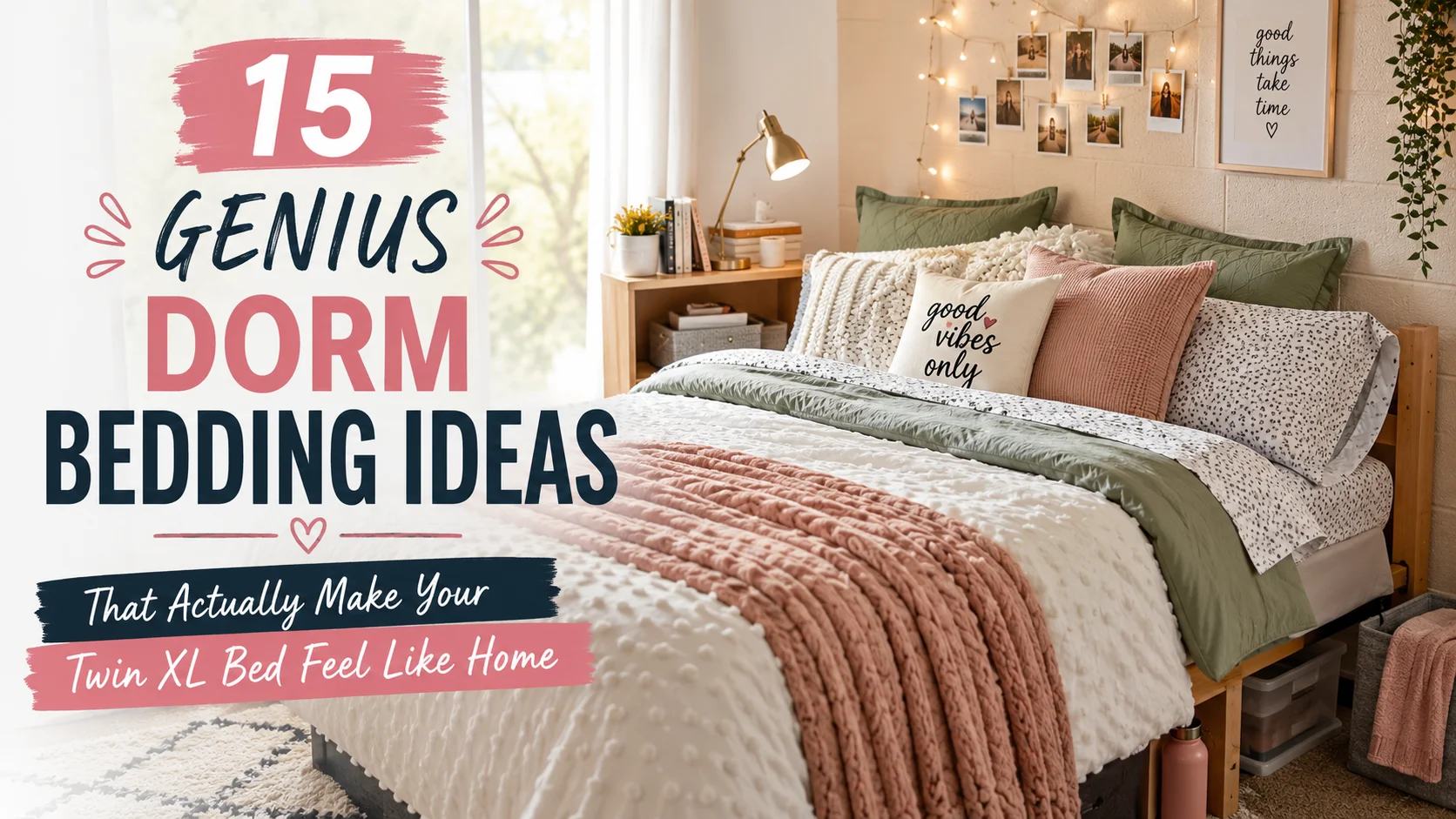
Dorm bedding ideas were the first thing I searched for the week before my daughter moved into her Twin XL dorm bed, and I quickly realized most “inspiration” lists online show gorgeous photos without telling you what actually holds up after week three of communal laundry machines and late-night study sessions. I’ve now helped style three different dorm rooms — my daughter’s, my niece’s, and a family friend’s — and I’ve learned exactly which pieces are worth the money and which ones look great in a photo but fall apart by October.
Below are the 15 dorm bedding ideas I actually use every time, in the order I’d tackle them — from the biggest style decision down to the smallest finishing touch.
What Makes Dorm Bedding Different From Regular Bedding
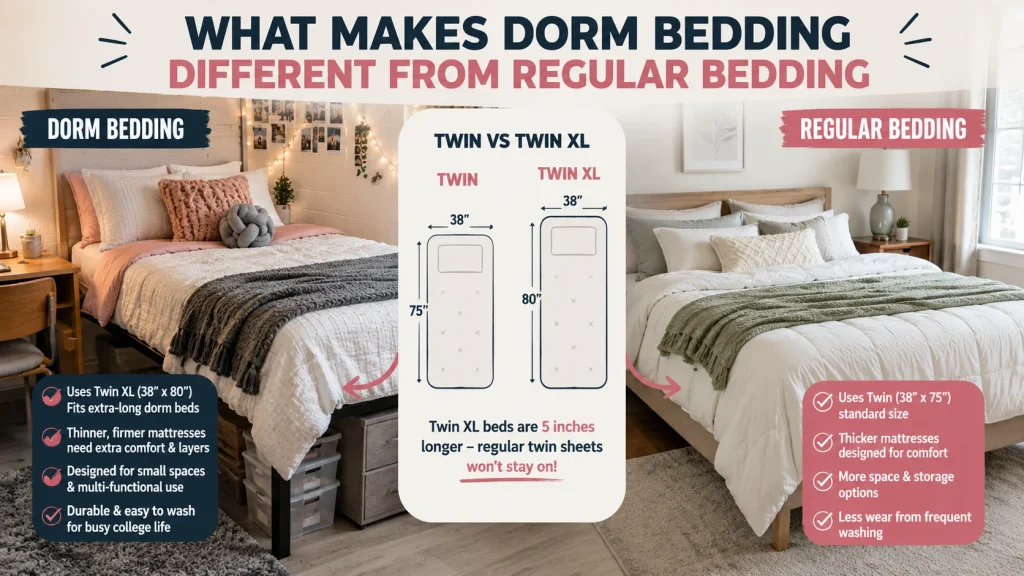
Before you buy anything, it helps to understand why dorm bedding ideas don’t always translate from regular bedroom advice. Most college dorm beds use a Twin XL mattress, which measures 38 by 80 inches — five inches longer than a standard twin (38 by 75 inches). If you or your student buys regular twin sheets by mistake, they’ll pop off the corners within the first week. This single detail trips up more first-year students than anything else on this list.
Dorm rooms also come with fixed constraints regular bedrooms don’t: shared walls, no nails allowed in most buildings, limited floor space, and a mattress that’s usually thin, firm, and not particularly comfortable on its own. Every idea below accounts for those realities.
1. Start With a Textured Comforter as Your Color Anchor
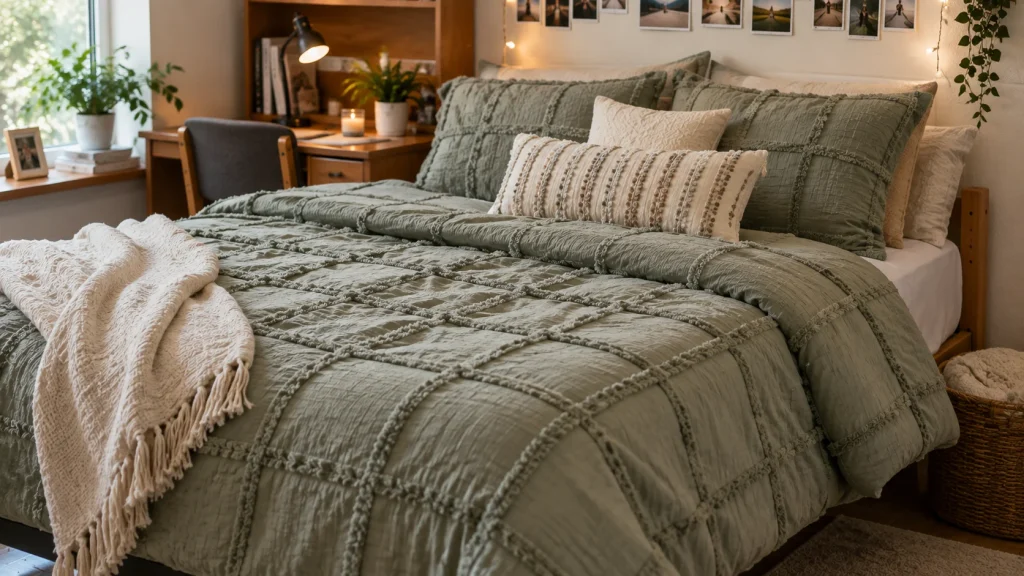
Of all the dorm bedding ideas in this guide, this is the decision I get asked about most. The comforter sets the color story for the entire bed, so I always recommend picking this first. Look for visible texture — a waffle weave, channel stitching, or a subtle quilted grid — instead of a flat, shiny surface, which photographs cheap and pills quickly. A quality comforter from IKEA or Target typically costs $60–$90, while a down-alternative option from Brooklinen or West Elm runs $100–$180 but holds its loft through dozens of washes, unlike cheaper polyester-fill versions that go flat by winter break.
2. Get Real Twin XL Sheets — Not Regular Twin
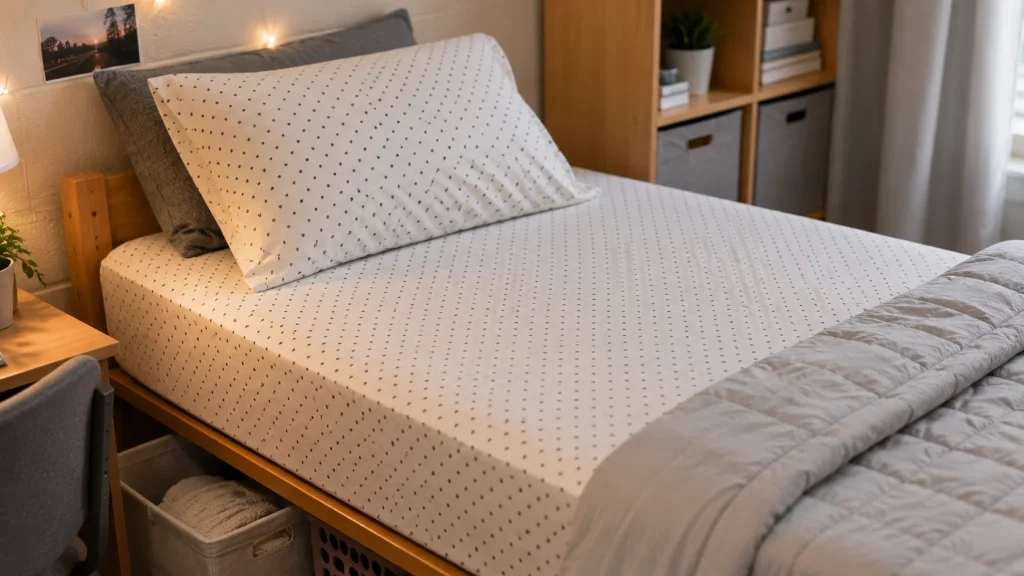
I mentioned this above, but it bears repeating: confirm the packaging explicitly says “Twin XL.” Beyond sizing, a microfiber or cotton-blend sheet set in the mid-range thread count holds up best against dorm laundry machines, which run hotter and rougher than home washers. A set from Target or Walmart usually runs $25–$40 and is one of the first purchases I make for any dorm setup.
3. Add a Mattress Topper for Comfort and Drape
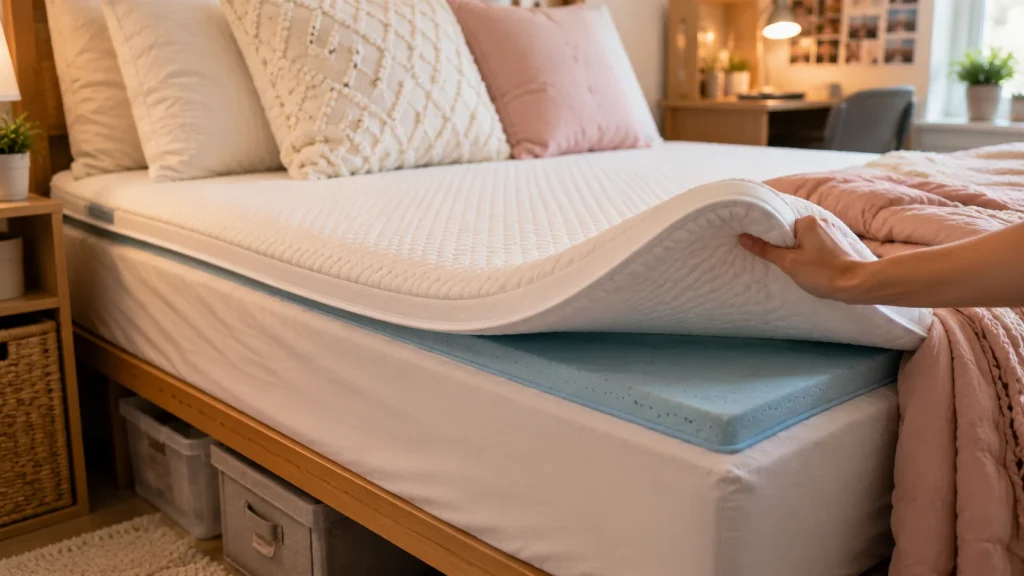
This is the most overlooked item on any dorm bedding ideas list, and honestly the one that made the biggest difference for my daughter. A 2-inch memory foam topper from Amazon Basics or Linenspa (around $30–$45) does two things at once — it makes the mattress genuinely more comfortable, and it raises the whole bed’s profile so the comforter drapes with more volume instead of hugging a flat, thin mattress.
4. Upgrade to Satin Pillowcases
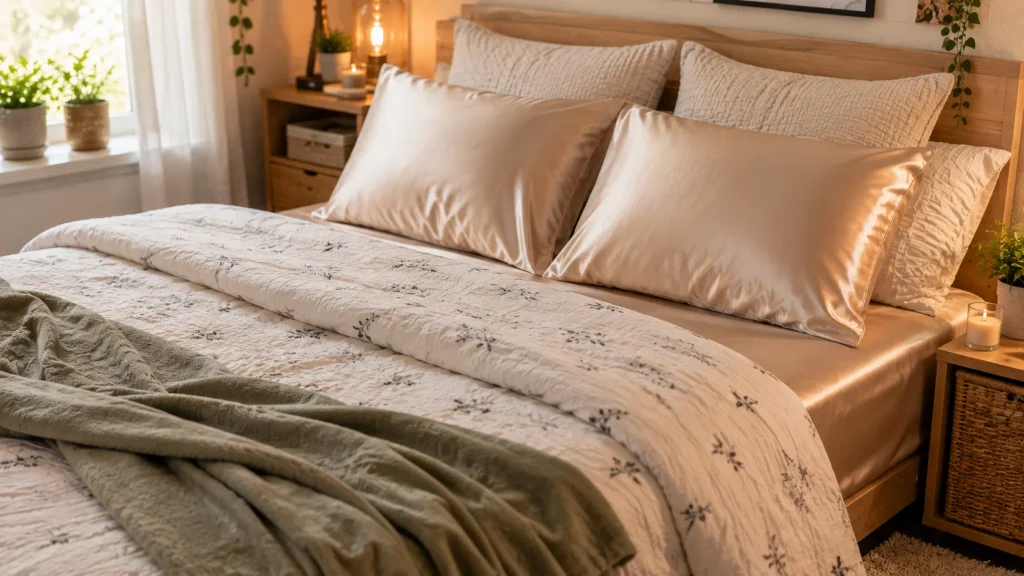
A basic set of satin pillowcases from Amazon (around $12–$15) is one of the cheapest upgrades that makes the biggest visual difference — I noticed this immediately when I swapped my niece’s plain cotton cases for a satin pair in a complementary color rather than an exact match to the comforter.
5. Layer a Chunky Throw at the Foot of the Bed
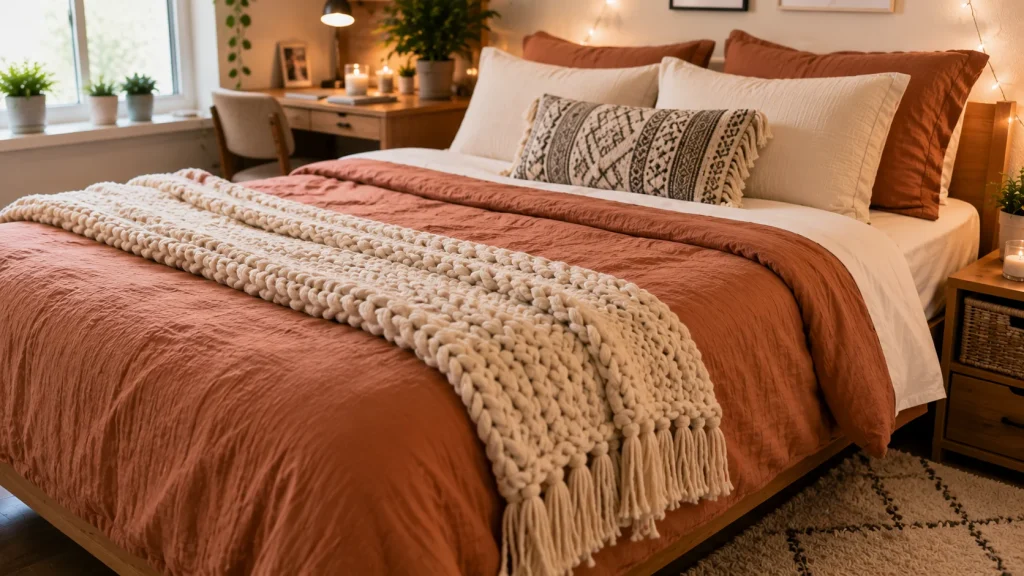
A chunky knit throw draped loosely across the foot of the bed adds texture without much cost — this is one of the least expensive changes on the list, and it’s the one guests notice first. Fold it off-center rather than perfectly flat; that small styling detail reads as lived-in rather than staged.
6. Add Two or Three Coordinating Decorative Pillows

For decorative pillows, I stick to two or three that repeat colors already in the comforter and throw. More than that starts to crowd a narrow Twin XL mattress and makes the bed harder to actually sleep in. Mixing textures — one linen, one boucle — adds depth without adding clutter.
7. Try a Duvet Cover Instead of Buying a New Comforter
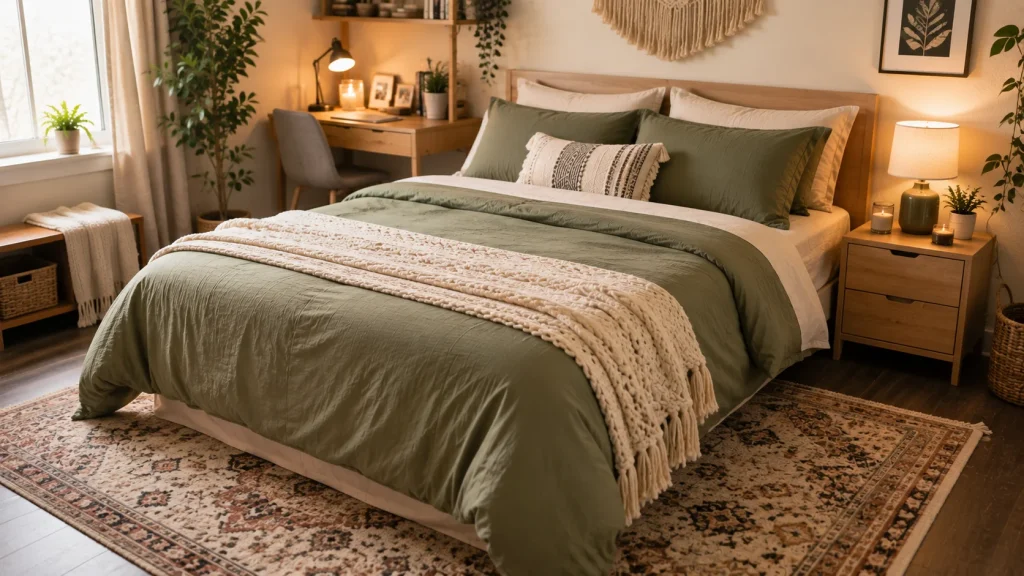
If you already own a decent comforter, a duvet cover from Urban Outfitters or Target ($40–$100) is the more budget-friendly move; it slips over any insert and instantly changes the look without buying a new comforter every year. It also makes laundry day easier since you only wash the cover, not the entire insert.
8. Add a Bed Rest Pillow for Studying in Bed

Dorm beds pull triple duty as a place to sleep, study, and hang out, so a bed rest pillow with arms is genuinely practical — not just decorative. Choosing one in a fabric that matches the bedding palette (velvet, linen, or sherpa) keeps it from looking like a random dorm-room prop.
9. Layer a Lightweight Quilt for Warmer Rooms
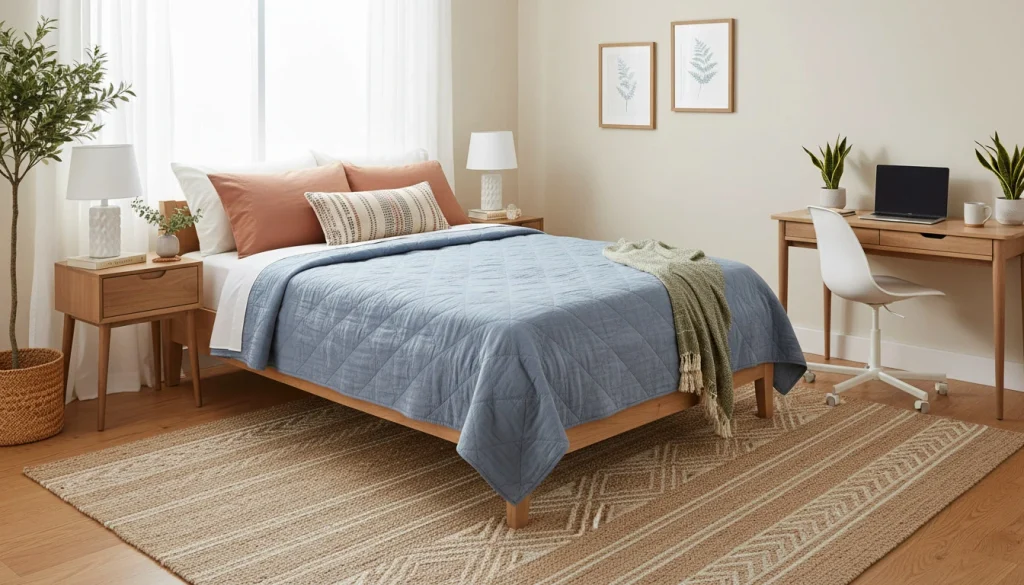
A quilt or coverlet ($50–$120) is the cooler-weather alternative to a chunky throw and works well folded across the lower two-thirds of the bed. It adds pattern without bulk, which matters in dorm buildings that tend to run warm.
10. Choose a Budget-Friendly Color Palette First
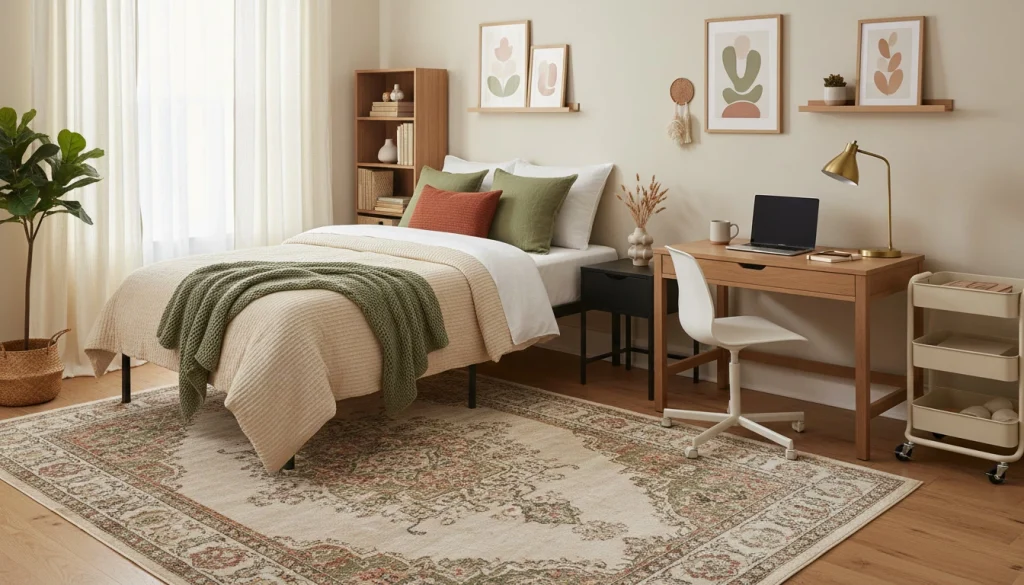
Out of every category of dorm bedding ideas, color is where things start to feel personal instead of generic. A few combinations that consistently work well in small dorm rooms:
- Boho Neutral: warm mushroom, oat, and terracotta — layers beautifully and hides everyday wear
- Coastal Calm: dusty blue, cream, and driftwood tones — feels fresh in a windowless room
- Dark Academia: deep forest green, burgundy, and warm brown — cozy for colder climates
- Soft Pastel: blush, sage, and ivory — a popular pick among the girls’ dorm rooms I’ve styled
Keep pillowcases and sheets one shade lighter or darker than the comforter rather than matching exactly — that subtle contrast is what makes a bed look styled instead of just assembled.
11. Match Under-Bed Storage to Your Bedding
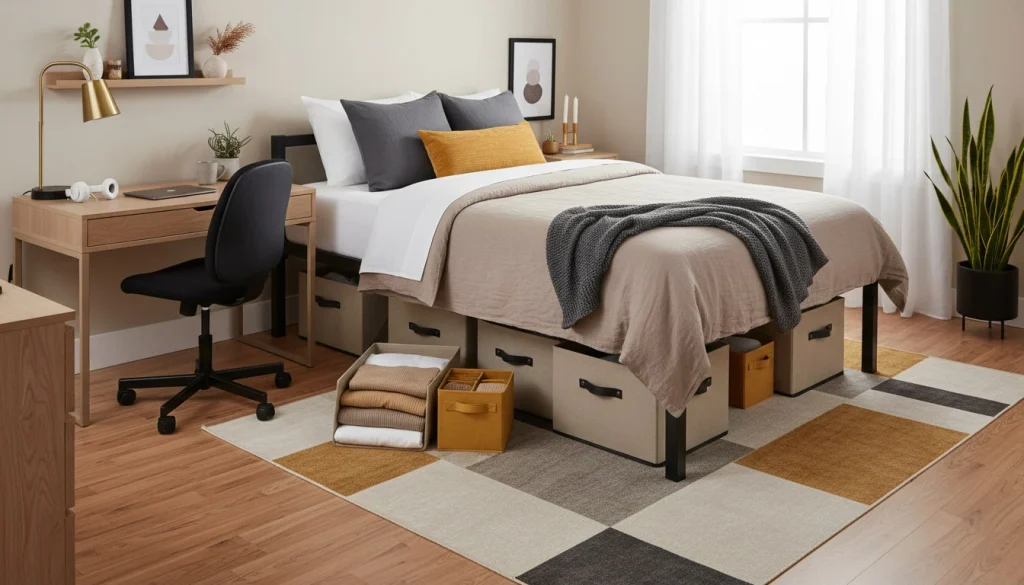
A dorm bed doesn’t end at the mattress edge — it ends at the floor. A woven storage basket or fabric bin tucked at the foot of the bed, in a material that matches the bedding palette, keeps the whole setup looking finished instead of cluttered rather than a random mix of plastic bins.
12. Hang a Blanket Behind the Headboard
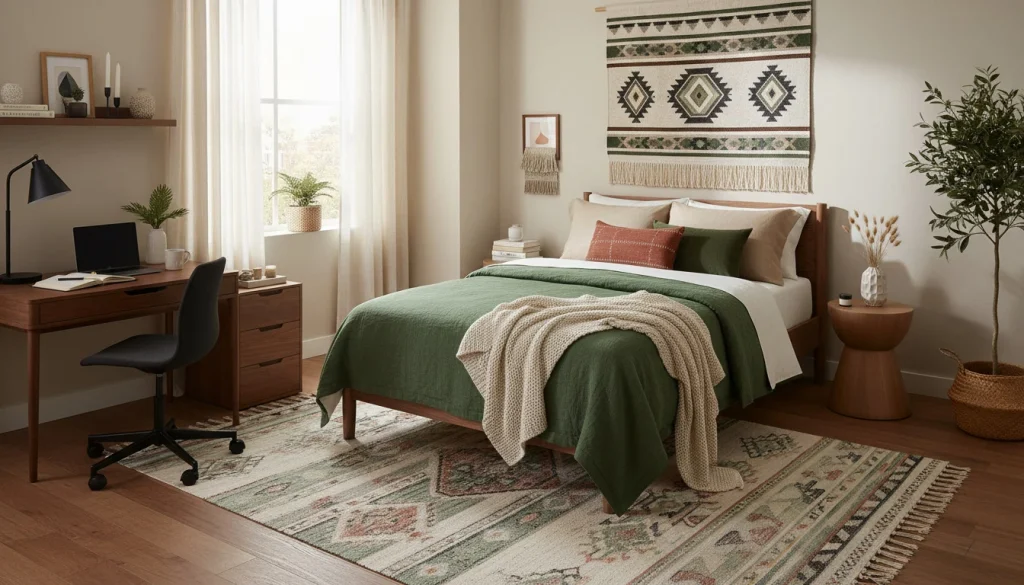
Since most dorm buildings don’t allow nails, draping a chunky knit or macramé blanket over a Command hook behind the headboard is one of the easiest ways to add warmth to a bare wall without any permanent fixtures. Keep it to one blanket — two starts to look like a storage problem instead of a design choice.
13. Use Bed Risers to Add Storage Underneath
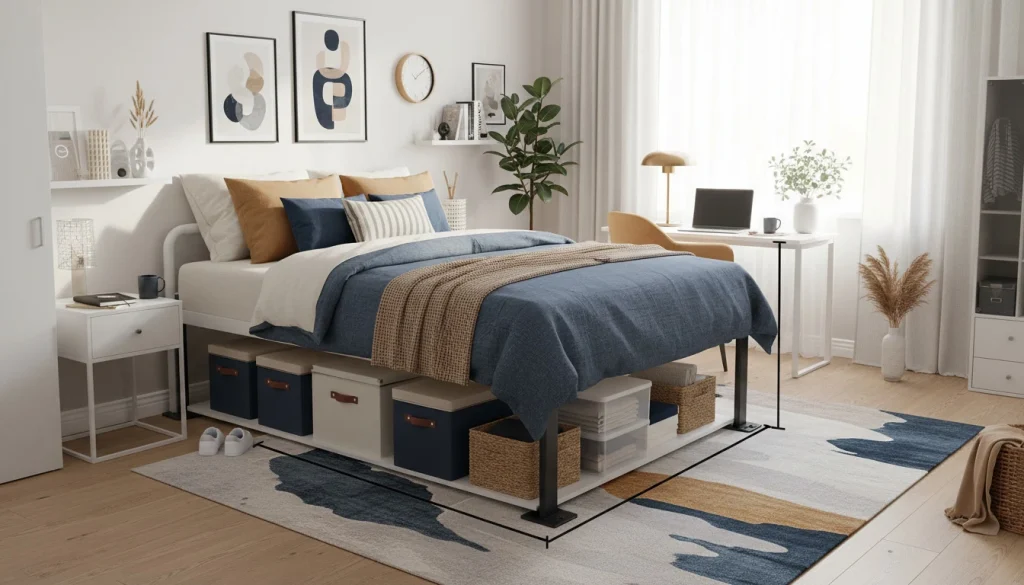
One of the more practical dorm bedding ideas on this list, bed risers ($15–$25) lift the entire bed frame a few extra inches, which opens up more room for storage bins underneath — genuinely useful in a room where floor space is already tight. This is a practical idea more than a visual one, but it makes every other bedding choice on this list easier to keep organized.
14. Pick a Reversible Comforter for Two Looks in One

A reversible comforter — solid on one side, patterned or a second color on the other — is one of the smartest budget moves in dorm bedding. It effectively gives you two different looks for the price of one, which is useful if a student wants to refresh the room’s feel partway through the year without buying anything new.
15. Add Warm String Lights Above the Headboard

This is the finishing touch that ties the whole bed together. A short strand of warm-white string lights tucked along the headboard or draped just above the pillows adds a soft glow that makes the whole setup feel considerably cozier at night, and it’s one of the few decor items that works in almost every dorm building’s fire safety guidelines (always double check your specific school’s policy first).
Comforter vs. Duvet Cover vs. Quilt: Which Is Right for a Dorm Bed?

These three dorm bedding ideas often get confused with one another, so here’s a quick side-by-side comparison to help decide which fits your situation.
| Feature | Comforter | Duvet Cover | Quilt |
|---|---|---|---|
| Best for | First-time dorm setups | Refreshing an existing comforter | Warmer climates or layering |
| Price range | $60–$180 | $40–$100 (cover only) | $50–$120 |
| Maintenance | Bulkier to wash | Wash cover only, easier | Lightweight, easy wash |
| Visual weight | Heaviest, most cozy | Customizable, changeable | Light, adds pattern |
For more small-space styling tricks that apply well beyond the dorm room, this approach carries over nicely to small living room decor ideas, where the same layering principles help a tight space feel intentional rather than cramped. As NBC Selected’s 2026 college dorm essentials guide points out, cozy bedding is one of the categories students and families specifically shop for to turn a temporary dorm room into a comfortable, personalized space.
Common Dorm Bedding Mistakes I See Every August
After helping style three different dorm rooms, I’ve noticed the same few mistakes come up again and again when people try to put dorm bedding ideas into practice too quickly — and they’re easy to avoid once you know what to look for.
Buying regular twin sheets instead of Twin XL. This is the single most common mistake, and it’s an easy one to make when you’re shopping quickly before move-in day. The five-inch difference doesn’t sound like much, but it means the fitted sheet corners won’t stay on the mattress, and you’ll end up re-buying the same item within the first month.
Choosing an all-white or all-light color scheme. It looks beautiful in photos, but a dorm bed gets more wear than a bedroom bed at home — snacks, makeup, shoes on the comforter between classes. A warm neutral or muted tone hides everyday wear far better than white while still feeling clean and put-together.
Skipping the mattress topper to save money. Of everything on this list, this is the item I’d never cut from the budget. A thin, firm dorm mattress makes even an expensive comforter look flat, and it’s genuinely uncomfortable to sleep on for a full school year without one.
Overcrowding the bed with too many pillows. A Twin XL mattress is narrow — about the width of a standard armchair. Piling on six or seven decorative pillows looks impressive in a store display, but on an actual dorm bed it just means less room to sleep and more clutter to move every night.
Forgetting to check the return policy before the semester starts. Dorm bedding often looks different in person than online, and once a comforter has been washed, most retailers won’t accept a return. I always recommend ordering everything at least two weeks before move-in so there’s time to exchange anything that doesn’t match or feel right.
A Simple Dorm Bedding Ideas Shopping Checklist Before Move-In Day
When I’m helping someone shop for dorm bedding ideas that will actually last the school year, I run through this list before checking out:
- Confirm every sheet, mattress pad, and topper is labeled Twin XL, not standard twin
- Choose a comforter with visible texture rather than a flat, shiny finish
- Pick one warm neutral or muted tone as the color anchor before adding accent pieces
- Add a 2-inch mattress topper, even on a tight budget
- Limit decorative pillows to two or three so the bed stays functional
- Order at least two weeks before move-in to allow time for exchanges
- Check that comforters and duvet inserts are machine washable or note any dry-clean-only pieces before buying
Running through this checklist takes maybe ten minutes, but it’s saved me from at least three return trips to the store across the dorm rooms I’ve helped set up.
Final Thoughts
The best dorm bedding ideas aren’t about buying the most products — they’re about choosing a handful of pieces that work together as a system. Start with the comforter as your color anchor, build texture with a throw and a few pillows, get the practical layer right with quality sheets and a mattress topper, and finish with small details like storage, a wall drape, and warm lighting. Do that, and the bed will look and feel like home from move-in day through finals week.
Frequently Asked Questions
What size sheets do I need for a dorm bed?
Almost all college dorm beds use a Twin XL mattress (38 x 80 inches), which is longer than a standard twin. Always confirm the sheet set is labeled “Twin XL” specifically, since regular twin sheets will be too short.
How many pillows should I put on a dorm bed?
For a Twin XL bed, two sleeping pillows plus two to three smaller decorative pillows are usually the right balance — enough for visual interest without overwhelming the narrow mattress.
Is a duvet cover or comforter better for a dorm room?
A comforter is simpler for a first dorm setup since it’s ready to use out of the bag. A duvet cover is better if you want to refresh an existing comforter or plan to change your look between semesters, since you only need to wash the cover.
How do I make my dorm bed look cozy on a budget?
Start with a textured comforter as your color anchor, then add a throw blanket and two or three coordinating pillows. Of all the budget-friendly dorm bedding ideas I’ve tried, these three pieces make the biggest visual difference for the least cost.
What thread count is best for dorm sheets?
A microfiber or cotton-blend set is generally more practical than a high thread-count cotton sheet for dorm use, since it holds up better against frequent washing in commercial machines.

Emily Johnson writes about affordable home styling and budget-friendly decor for Pretty Home. She focuses on practical, easy-to-follow ideas that help homeowners and renters create beautiful, high-end looking spaces without overspending.